August 9, 2026
LATEST
New EU Gas Market Rules Take Effect With Consumer SafeguardsDeforestation Regulation Holds Its December Deadline Despite CutsDigital Omnibus Delays Europe’s High-Risk AI Deadline to 2027Europe’s Schools Confront a Widening Basic Skills GapRule of Law Report Finds Progress but Trust Still LagsIRIS2 Gains 66 Satellites as Brussels Signs the Rollout DealNature Restoration Plans Come Due as Member States Race a DeadlineECB Rates Hold at 2.25 Percent as Frankfurt Waits on the DataEU Budget Talks Turn to Cohesion as Ireland Takes OverWildfire Response Stretches Europe’s Emergency Fleet ThinCan Europe’s Quantum Plan Match Its Big Ambitions?Armenia Edges West as Moscow’s Grip Slips AwayEurope Inherits the World’s Aid Bill It Cannot Fully PayAir Passenger Rights Get Their First Overhaul in Two DecadesErasmus Opens a 5 Billion Euro Round for Skills and MobilityCeuta Crisis Pushes the EU Toward Faster Migrant ReturnsBulky Parcels Face a Packaging Crackdown From August 12Can Europe Build Its Drone Wall Before 2030 Arrives?Indonesia’s Trade Deal With Europe Nears Its Final SignatureEurope Leans on Beijing to Keep Climate Talks Alive Before AntalyaNew EU Gas Market Rules Take Effect With Consumer SafeguardsDeforestation Regulation Holds Its December Deadline Despite CutsDigital Omnibus Delays Europe’s High-Risk AI Deadline to 2027Europe’s Schools Confront a Widening Basic Skills GapRule of Law Report Finds Progress but Trust Still LagsIRIS2 Gains 66 Satellites as Brussels Signs the Rollout DealNature Restoration Plans Come Due as Member States Race a DeadlineECB Rates Hold at 2.25 Percent as Frankfurt Waits on the DataEU Budget Talks Turn to Cohesion as Ireland Takes OverWildfire Response Stretches Europe’s Emergency Fleet ThinCan Europe’s Quantum Plan Match Its Big Ambitions?Armenia Edges West as Moscow’s Grip Slips AwayEurope Inherits the World’s Aid Bill It Cannot Fully PayAir Passenger Rights Get Their First Overhaul in Two DecadesErasmus Opens a 5 Billion Euro Round for Skills and MobilityCeuta Crisis Pushes the EU Toward Faster Migrant ReturnsBulky Parcels Face a Packaging Crackdown From August 12Can Europe Build Its Drone Wall Before 2030 Arrives?Indonesia’s Trade Deal With Europe Nears Its Final SignatureEurope Leans on Beijing to Keep Climate Talks Alive Before Antalya
August 9, 2026
LATEST
New EU Gas Market Rules Take Effect With Consumer SafeguardsDeforestation Regulation Holds Its December Deadline Despite CutsDigital Omnibus Delays Europe’s High-Risk AI Deadline to 2027Europe’s Schools Confront a Widening Basic Skills GapRule of Law Report Finds Progress but Trust Still LagsIRIS2 Gains 66 Satellites as Brussels Signs the Rollout DealNature Restoration Plans Come Due as Member States Race a DeadlineECB Rates Hold at 2.25 Percent as Frankfurt Waits on the DataEU Budget Talks Turn to Cohesion as Ireland Takes OverWildfire Response Stretches Europe’s Emergency Fleet ThinCan Europe’s Quantum Plan Match Its Big Ambitions?Armenia Edges West as Moscow’s Grip Slips AwayEurope Inherits the World’s Aid Bill It Cannot Fully PayAir Passenger Rights Get Their First Overhaul in Two DecadesErasmus Opens a 5 Billion Euro Round for Skills and MobilityCeuta Crisis Pushes the EU Toward Faster Migrant ReturnsBulky Parcels Face a Packaging Crackdown From August 12Can Europe Build Its Drone Wall Before 2030 Arrives?Indonesia’s Trade Deal With Europe Nears Its Final SignatureEurope Leans on Beijing to Keep Climate Talks Alive Before AntalyaNew EU Gas Market Rules Take Effect With Consumer SafeguardsDeforestation Regulation Holds Its December Deadline Despite CutsDigital Omnibus Delays Europe’s High-Risk AI Deadline to 2027Europe’s Schools Confront a Widening Basic Skills GapRule of Law Report Finds Progress but Trust Still LagsIRIS2 Gains 66 Satellites as Brussels Signs the Rollout DealNature Restoration Plans Come Due as Member States Race a DeadlineECB Rates Hold at 2.25 Percent as Frankfurt Waits on the DataEU Budget Talks Turn to Cohesion as Ireland Takes OverWildfire Response Stretches Europe’s Emergency Fleet ThinCan Europe’s Quantum Plan Match Its Big Ambitions?Armenia Edges West as Moscow’s Grip Slips AwayEurope Inherits the World’s Aid Bill It Cannot Fully PayAir Passenger Rights Get Their First Overhaul in Two DecadesErasmus Opens a 5 Billion Euro Round for Skills and MobilityCeuta Crisis Pushes the EU Toward Faster Migrant ReturnsBulky Parcels Face a Packaging Crackdown From August 12Can Europe Build Its Drone Wall Before 2030 Arrives?Indonesia’s Trade Deal With Europe Nears Its Final SignatureEurope Leans on Beijing to Keep Climate Talks Alive Before Antalya

Vietnam Becomes The First ASEAN State In Europe’s Top Tier

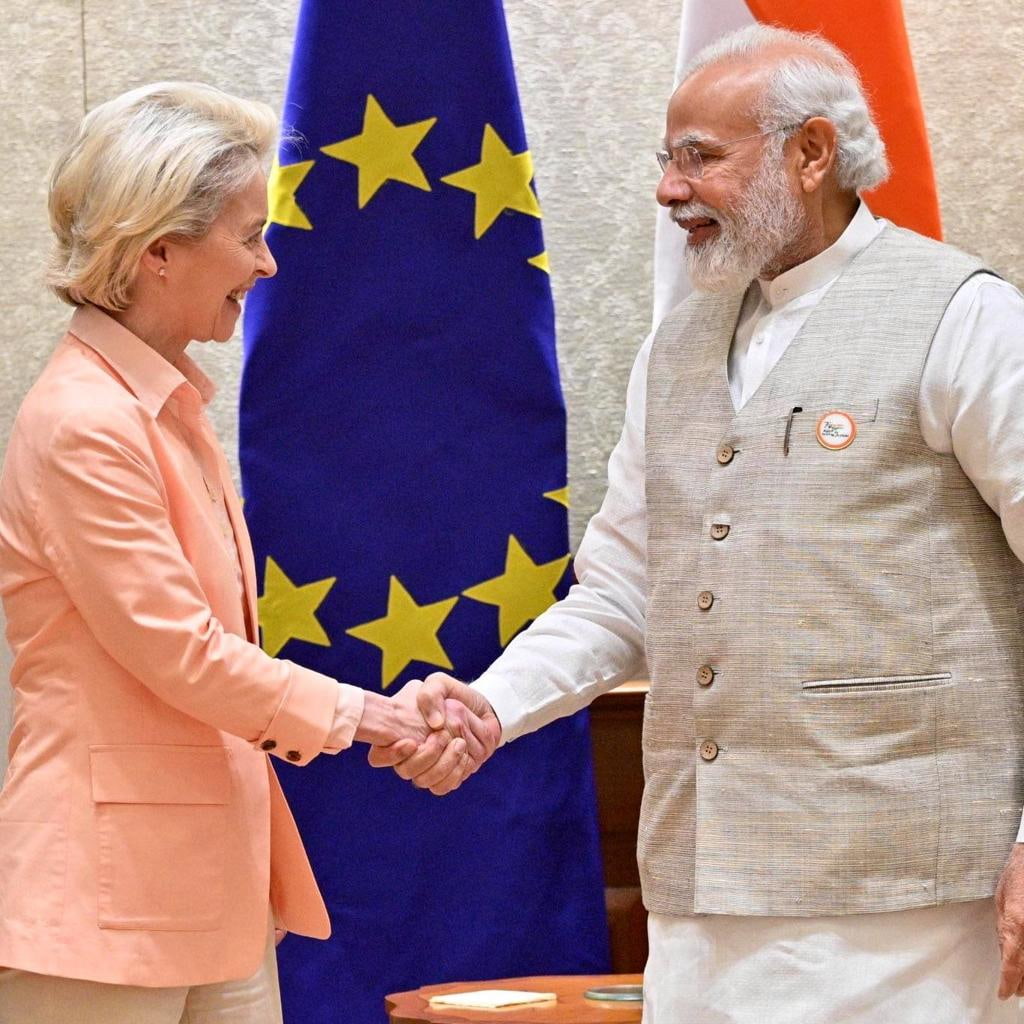
Hanoi: When Antonio Costa landed in the Vietnamese capital on 29 January, the European Council president did more than initial another diplomatic communique. He elevated Vietnam to a Comprehensive Strategic Partnership, the highest rung on Hanoi’s ladder of foreign ties and a tier the country had previously reserved for powers such as China, Russia and the United States. Vietnam thereby became the first member of the Association of Southeast Asian Nations to reach that level with Brussels. For a bloc that has spent three years preaching the gospel of de-risking from China, the choice of partner is striking. The European Union has built its most ambitious Asian relationship around a single-party state on China’s southern border, and it has done so with evident enthusiasm.

The substance behind the ceremony rewards closer reading. The joint statement commits both sides to cooperation across semiconductor supply chains, critical minerals, artificial intelligence and digital transformation, alongside climate action and the energy transition. More notable is the security chapter. The partners pledged to deepen dialogue on maritime security, cybersecurity, crisis management and peacekeeping, and observers in Hanoi were quick to read the language as opening the door to defence-technology transfers. That is a meaningful shift for a European Union that has historically treated Southeast Asia as a trade theatre rather than a strategic one.

The logic is not hard to reconstruct. Vietnam’s so-called bamboo diplomacy, bending with the wind while keeping its roots, has allowed Hanoi to hedge between Washington and Beijing for years. American isolationism under a tariff-minded administration and Chinese pressure in the South China Sea have both made that balancing act harder. A credible European partner offers Hanoi a third pillar, one that brings investment and technology without demanding alignment. For Brussels, the appeal is mirror-image. Vietnam is a manufacturing hub already woven into supply chains the European Union wants to diversify, and the existing free-trade agreement gives the new partnership commercial ballast that many strategic declarations lack.

Yet enthusiasm should not crowd out honesty about the limits. Comprehensive Strategic Partnerships are frameworks, not guarantees, and Europe has a habit of announcing architecture faster than it builds rooms. Defence-technology cooperation will run into export-control rules and the political sensitivity of arming a government with a poor human-rights record. The same week that delivered warm words on trade also drew criticism from rights groups, who note that Hanoi continues to jail journalists and activists even as it courts European capital. The European Parliament has leverage here, and its willingness to use it will test whether the partnership’s values language is real or decorative.

There is also the question of China’s reaction. Beijing will not miss the symbolism of the European Union planting its flag in a neighbour with which it disputes maritime boundaries. Brussels will insist, accurately, that the partnership targets no third country. But strategy is read through deeds, and a security dialogue touching maritime security in precisely the waters China claims is not a neutral act.

The honest verdict is that this is a promising beginning rather than a finished achievement. Vietnam’s elevation signals that the European Union’s Indo-Pacific strategy is acquiring partners of genuine weight, not merely position papers. Whether it matures into transferred technology, joint exercises and durable investment, or settles back into the comfortable vagueness of so many summit texts, will be clear only over the coming years. For now, Hanoi has gained a partner, and Brussels has gained a foothold worth defending.