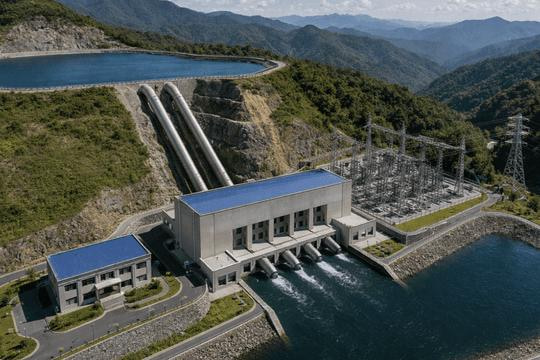
Haiphong: Northern Vietnam’s industrial corridor draws power from a system that adds generation faster than it adds wires, and European money is now flowing into both halves of that imbalance.
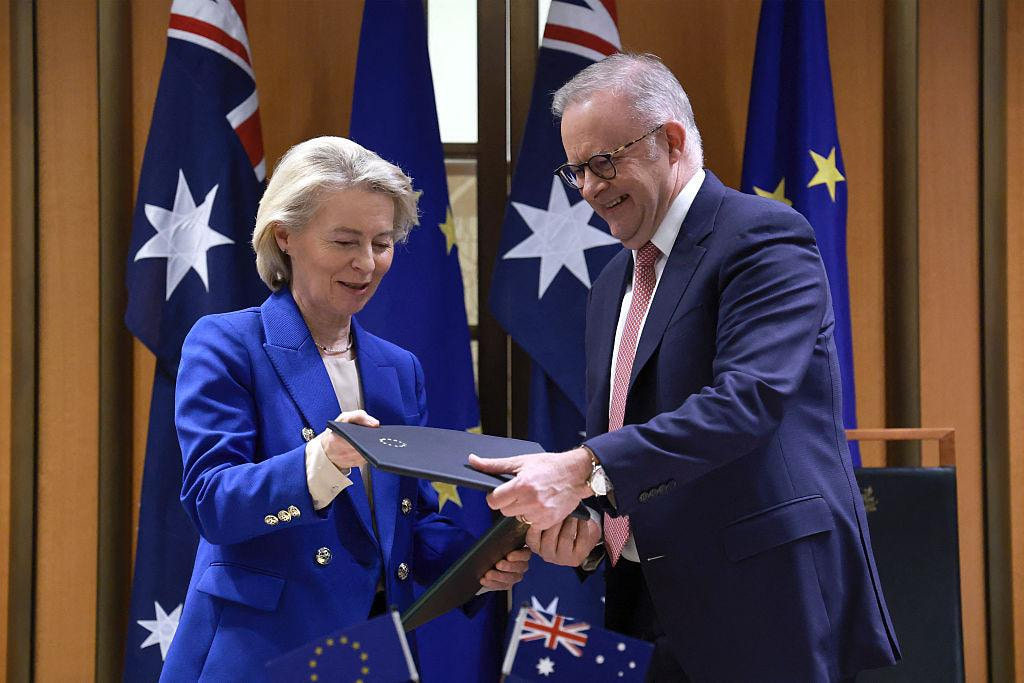
Commissioner Jozef Síkela travelled to Vietnam between 23 and 25 March 2026 and used the Hanoi business forum to announce more than €560 million in sustainable transport and clean energy commitments under the Global Gateway strategy. European development banks signed loan agreements worth €230 million for Electricity of Vietnam’s Bac Ai project, the country’s first pumped storage hydropower plant. The Commission described the visit as a shift toward transport as well as power.
Bac Ai deserves the attention it received. Pumped storage does for a grid what nothing else does at scale, absorbing surplus generation in the afternoon and returning it after dark. Vietnam needs that function badly. The southern provinces built solar capacity between 2019 and 2021 faster than any comparable market, and operators have spent every year since curtailing output because transmission lines could not carry it to the load centres. Storage does not fix a transmission deficit, but it reduces how much generation gets wasted at the point where it is produced.
The wider frame is the Just Energy Transition Partnership, which the European Union co-leads and which promised Vietnam a large financing envelope in exchange for an earlier coal peak. Brussels reinforced its share with a €430 million package in October 2025, and the partnership page now lists a portfolio that reads impressively in aggregate. Disbursement tells a harder story. Concessional lending requires sovereign guarantees, and Hanoi has limited how many it will issue against its debt ceiling. Projects sit approved and unfunded for reasons that have nothing to do with European willingness.
The grid remains the binding constraint, and it attracts the least concessional money. Transmission earns a regulated return that donors find unglamorous and that Vietnamese tariffs keep low. A pumped storage plant photographs well. A 500 kilovolt circuit through the central provinces does not, and it is the thing that determines whether any of the rest works.
Vietnamese planners understand this and have accelerated line construction, notably on the north-south corridor. Whether European lending follows into that segment will show how seriously the partnership treats system integration rather than headline capacity.
A fair counterpoint is that development finance rarely funds transmission anywhere, because it is a natural monopoly that governments prefer to keep on their own balance sheets. Judging Europe against a standard nobody meets would be unfair. The more useful question is whether the €560 million arrives as disbursed cash within the financing window or as commitments carried forward into the next announcement.
Vietnam will build the plants either way. What Europe buys with this money is influence over the standards those plants meet and the sequence in which they connect, and that influence lasts only as long as the money actually moves.