
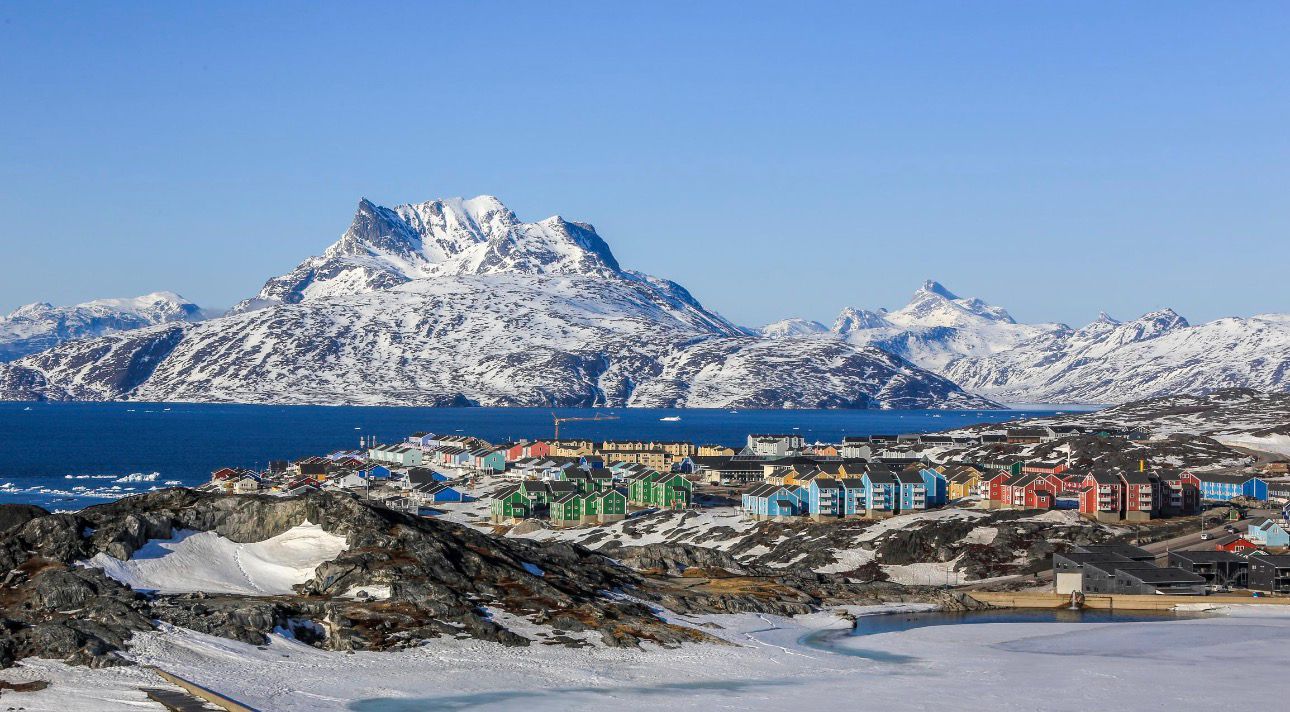

Ursula von der Leyen will fly to Nuuk on 6 September to sign the first EU-Greenland joint declaration since Washington’s annexation threats began. Brussels already has a number on paper: €530 million, proposed months before the crisis. What it does not yet have is a date, or proof that number survives the budget fight its own member states just opened.
Brussels announced on 27 August that its president would spend two days in Greenland next month, meeting Danish Prime Minister Mette Frederiksen and Greenland’s premier Jens-Frederik Nielsen, and that she would sign a joint declaration while she was there. Commission spokeswoman Paula Pinho called it proof of Europe’s commitment to Arctic security and cooperation. It is also, on the calendar, the first occasion the sentiment of the last eight months has to become a text with her name on it.
That calendar matters. The visit is confirmed the same week Icelanders vote on whether to resume their own EU accession talks, and it follows a year in which the Union and its member states have said a great deal about the Arctic without agreeing to much that either Greenland or Denmark could hold up and read. Trump’s own posture has cooled since January: Washington has been in direct talks with Copenhagen and Nuuk over the island’s future for months, and the annexation threats that opened the year have not been repeated with the same intensity. The question the visit poses is no longer about Washington. It is about what Brussels itself is prepared to put in writing.
What the year actually produced
Start with the steelman, because there is one. On 6 January, hours after Donald Trump renewed his demand to acquire the island, European leaders, including Emmanuel Macron, Friedrich Merz, Giorgia Meloni, Donald Tusk, Pedro Sánchez and Keir Starmer, signed a joint declaration naming Arctic security a European priority. The Nordic foreign ministers issued a parallel statement the same day. Denmark then acted rather than declared: from 14 January the Danish Ministry of Defence announced an expanded military presence in and around Greenland, and units from France, Germany, Sweden, Norway and Britain arrived within days under that Danish command, not a new EU or NATO one. Costa and von der Leyen endorsed the exercise on 17 January, describing it precisely as “the pre-coordinated Danish exercise, conducted with allies,” language that is honest about whose operation it was.
The clearest institutional signal came from Defence Commissioner Andrius Kubilius, who used a speech at the Folk och Försvar security conference in Sälen on 11 January to press for the Union to be institutionally ready to invoke Article 42.7 of the EU treaty, the mutual assistance clause, should a member state face armed aggression. The same day, he told Reuters directly: “I agree with the Danish Prime Minister that it will be the end of NATO, but also among people it will be also very, very negative.” He added that he did not believe an invasion was imminent, and that the Article 42.7 obligation would depend heavily on how Denmark itself chose to respond.
Read in sequence, that looks like a Union that moved fast. Read for competence, it is a run of statements of position from Brussels bracketing one Danish national exercise that Brussels endorsed after the fact rather than commanded. Nothing in the record obliges the Commission to spend anything, build anything or extend Greenland an entitlement it did not already have. The declarations were straightforward to issue because none of them committed money, and the Union has spent the better part of a year discovering how far solidarity travels on language alone.
Why the declaration will not be a defence pact, and should not be judged as one
Here the argument turns on a fact the commentary around the visit keeps skating past. Denmark, not Greenland and not the Union, holds foreign policy and defence competence over the territory under the terms of Greenlandic home rule, which is exactly why the January exercise ran under a Danish Ministry of Defence statement and why Costa and von der Leyen could only endorse it, not order it. Brussels cannot sign a defence guarantee with Nuuk because Nuuk is not the counterparty for defence matters, and it is unlikely to try. Judged against a security instrument the declaration was never going to contain, the 6 September signing will look thin regardless of what is in it, and critics on both sides of the Atlantic will say so.
That makes the honest test a different one. The Union’s competence in Greenland runs through raw materials, energy and investment, not troops. It opened a Commission office in Nuuk in March 2024, signed a memorandum of understanding on critical raw materials the previous November, and put €22.5 million behind a Green Growth programme for energy and minerals value chains. GEUS, the Geological Survey of Denmark and Greenland, has mapped deposits covering 25 of the Union’s 34 listed critical raw materials, including battery-grade graphite, rare earths, lithium and copper, concentrated in the Gardar alkaline province in the south. The Commission’s own Strategic Projects decision of 4 June 2025 named the Amitsoq graphite deposit a Strategic Project under the Critical Raw Materials Act, the only Greenlandic project to hold that status, and on 8 December 2025 Greenland’s government granted the operator a thirty-year exploitation licence, filed as a regulated market disclosure. On paper, the framework for a serious economic relationship already exists. What it has lacked is scale and a deadline, and those are the two things a declaration can supply without touching Danish defence competence at all.
Judged on that ground, the 6 September text has something to prove, but the baseline it will be measured against is larger than it first appears. On 3 September 2025, four months before Trump’s renewed threats and entirely outside the crisis, the Commission proposed nearly doubling total EU funding for its Overseas Countries and Territories to €999 million for 2028-2034, and named Greenland for €530 million of that, more than double the €225 million Greenland receives under the current 2021-2027 cycle. The Commission’s own Greenland page adds that a further, separate investment package is being prepared, as announced by von der Leyen, distinct from that budget line. Nothing in the record ties that package to the 6 September date specifically, but the two are the obvious candidate for what a signing in Nuuk would actually contain.
None of that money is delivered yet. The €530 million is a proposal inside a budget that must clear unanimous Council agreement and Parliament’s consent, and it does not begin until 2028 even if approved unchanged. On 28 August, Germany, Denmark, the Netherlands, Austria, Finland and Sweden issued a joint statement demanding cuts of several hundred billion euros across every heading of that same 2028-2034 budget, the Greenland line included by implication since they named no exemptions. Denmark, having spent the year insisting the Union stand behind Greenland, is now a co-signatory to a letter that puts the Union’s actual Greenland money at risk before the Council has even opened the bargaining. That is the honest test for 6 September: not whether the declaration commits money in principle, which it already has on paper, but whether it ties any of the €530 million, or the separate package von der Leyen has promised, to a date and a mechanism that survive contact with the cuts Denmark itself just asked for. It should also, at a minimum, address the Chinese shareholding still sitting inside Greenland’s mineral sector, a fact the Union’s own critical raw materials strategy exists to address and that no document in this record mentions.
The Iceland coincidence
None of this happens in isolation. Iceland votes on 29 August on whether to resume accession talks suspended since 2013, and the Council’s own conclusions this June welcomed that prospect while leaving the fisheries and Arctic files that actually divide Reykjavik from Brussels unaddressed. Two Nordic sovereignty questions, one about joining the Union and one about the Union’s relationship with a territory that will never join it, sit in the same fortnight of the European calendar. Both test the same habit: an institution that finds it easier to state a principle than to price one.
That habit has a name in Brussels, and it is not usually a flattering one. A Union that spends a year naming Arctic security a priority, endorses a Danish-run exercise after the fact, and then arrives in Nuuk with a document built mostly from language and figures it has already used, will have confirmed the complaint rather than answered it. A Union that arrives instead with a firmer date on the €530 million already proposed, a genuinely new package layered on top, and a line on strategic dependency in its own supply chain will have done something none of the January statements did, which is spend political capital rather than borrow against it.
What to watch for on 6 September
The test is not whether von der Leyen signs something. She will. It is whether the declaration attaches a number, a date or a named mechanism to money that is otherwise still a Commission proposal sitting inside a budget its own signatories, Denmark included, are simultaneously trying to shrink. Brussels has had eight months, and now a same-week demand for cuts from the very capital that hosts Greenland’s sovereignty, to prepare an answer to that question. Nuuk will find out in ten days whether it has one.
PROVENANCE: PRIMARY DOCUMENTS OPENED AND READ
The 6 January leaders’ declaration (Élysée); the Nordic foreign ministers’ statement of the same day (Norwegian government); the Danish Ministry of Defence statement of 14 January announcing the expanded Arctic presence (fmn.dk); the Costa-von der Leyen joint statement of 17 January, dated and timestamped on Consilium’s own record (consilium.europa.eu); Commissioner Kubilius’s 11 January speech at Folk och Försvar (European Commission press corner); the EU-Greenland critical raw materials memorandum of understanding (European Commission); the Commission’s Strategic Projects Decision C(2025) 3491 of 4 June 2025 naming Amitsoq (European Commission, PDF); GEUS’s own published review of Greenland’s critical raw material resource potential (GEUS, pub.geus.dk); GreenRoc’s regulated market disclosure confirming the 8 December 2025 exploitation licence, filed via the London Stock Exchange’s RNS, an FCA-approved Primary Information Provider (Investegate); the Commission’s own Greenland country page confirming the proposed €530 million and the separate investment package (international-partnerships.ec.europa.eu); the underlying Commission proposal COM(2025) 599 final of 3 September 2025 amending the Overseas Association Decision (EUR-Lex); and the joint statement of six member states on the 2028-2034 budget, published 28 August 2026 (Bundeskanzler.de, the German federal government). Twelve primary documents in total.
ATTRIBUTED REPORTING
The 6 September visit itself is reported via the Commission spokeswoman’s statement as carried by The Local Denmark; no separate Commission press release had been published on the visit at time of writing. Kubilius’s “end of NATO” remark is a direct, on-record quotation given to Reuters (reporter Johan Ahlander) at the Sälen conference; it does not appear in his published Commission speech text, so it is treated here as reported rather than institutional, though the quotation itself, not a paraphrase of it, is what is used, and it is corroborated in identical wording across six independent wire pickups.
ABOUT THE AUTHOR
Lukas Weber is a Brussels-based senior analyst and the international editor of The European Post, and writes on European external relations and geopolitics.