August 9, 2026
LATEST
New EU Gas Market Rules Take Effect With Consumer SafeguardsDeforestation Regulation Holds Its December Deadline Despite CutsDigital Omnibus Delays Europe’s High-Risk AI Deadline to 2027Europe’s Schools Confront a Widening Basic Skills GapRule of Law Report Finds Progress but Trust Still LagsIRIS2 Gains 66 Satellites as Brussels Signs the Rollout DealNature Restoration Plans Come Due as Member States Race a DeadlineECB Rates Hold at 2.25 Percent as Frankfurt Waits on the DataEU Budget Talks Turn to Cohesion as Ireland Takes OverWildfire Response Stretches Europe’s Emergency Fleet ThinCan Europe’s Quantum Plan Match Its Big Ambitions?Armenia Edges West as Moscow’s Grip Slips AwayEurope Inherits the World’s Aid Bill It Cannot Fully PayAir Passenger Rights Get Their First Overhaul in Two DecadesErasmus Opens a 5 Billion Euro Round for Skills and MobilityCeuta Crisis Pushes the EU Toward Faster Migrant ReturnsBulky Parcels Face a Packaging Crackdown From August 12Can Europe Build Its Drone Wall Before 2030 Arrives?Indonesia’s Trade Deal With Europe Nears Its Final SignatureEurope Leans on Beijing to Keep Climate Talks Alive Before AntalyaNew EU Gas Market Rules Take Effect With Consumer SafeguardsDeforestation Regulation Holds Its December Deadline Despite CutsDigital Omnibus Delays Europe’s High-Risk AI Deadline to 2027Europe’s Schools Confront a Widening Basic Skills GapRule of Law Report Finds Progress but Trust Still LagsIRIS2 Gains 66 Satellites as Brussels Signs the Rollout DealNature Restoration Plans Come Due as Member States Race a DeadlineECB Rates Hold at 2.25 Percent as Frankfurt Waits on the DataEU Budget Talks Turn to Cohesion as Ireland Takes OverWildfire Response Stretches Europe’s Emergency Fleet ThinCan Europe’s Quantum Plan Match Its Big Ambitions?Armenia Edges West as Moscow’s Grip Slips AwayEurope Inherits the World’s Aid Bill It Cannot Fully PayAir Passenger Rights Get Their First Overhaul in Two DecadesErasmus Opens a 5 Billion Euro Round for Skills and MobilityCeuta Crisis Pushes the EU Toward Faster Migrant ReturnsBulky Parcels Face a Packaging Crackdown From August 12Can Europe Build Its Drone Wall Before 2030 Arrives?Indonesia’s Trade Deal With Europe Nears Its Final SignatureEurope Leans on Beijing to Keep Climate Talks Alive Before Antalya
August 9, 2026
LATEST
New EU Gas Market Rules Take Effect With Consumer SafeguardsDeforestation Regulation Holds Its December Deadline Despite CutsDigital Omnibus Delays Europe’s High-Risk AI Deadline to 2027Europe’s Schools Confront a Widening Basic Skills GapRule of Law Report Finds Progress but Trust Still LagsIRIS2 Gains 66 Satellites as Brussels Signs the Rollout DealNature Restoration Plans Come Due as Member States Race a DeadlineECB Rates Hold at 2.25 Percent as Frankfurt Waits on the DataEU Budget Talks Turn to Cohesion as Ireland Takes OverWildfire Response Stretches Europe’s Emergency Fleet ThinCan Europe’s Quantum Plan Match Its Big Ambitions?Armenia Edges West as Moscow’s Grip Slips AwayEurope Inherits the World’s Aid Bill It Cannot Fully PayAir Passenger Rights Get Their First Overhaul in Two DecadesErasmus Opens a 5 Billion Euro Round for Skills and MobilityCeuta Crisis Pushes the EU Toward Faster Migrant ReturnsBulky Parcels Face a Packaging Crackdown From August 12Can Europe Build Its Drone Wall Before 2030 Arrives?Indonesia’s Trade Deal With Europe Nears Its Final SignatureEurope Leans on Beijing to Keep Climate Talks Alive Before AntalyaNew EU Gas Market Rules Take Effect With Consumer SafeguardsDeforestation Regulation Holds Its December Deadline Despite CutsDigital Omnibus Delays Europe’s High-Risk AI Deadline to 2027Europe’s Schools Confront a Widening Basic Skills GapRule of Law Report Finds Progress but Trust Still LagsIRIS2 Gains 66 Satellites as Brussels Signs the Rollout DealNature Restoration Plans Come Due as Member States Race a DeadlineECB Rates Hold at 2.25 Percent as Frankfurt Waits on the DataEU Budget Talks Turn to Cohesion as Ireland Takes OverWildfire Response Stretches Europe’s Emergency Fleet ThinCan Europe’s Quantum Plan Match Its Big Ambitions?Armenia Edges West as Moscow’s Grip Slips AwayEurope Inherits the World’s Aid Bill It Cannot Fully PayAir Passenger Rights Get Their First Overhaul in Two DecadesErasmus Opens a 5 Billion Euro Round for Skills and MobilityCeuta Crisis Pushes the EU Toward Faster Migrant ReturnsBulky Parcels Face a Packaging Crackdown From August 12Can Europe Build Its Drone Wall Before 2030 Arrives?Indonesia’s Trade Deal With Europe Nears Its Final SignatureEurope Leans on Beijing to Keep Climate Talks Alive Before Antalya

Biometric Border Checks Replace the Passport Stamp Across Europe

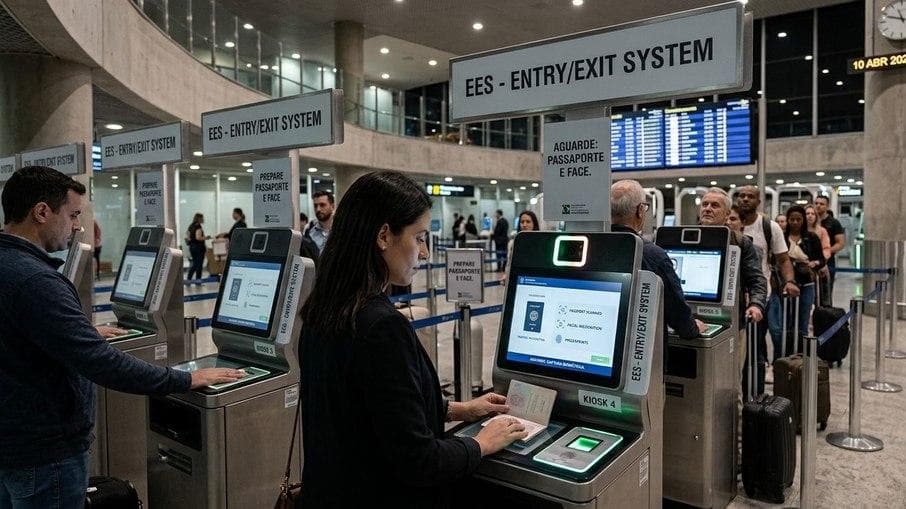
Brussels: The inky thud of a passport stamp, for generations the small ceremony that marked arrival in Europe, is being retired. Since 10 April the European Union’s Entry/Exit System has been fully operational, registering every non-EU national who crosses an external border for a short stay into a shared digital ledger that spans twenty-nine countries.

The system records a traveller’s name and document details alongside biometric data, fingerprints and a facial image, together with the time and place of each entry and exit. In doing so it automates a task border guards once did by eye and ink: detecting people who overstay the ninety-day limit. The machine-readable trail replaces the stamped page that was easy to forge, hard to audit and impossible to aggregate across the bloc.

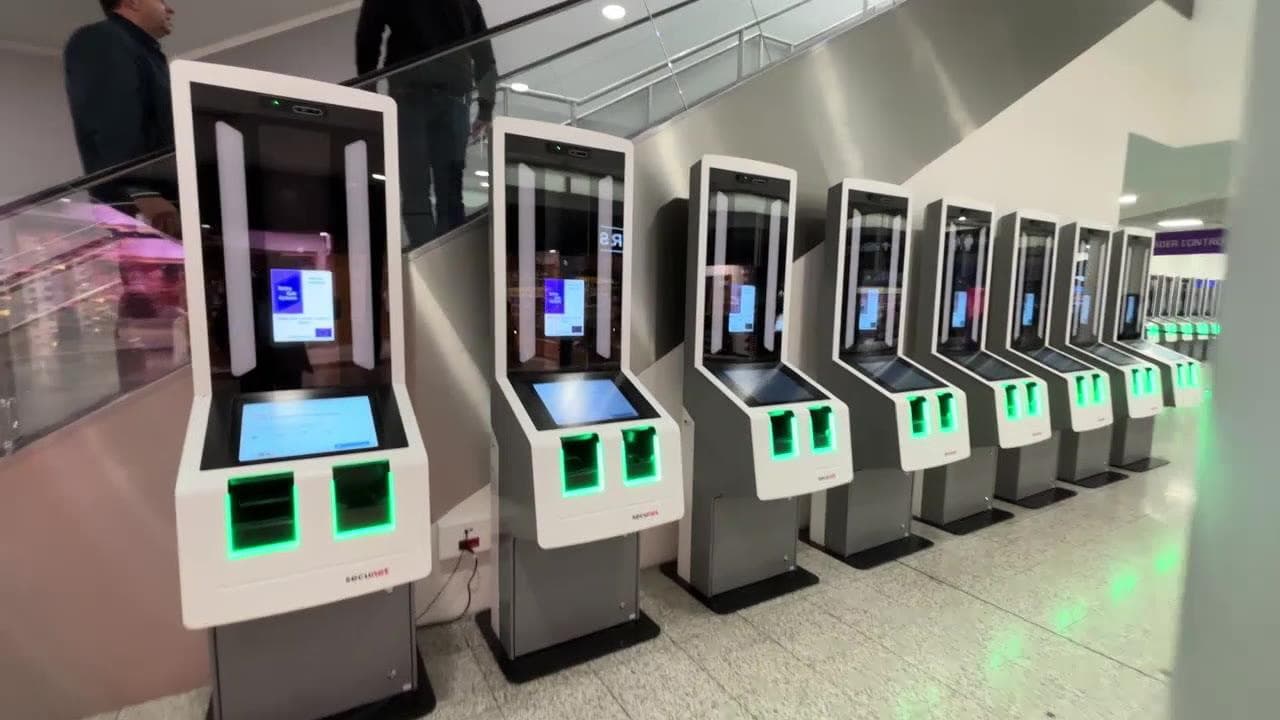
The rollout was deliberately gradual. From 12 October last year, airports and land crossings switched on the technology in phases, some activating biometric kiosks early while others eased passengers in over the winter. By April the transition period closed and the obligation became universal, including a duty on airlines and ferry operators to verify that short-stay visa holders have not exhausted their permitted entries before boarding.

The early months have not been frictionless. Travel bodies warned for years that capturing fingerprints and photographs at peak periods risked long queues, and the first registration of each visitor remains the slowest step, since returning travellers can later be matched against records already on file. Airports invested heavily in self-service terminals to absorb the load, and the staggered start was itself a concession to those capacity fears.

Still missing from the picture is the system’s companion, the European Travel Information and Authorisation System, the online pre-screening that visa-exempt visitors will need before they set off. That scheme is now expected in the final quarter of this year, meaning the bloc is operating the entry-recording half of its smart-borders project while the advance-vetting half remains on the drawing board. Until it launches, no website legitimately issues the authorisation, a gap that has spawned a cottage industry of look-alike sites that officials warn travellers to avoid.

For the bloc, the new architecture is as much about data as about queues. A single record of who enters, where and for how long gives authorities a tool they have never possessed at scale: the ability to spot patterns of overstaying, identity swapping and document fraud across the whole external frontier rather than country by country. Civil liberties groups counter that a centralised store of biometric data on hundreds of millions of visitors carries its own risks, from breaches to function creep, and have pressed for tight limits on how long records are kept and who may query them.

Those debates will sharpen once the advance-authorisation layer arrives and the two systems begin sharing data. For now, the most visible change is at the kiosk, where a camera and a fingerprint reader have quietly taken over the job a rubber stamp once performed.