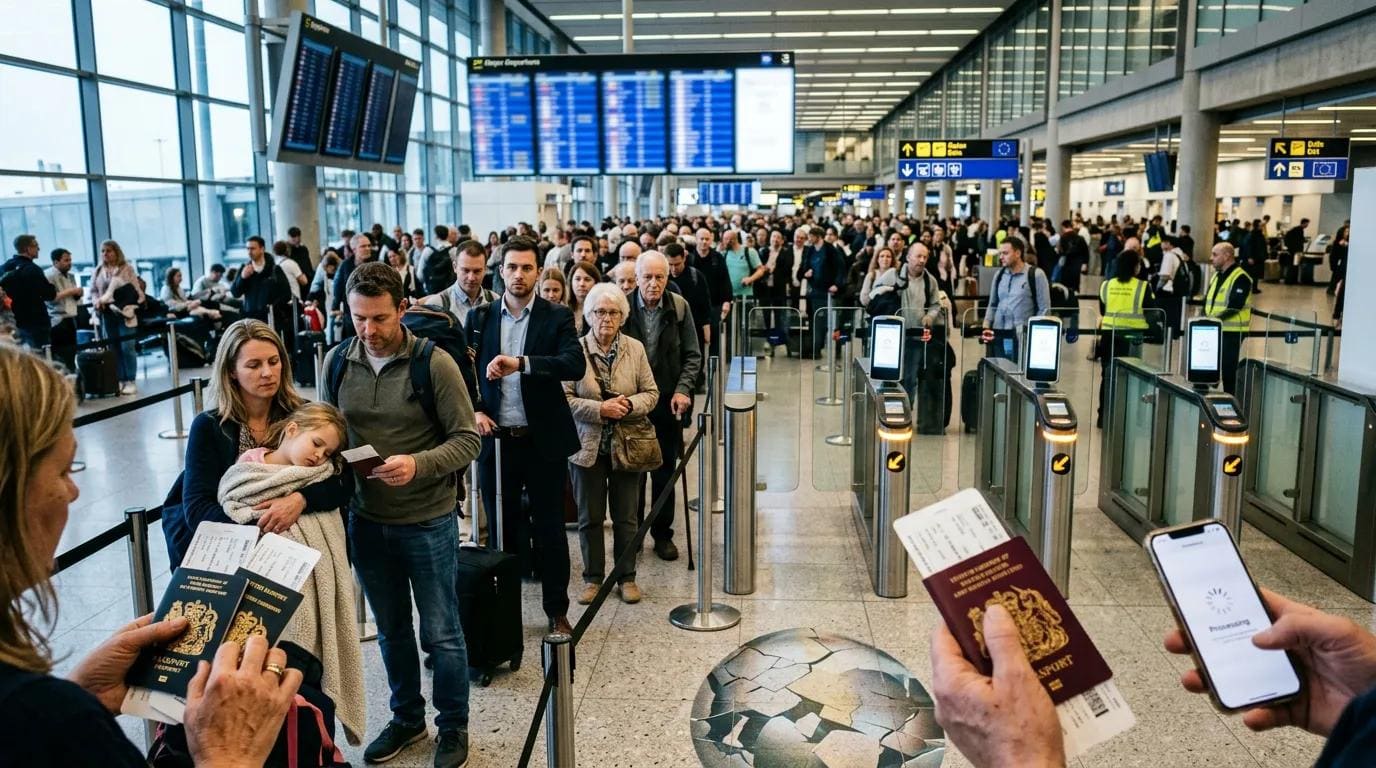
Lisbon: The queues at passport control have become the story of the European summer. Since the Union’s new digital border system reached full operation in April, travellers arriving from outside the bloc have faced waits of two to five hours at major airports, and several hubs reported fresh spikes this month as holiday traffic peaked.
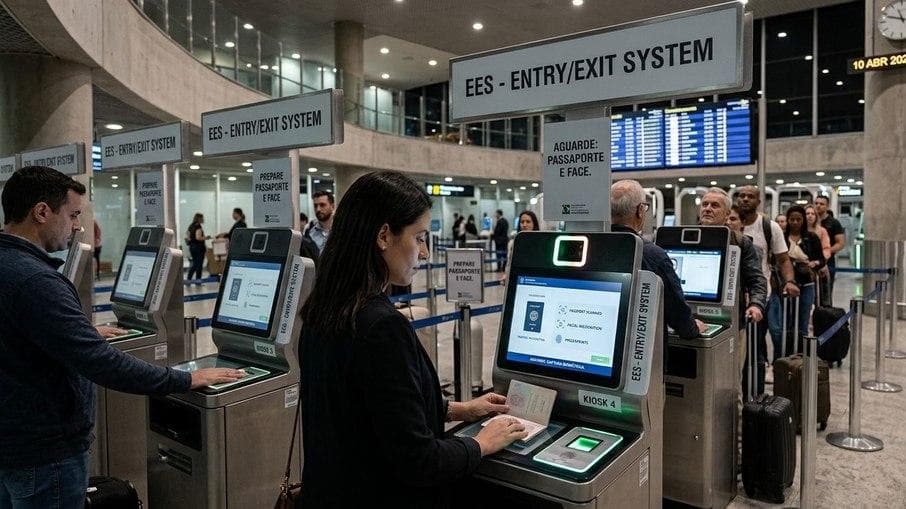
The system behind the delays is the Entry/Exit System, an automated register that records every non-EU visitor crossing an external border for a short stay. It captures names, travel-document data and biometrics, fingerprints and a facial image, in place of the old ink stamp. The Commission describes the tool on its smart borders pages, and casts it as a way to track overstays and tighten security across 29 countries.
The promise and the pain are tangled together. Border checks that once took seconds now take minutes per traveller as officers enrol first-time visitors, and airports that never planned for the extra kiosks have watched halls back up. Airlines, exasperated by missed connections and angry passengers, asked the Commission to let member states suspend the checks through July and August, the busiest travel weeks of the year.
Brussels said no. The Commission confirmed in early July that it would not widen the suspension window airports wanted, arguing that pausing the system now would gut its purpose and reward poor preparation. Officials insist the bottlenecks reflect an incomplete rollout rather than a flawed design, and they expect waits to ease as more crossings install equipment and staff grow used to the routine.
Travellers caught in the halls take little comfort from that logic. Reports of five-hour queues have spread through summer travel forums, and visitors from the United States, Britain, Canada and Australia have traded tips on which airports to avoid, as reporting from across the continent has chronicled. Tour operators worry that the friction dents Europe’s appeal at the very moment coastal towns count on the season’s income.
Home-affairs officials answer that the pain is front-loaded. Once a visitor is enrolled, later crossings should move faster because the biometrics already sit on file, so the worst congestion should fade as the database fills. They also stress that the system underpins a second layer, a travel-authorisation scheme for visa-free visitors, which cannot function without the border register beneath it.
The dispute leaves a familiar tension exposed. The Union wants harder external borders and smoother internal travel at the same time, and this summer those goals have collided in the arrivals hall. For now the message from officials is that the checks stay, the queues are temporary, and patience is the price of a border the bloc can finally see. Frustrated passengers, sweating in line, may need convincing.