August 9, 2026
LATEST
New EU Gas Market Rules Take Effect With Consumer SafeguardsDeforestation Regulation Holds Its December Deadline Despite CutsDigital Omnibus Delays Europe’s High-Risk AI Deadline to 2027Europe’s Schools Confront a Widening Basic Skills GapRule of Law Report Finds Progress but Trust Still LagsIRIS2 Gains 66 Satellites as Brussels Signs the Rollout DealNature Restoration Plans Come Due as Member States Race a DeadlineECB Rates Hold at 2.25 Percent as Frankfurt Waits on the DataEU Budget Talks Turn to Cohesion as Ireland Takes OverWildfire Response Stretches Europe’s Emergency Fleet ThinCan Europe’s Quantum Plan Match Its Big Ambitions?Armenia Edges West as Moscow’s Grip Slips AwayEurope Inherits the World’s Aid Bill It Cannot Fully PayAir Passenger Rights Get Their First Overhaul in Two DecadesErasmus Opens a 5 Billion Euro Round for Skills and MobilityCeuta Crisis Pushes the EU Toward Faster Migrant ReturnsBulky Parcels Face a Packaging Crackdown From August 12Can Europe Build Its Drone Wall Before 2030 Arrives?Indonesia’s Trade Deal With Europe Nears Its Final SignatureEurope Leans on Beijing to Keep Climate Talks Alive Before AntalyaNew EU Gas Market Rules Take Effect With Consumer SafeguardsDeforestation Regulation Holds Its December Deadline Despite CutsDigital Omnibus Delays Europe’s High-Risk AI Deadline to 2027Europe’s Schools Confront a Widening Basic Skills GapRule of Law Report Finds Progress but Trust Still LagsIRIS2 Gains 66 Satellites as Brussels Signs the Rollout DealNature Restoration Plans Come Due as Member States Race a DeadlineECB Rates Hold at 2.25 Percent as Frankfurt Waits on the DataEU Budget Talks Turn to Cohesion as Ireland Takes OverWildfire Response Stretches Europe’s Emergency Fleet ThinCan Europe’s Quantum Plan Match Its Big Ambitions?Armenia Edges West as Moscow’s Grip Slips AwayEurope Inherits the World’s Aid Bill It Cannot Fully PayAir Passenger Rights Get Their First Overhaul in Two DecadesErasmus Opens a 5 Billion Euro Round for Skills and MobilityCeuta Crisis Pushes the EU Toward Faster Migrant ReturnsBulky Parcels Face a Packaging Crackdown From August 12Can Europe Build Its Drone Wall Before 2030 Arrives?Indonesia’s Trade Deal With Europe Nears Its Final SignatureEurope Leans on Beijing to Keep Climate Talks Alive Before Antalya
August 9, 2026
LATEST
New EU Gas Market Rules Take Effect With Consumer SafeguardsDeforestation Regulation Holds Its December Deadline Despite CutsDigital Omnibus Delays Europe’s High-Risk AI Deadline to 2027Europe’s Schools Confront a Widening Basic Skills GapRule of Law Report Finds Progress but Trust Still LagsIRIS2 Gains 66 Satellites as Brussels Signs the Rollout DealNature Restoration Plans Come Due as Member States Race a DeadlineECB Rates Hold at 2.25 Percent as Frankfurt Waits on the DataEU Budget Talks Turn to Cohesion as Ireland Takes OverWildfire Response Stretches Europe’s Emergency Fleet ThinCan Europe’s Quantum Plan Match Its Big Ambitions?Armenia Edges West as Moscow’s Grip Slips AwayEurope Inherits the World’s Aid Bill It Cannot Fully PayAir Passenger Rights Get Their First Overhaul in Two DecadesErasmus Opens a 5 Billion Euro Round for Skills and MobilityCeuta Crisis Pushes the EU Toward Faster Migrant ReturnsBulky Parcels Face a Packaging Crackdown From August 12Can Europe Build Its Drone Wall Before 2030 Arrives?Indonesia’s Trade Deal With Europe Nears Its Final SignatureEurope Leans on Beijing to Keep Climate Talks Alive Before AntalyaNew EU Gas Market Rules Take Effect With Consumer SafeguardsDeforestation Regulation Holds Its December Deadline Despite CutsDigital Omnibus Delays Europe’s High-Risk AI Deadline to 2027Europe’s Schools Confront a Widening Basic Skills GapRule of Law Report Finds Progress but Trust Still LagsIRIS2 Gains 66 Satellites as Brussels Signs the Rollout DealNature Restoration Plans Come Due as Member States Race a DeadlineECB Rates Hold at 2.25 Percent as Frankfurt Waits on the DataEU Budget Talks Turn to Cohesion as Ireland Takes OverWildfire Response Stretches Europe’s Emergency Fleet ThinCan Europe’s Quantum Plan Match Its Big Ambitions?Armenia Edges West as Moscow’s Grip Slips AwayEurope Inherits the World’s Aid Bill It Cannot Fully PayAir Passenger Rights Get Their First Overhaul in Two DecadesErasmus Opens a 5 Billion Euro Round for Skills and MobilityCeuta Crisis Pushes the EU Toward Faster Migrant ReturnsBulky Parcels Face a Packaging Crackdown From August 12Can Europe Build Its Drone Wall Before 2030 Arrives?Indonesia’s Trade Deal With Europe Nears Its Final SignatureEurope Leans on Beijing to Keep Climate Talks Alive Before Antalya

Borrowing Costs Climb as the ECB Reverses Course on Rates

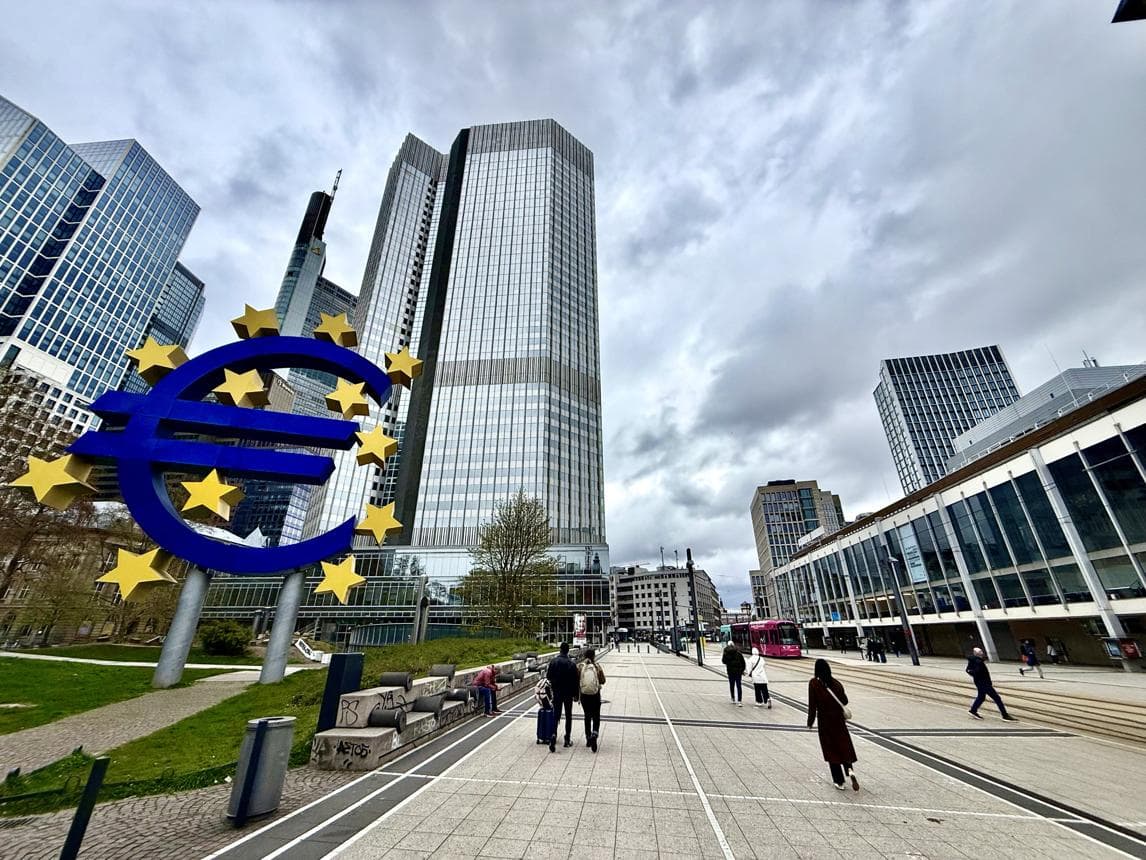
Frankfurt: For three years the only direction the European Central Bank’s interest rates moved was down. That run ended on 11 June, when the Governing Council lifted its three key rates by 25 basis points, pushing the deposit facility rate back up and signalling that the era of cheap money the euro area had grown used to is, for now, over.

The decision is less a routine adjustment than a confession that the inflation fight is not finished. After the conflict between Israel and Iran rattled energy markets in late spring, oil and gas prices jumped and fed quickly into the headline numbers. Bank staff projections now show inflation drifting back above the two percent target rather than settling neatly onto it, and the Council judged that waiting risked letting expectations slip. A central bank that spent 2024 and 2025 carefully unwinding the most aggressive tightening cycle in its history has been forced to admit that the job was only paused.

What makes the move awkward is its timing relative to the real economy. Growth across the bloc remains thin, and several large member states are still wrestling with elevated public debt and the prospect of fiscal consolidation. Higher borrowing costs land hardest on exactly those governments and households with the least room to absorb them. A homeowner in southern Europe rolling a mortgage onto a variable rate, or a finance ministry refinancing maturing bonds, will feel the quarter point well before any disinflation shows up in the shops.

President Christine Lagarde framed the step as insurance rather than the start of a new climbing cycle, stressing that future decisions would be taken meeting by meeting and would depend on incoming data rather than any predetermined path. That caution is deliberate. The bank does not want markets pricing in a long series of hikes when the underlying picture, stripped of volatile energy, is far softer. Services inflation has proven sticky, but goods prices and wage growth have been cooling, and a single geopolitical shock is a poor reason to declare a trend.

The deeper difficulty is that the bank is being asked to steer with instruments designed for demand-driven overheating against a price shock that is largely imported. Raising rates does little to bring down the cost of a barrel of crude; it works by cooling activity until demand falls back into line with constrained supply. In an economy already running close to stall speed, that is a blunt and uncomfortable tool. Critics inside and outside the bank worry that tightening into weakness could tip marginal economies toward contraction while doing little to address the actual source of the price pressure.

For savers, the reversal is welcome after a long stretch of returns that barely kept pace with prices. For borrowers, it is a reminder that the post-pandemic normalisation never truly arrived. And for the bloc’s fiscal architecture, it sharpens an old tension: monetary policy set for the whole currency union rarely fits any single member, and the gap between Frankfurt’s mandate and national budgets widens every time rates move.

The Council’s next meetings will be watched for whether June was a one-off correction or the opening of a more hawkish chapter. Much depends on the path of energy markets, which no central banker controls. If the geopolitical premium fades, the bank may quietly let the hike stand as a single act of caution. If it does not, the institution that spent two years loosening its grip may find itself tightening again, into an economy with very little cushion left.