Madrid: Spanish households refinancing a mortgage this summer feel the weight of a decision taken far to the north, and they now wait for the next one. The European Central Bank meets on 23 July 2026, and after its first rate rise in three years, borrowers and savers across the euro area want to know whether policymakers will press on or hold their fire. The debate over ECB rates has rarely felt so consequential for ordinary balance sheets.
The pivot came on 11 June. The Governing Council lifted its three key rates by 25 basis points, pushing the deposit facility to 2.25 percent, the main refinancing rate to 2.40 percent and the marginal lending rate to 2.65 percent, all effective from 17 June. It marked the first increase since 2023 and reversed the long easing cycle that had defined the previous two years.
Inflation drove the reversal. Eurosystem staff now expect headline inflation to average 3.0 percent in 2026 before easing to 2.3 percent in 2027 and settling at the 2.0 percent target in 2028. Energy costs, aggravated by conflict in the Middle East, have pushed prices above where the bank wants them, and the Council judged that a single move was robust across the range of scenarios it modelled.
What makes July awkward is the calendar. It is a non-projection meeting, so the bank will publish no fresh staff forecasts alongside the decision. Policymakers must lean on the June numbers and on incoming data for prices, wages and activity, which limits how much new conviction they can credibly signal.
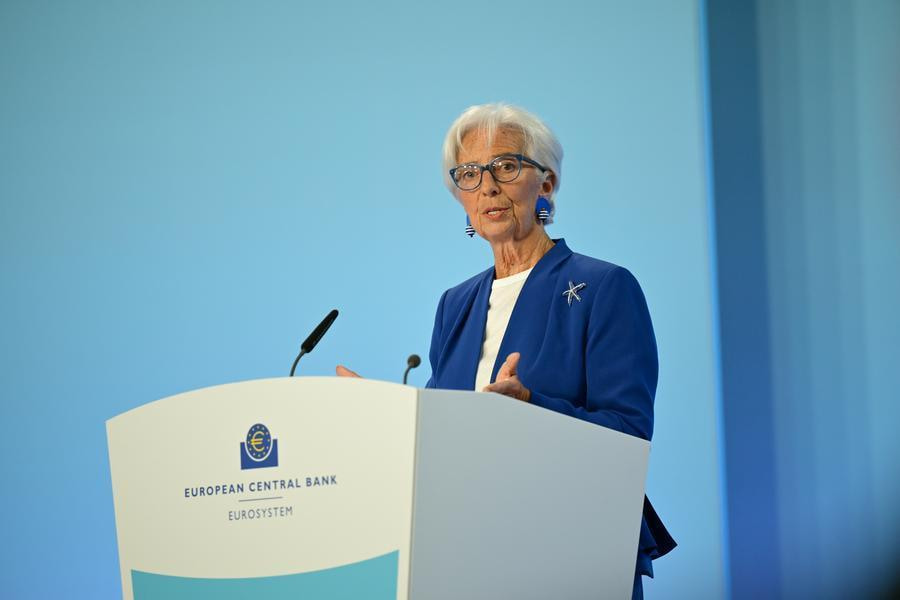
The Council has also chosen its words with unusual care. After June, officials agreed to withhold guidance on the future path of rates, insisting that communication stay neutral. They want to avoid hinting at a sequence of hikes while also refusing to frame the June move as a one-off, a deliberate ambiguity that keeps markets from running ahead of the data.
For a Spanish economy weighted toward variable-rate mortgages and tourism, the stakes are immediate. Higher borrowing costs cool demand and can ease price pressure, yet they also raise repayments for families and squeeze the small firms that anchor employment along the Mediterranean coast. A pause would offer relief; a further rise would signal that the bank still sees inflation as the greater danger.
Markets lean toward a hold on 23 July, reasoning that the bank will want to watch how the June increase filters through before adding more restraint. But few analysts will commit firmly, precisely because the ECB has refused to commit itself. That is the point of the neutral stance. It preserves the bank’s freedom to act on the next surprise, whether it comes from energy markets, wage settlements or the wider geopolitical shock that has unsettled the outlook.
Whatever the Council decides, the July meeting will read as a statement of temperament as much as policy. It will show whether the ECB treats June as the opening of a tightening phase or as a cautious insurance payment against a risk it hopes has already begun to fade.