August 9, 2026
LATEST
New EU Gas Market Rules Take Effect With Consumer SafeguardsDeforestation Regulation Holds Its December Deadline Despite CutsDigital Omnibus Delays Europe’s High-Risk AI Deadline to 2027Europe’s Schools Confront a Widening Basic Skills GapRule of Law Report Finds Progress but Trust Still LagsIRIS2 Gains 66 Satellites as Brussels Signs the Rollout DealNature Restoration Plans Come Due as Member States Race a DeadlineECB Rates Hold at 2.25 Percent as Frankfurt Waits on the DataEU Budget Talks Turn to Cohesion as Ireland Takes OverWildfire Response Stretches Europe’s Emergency Fleet ThinCan Europe’s Quantum Plan Match Its Big Ambitions?Armenia Edges West as Moscow’s Grip Slips AwayEurope Inherits the World’s Aid Bill It Cannot Fully PayAir Passenger Rights Get Their First Overhaul in Two DecadesErasmus Opens a 5 Billion Euro Round for Skills and MobilityCeuta Crisis Pushes the EU Toward Faster Migrant ReturnsBulky Parcels Face a Packaging Crackdown From August 12Can Europe Build Its Drone Wall Before 2030 Arrives?Indonesia’s Trade Deal With Europe Nears Its Final SignatureEurope Leans on Beijing to Keep Climate Talks Alive Before AntalyaNew EU Gas Market Rules Take Effect With Consumer SafeguardsDeforestation Regulation Holds Its December Deadline Despite CutsDigital Omnibus Delays Europe’s High-Risk AI Deadline to 2027Europe’s Schools Confront a Widening Basic Skills GapRule of Law Report Finds Progress but Trust Still LagsIRIS2 Gains 66 Satellites as Brussels Signs the Rollout DealNature Restoration Plans Come Due as Member States Race a DeadlineECB Rates Hold at 2.25 Percent as Frankfurt Waits on the DataEU Budget Talks Turn to Cohesion as Ireland Takes OverWildfire Response Stretches Europe’s Emergency Fleet ThinCan Europe’s Quantum Plan Match Its Big Ambitions?Armenia Edges West as Moscow’s Grip Slips AwayEurope Inherits the World’s Aid Bill It Cannot Fully PayAir Passenger Rights Get Their First Overhaul in Two DecadesErasmus Opens a 5 Billion Euro Round for Skills and MobilityCeuta Crisis Pushes the EU Toward Faster Migrant ReturnsBulky Parcels Face a Packaging Crackdown From August 12Can Europe Build Its Drone Wall Before 2030 Arrives?Indonesia’s Trade Deal With Europe Nears Its Final SignatureEurope Leans on Beijing to Keep Climate Talks Alive Before Antalya
August 9, 2026
LATEST
New EU Gas Market Rules Take Effect With Consumer SafeguardsDeforestation Regulation Holds Its December Deadline Despite CutsDigital Omnibus Delays Europe’s High-Risk AI Deadline to 2027Europe’s Schools Confront a Widening Basic Skills GapRule of Law Report Finds Progress but Trust Still LagsIRIS2 Gains 66 Satellites as Brussels Signs the Rollout DealNature Restoration Plans Come Due as Member States Race a DeadlineECB Rates Hold at 2.25 Percent as Frankfurt Waits on the DataEU Budget Talks Turn to Cohesion as Ireland Takes OverWildfire Response Stretches Europe’s Emergency Fleet ThinCan Europe’s Quantum Plan Match Its Big Ambitions?Armenia Edges West as Moscow’s Grip Slips AwayEurope Inherits the World’s Aid Bill It Cannot Fully PayAir Passenger Rights Get Their First Overhaul in Two DecadesErasmus Opens a 5 Billion Euro Round for Skills and MobilityCeuta Crisis Pushes the EU Toward Faster Migrant ReturnsBulky Parcels Face a Packaging Crackdown From August 12Can Europe Build Its Drone Wall Before 2030 Arrives?Indonesia’s Trade Deal With Europe Nears Its Final SignatureEurope Leans on Beijing to Keep Climate Talks Alive Before AntalyaNew EU Gas Market Rules Take Effect With Consumer SafeguardsDeforestation Regulation Holds Its December Deadline Despite CutsDigital Omnibus Delays Europe’s High-Risk AI Deadline to 2027Europe’s Schools Confront a Widening Basic Skills GapRule of Law Report Finds Progress but Trust Still LagsIRIS2 Gains 66 Satellites as Brussels Signs the Rollout DealNature Restoration Plans Come Due as Member States Race a DeadlineECB Rates Hold at 2.25 Percent as Frankfurt Waits on the DataEU Budget Talks Turn to Cohesion as Ireland Takes OverWildfire Response Stretches Europe’s Emergency Fleet ThinCan Europe’s Quantum Plan Match Its Big Ambitions?Armenia Edges West as Moscow’s Grip Slips AwayEurope Inherits the World’s Aid Bill It Cannot Fully PayAir Passenger Rights Get Their First Overhaul in Two DecadesErasmus Opens a 5 Billion Euro Round for Skills and MobilityCeuta Crisis Pushes the EU Toward Faster Migrant ReturnsBulky Parcels Face a Packaging Crackdown From August 12Can Europe Build Its Drone Wall Before 2030 Arrives?Indonesia’s Trade Deal With Europe Nears Its Final SignatureEurope Leans on Beijing to Keep Climate Talks Alive Before Antalya

ByteDance Gatekeeper Appeal Lands at Court of Justice Hearing Window

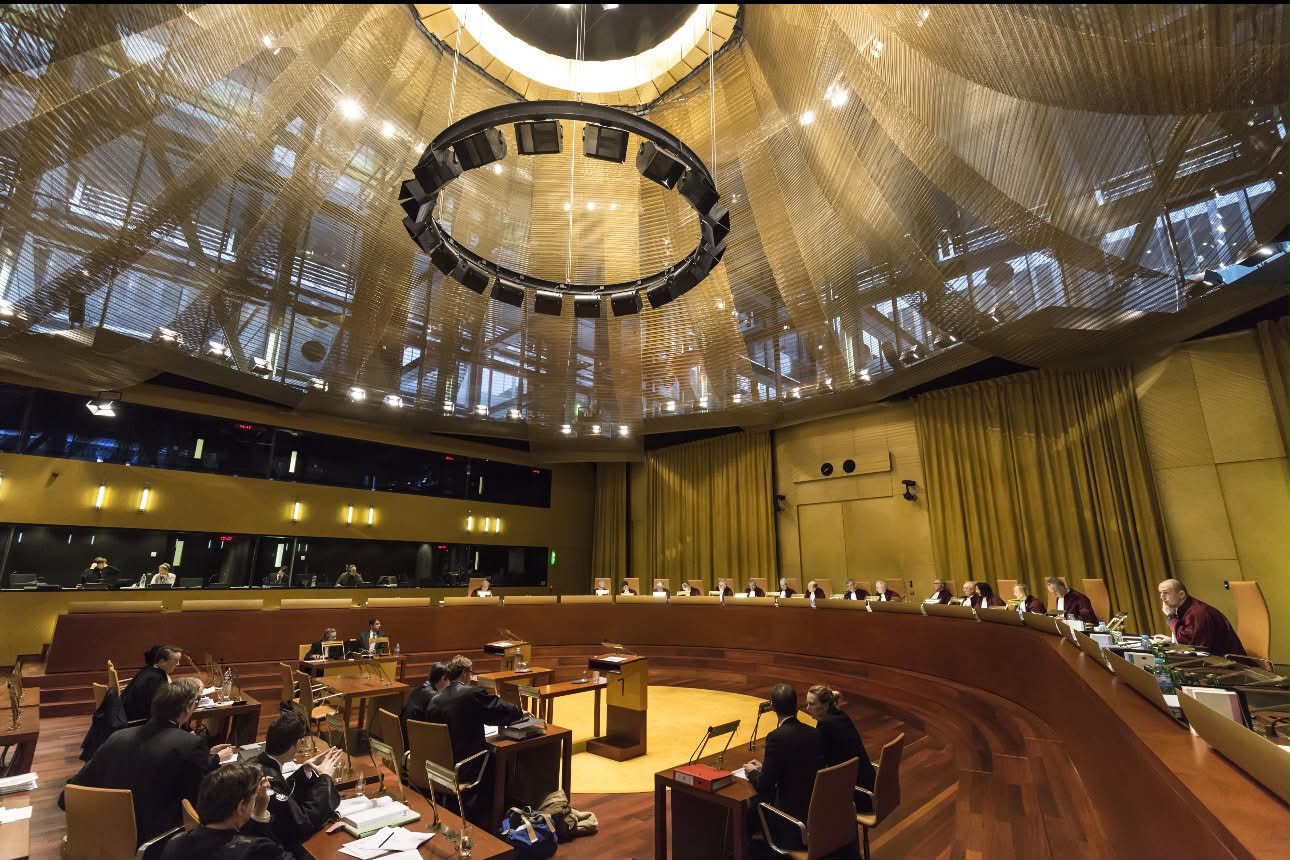
Aarhus: The Court of Justice of the European Union has held its hearing in the ByteDance appeal against the Commission’s gatekeeper designation under the Digital Markets Act, with the case heard on the twelfth of May and a judgment expected later in the year. For Danish competition practitioners watching the early jurisprudence of the DMA, the case is the most consequential test yet of how the European judiciary will police the boundaries the Commission has drawn around the regulation’s central designation tool.

ByteDance, the parent company of TikTok, was designated a gatekeeper in September 2023 alongside other major platforms. The decision brought TikTok inside the perimeter of obligations imposed on entities with what the regulation calls an entrenched and durable position in the provision of core platform services. ByteDance challenged the designation before the General Court, arguing that the company had not yet acquired the kind of market position the regulation was designed to capture, and that the Commission had applied the qualitative criteria in a way that failed to take account of competitive dynamics in short-form video. The General Court rejected those arguments and confirmed the designation, prompting the appeal now before the Court of Justice.

The hearing focused on whether the lower court had correctly upheld the Commission’s reading of the criteria, and on the standard of review the General Court applied. ByteDance’s counsel emphasised the contested nature of the market in which TikTok competes with platforms operated by Meta, YouTube and Snap, and argued that the durability test should have been applied more rigorously to a service that has gained scale within a comparatively short period. The Commission, supported by the German government, urged the Court to confirm the General Court’s reasoning, arguing that the regulation’s threshold tests are calibrated for precisely the kind of fast-growing platform that ByteDance represents.

The case has implications well beyond TikTok. Several other gatekeepers continue to challenge specific obligations imposed under the DMA, and a Court ruling that tightens the standard of review of designation decisions could ripple across pending litigation. Conversely, a decision that upholds the General Court’s approach will provide the Commission with greater confidence in defending future designations, particularly as it weighs whether to bring additional services within scope.

Compliance practitioners are watching for two doctrinal questions. The first concerns how the Court treats the qualitative assessment that complements the regulation’s quantitative thresholds. The thresholds are designed to provide a clear gateway, but the Commission retains discretion to depart from them in either direction, and the boundaries of that discretion are not fully tested. The second is the relationship between the gatekeeper designation and the substantive obligations that follow. If the Court ties the validity of the designation more closely to the appropriateness of the resulting obligations, the Commission’s enforcement architecture may need adjustment.

The Danish competition authority, which has invested in DMA-related work as part of its general digital markets agenda, has been preparing legal analysis for the post-judgment period. Aarhus, home to several of the country’s leading platform research groups, has hosted multiple academic conferences in recent months that have probed the regulation’s first two years of operation and the disputes that have surfaced. Practitioners say the ByteDance ruling is likely to be cited heavily in those debates regardless of outcome, given the doctrinal weight of any Court of Justice intervention so early in the DMA’s life.

A judgment is expected in the autumn. Should the Court confirm ByteDance’s status as a gatekeeper, the company’s ongoing compliance work under the regulation continues unchanged. Should it overturn the General Court, the consequences will reach into compliance programmes far beyond TikTok and force a renewed conversation about the perimeter of the regulation that has defined European platform policy in recent years.