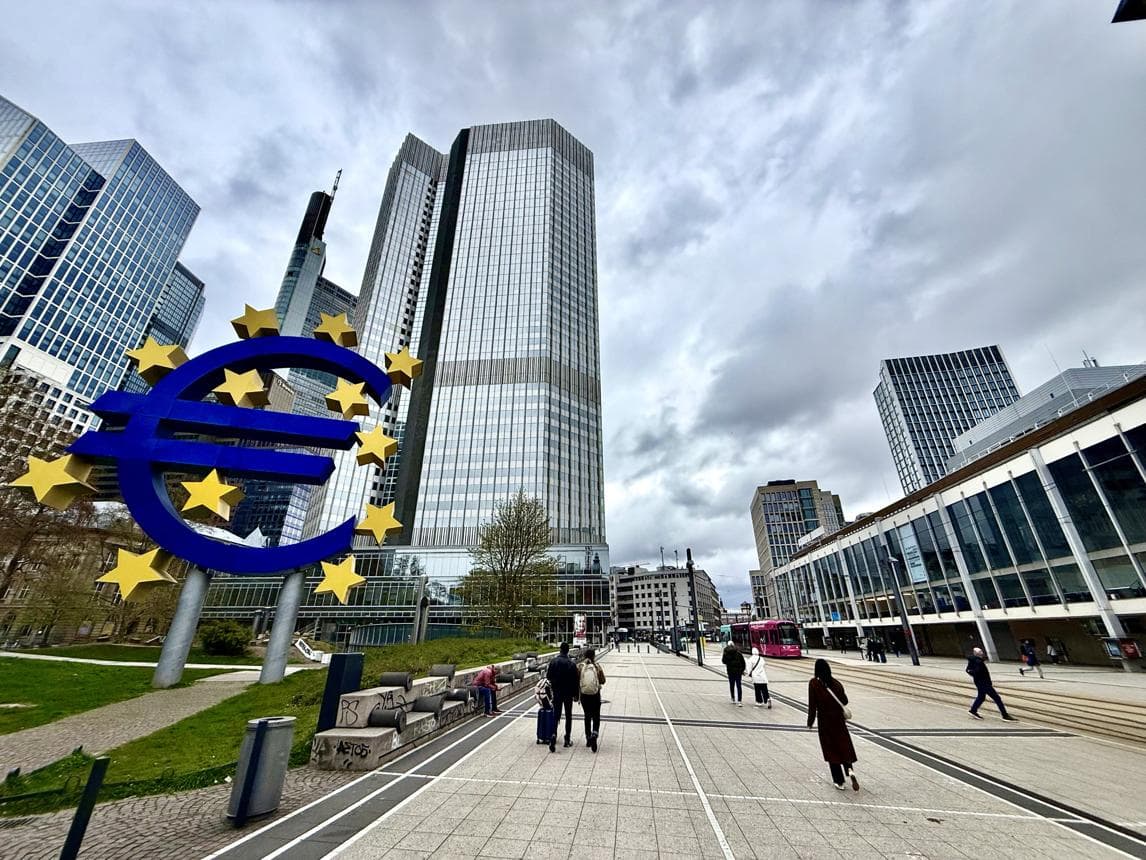
Vilnius: Households in the Lithuanian capital have watched borrowing costs turn upward again after years of relief, and they are not alone. The European Central Bank is weighing whether to lift interest rates once more when its governing council meets later this month.
The bank returns to the question on 23 July, six weeks after it raised its three key rates by a quarter point, the first increase since 2023. That June move lifted the deposit rate to 2.25 percent and reflected a bank suddenly worried less about weak growth than about prices that refuse to settle. The bank published its statement here.
The trigger is energy. Conflict in the Middle East has pushed oil and gas prices higher, and the bank’s economists expect that shock to seep into food, goods and services over the coming year. Their latest projections put headline inflation at an average of 3.0 percent in 2026, well above the 2 percent target, before easing to 2.3 percent in 2027 and back to target in 2028.
That path leaves the governing council with an uncomfortable choice. Move again in July and it risks choking a recovery that remains fragile across much of the bloc. Hold steady and it risks letting expectations of higher prices harden into wage demands and pricing decisions that prove far harder to reverse.
The pain is uneven. For borrowers in Vilnius, Riga and other markets where variable-rate mortgages dominate, every quarter point lands quickly on monthly repayments. Savers, by contrast, finally earn something on their deposits after a long drought. Governments carrying heavy debts face steeper interest bills just as they try to fund defence and green investment.
President Christine Lagarde has stressed that decisions will follow the data, meeting by meeting, rather than a fixed plan. That caution gives the bank room to pause if energy prices calm, or to press on if inflation proves stubborn. Markets have leaned toward a hold in July followed by a close watch on the autumn, though few forecasters sound confident.
What is clear is that the era of ever-cheaper money has ended for now. After a decade in which the central bank fought to lift inflation, it once again finds itself fighting to hold it down, and the households of the eurozone will feel the outcome long before the economists agree on it.