August 9, 2026
LATEST
New EU Gas Market Rules Take Effect With Consumer SafeguardsDeforestation Regulation Holds Its December Deadline Despite CutsDigital Omnibus Delays Europe’s High-Risk AI Deadline to 2027Europe’s Schools Confront a Widening Basic Skills GapRule of Law Report Finds Progress but Trust Still LagsIRIS2 Gains 66 Satellites as Brussels Signs the Rollout DealNature Restoration Plans Come Due as Member States Race a DeadlineECB Rates Hold at 2.25 Percent as Frankfurt Waits on the DataEU Budget Talks Turn to Cohesion as Ireland Takes OverWildfire Response Stretches Europe’s Emergency Fleet ThinCan Europe’s Quantum Plan Match Its Big Ambitions?Armenia Edges West as Moscow’s Grip Slips AwayEurope Inherits the World’s Aid Bill It Cannot Fully PayAir Passenger Rights Get Their First Overhaul in Two DecadesErasmus Opens a 5 Billion Euro Round for Skills and MobilityCeuta Crisis Pushes the EU Toward Faster Migrant ReturnsBulky Parcels Face a Packaging Crackdown From August 12Can Europe Build Its Drone Wall Before 2030 Arrives?Indonesia’s Trade Deal With Europe Nears Its Final SignatureEurope Leans on Beijing to Keep Climate Talks Alive Before AntalyaNew EU Gas Market Rules Take Effect With Consumer SafeguardsDeforestation Regulation Holds Its December Deadline Despite CutsDigital Omnibus Delays Europe’s High-Risk AI Deadline to 2027Europe’s Schools Confront a Widening Basic Skills GapRule of Law Report Finds Progress but Trust Still LagsIRIS2 Gains 66 Satellites as Brussels Signs the Rollout DealNature Restoration Plans Come Due as Member States Race a DeadlineECB Rates Hold at 2.25 Percent as Frankfurt Waits on the DataEU Budget Talks Turn to Cohesion as Ireland Takes OverWildfire Response Stretches Europe’s Emergency Fleet ThinCan Europe’s Quantum Plan Match Its Big Ambitions?Armenia Edges West as Moscow’s Grip Slips AwayEurope Inherits the World’s Aid Bill It Cannot Fully PayAir Passenger Rights Get Their First Overhaul in Two DecadesErasmus Opens a 5 Billion Euro Round for Skills and MobilityCeuta Crisis Pushes the EU Toward Faster Migrant ReturnsBulky Parcels Face a Packaging Crackdown From August 12Can Europe Build Its Drone Wall Before 2030 Arrives?Indonesia’s Trade Deal With Europe Nears Its Final SignatureEurope Leans on Beijing to Keep Climate Talks Alive Before Antalya
August 9, 2026
LATEST
New EU Gas Market Rules Take Effect With Consumer SafeguardsDeforestation Regulation Holds Its December Deadline Despite CutsDigital Omnibus Delays Europe’s High-Risk AI Deadline to 2027Europe’s Schools Confront a Widening Basic Skills GapRule of Law Report Finds Progress but Trust Still LagsIRIS2 Gains 66 Satellites as Brussels Signs the Rollout DealNature Restoration Plans Come Due as Member States Race a DeadlineECB Rates Hold at 2.25 Percent as Frankfurt Waits on the DataEU Budget Talks Turn to Cohesion as Ireland Takes OverWildfire Response Stretches Europe’s Emergency Fleet ThinCan Europe’s Quantum Plan Match Its Big Ambitions?Armenia Edges West as Moscow’s Grip Slips AwayEurope Inherits the World’s Aid Bill It Cannot Fully PayAir Passenger Rights Get Their First Overhaul in Two DecadesErasmus Opens a 5 Billion Euro Round for Skills and MobilityCeuta Crisis Pushes the EU Toward Faster Migrant ReturnsBulky Parcels Face a Packaging Crackdown From August 12Can Europe Build Its Drone Wall Before 2030 Arrives?Indonesia’s Trade Deal With Europe Nears Its Final SignatureEurope Leans on Beijing to Keep Climate Talks Alive Before AntalyaNew EU Gas Market Rules Take Effect With Consumer SafeguardsDeforestation Regulation Holds Its December Deadline Despite CutsDigital Omnibus Delays Europe’s High-Risk AI Deadline to 2027Europe’s Schools Confront a Widening Basic Skills GapRule of Law Report Finds Progress but Trust Still LagsIRIS2 Gains 66 Satellites as Brussels Signs the Rollout DealNature Restoration Plans Come Due as Member States Race a DeadlineECB Rates Hold at 2.25 Percent as Frankfurt Waits on the DataEU Budget Talks Turn to Cohesion as Ireland Takes OverWildfire Response Stretches Europe’s Emergency Fleet ThinCan Europe’s Quantum Plan Match Its Big Ambitions?Armenia Edges West as Moscow’s Grip Slips AwayEurope Inherits the World’s Aid Bill It Cannot Fully PayAir Passenger Rights Get Their First Overhaul in Two DecadesErasmus Opens a 5 Billion Euro Round for Skills and MobilityCeuta Crisis Pushes the EU Toward Faster Migrant ReturnsBulky Parcels Face a Packaging Crackdown From August 12Can Europe Build Its Drone Wall Before 2030 Arrives?Indonesia’s Trade Deal With Europe Nears Its Final SignatureEurope Leans on Beijing to Keep Climate Talks Alive Before Antalya

Counterfeit Truck Parts Seized as Europe’s Fraud Hunters Close In

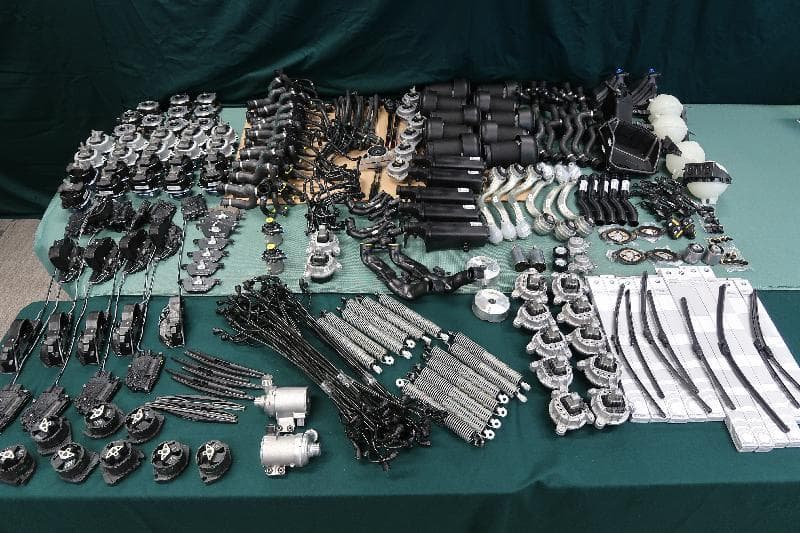
Porto: The brake pads, filters and steering components looked convincing enough to fool a busy mechanic. They were not. In early June, inspectors from Portugal’s Food and Economic Security Authority, acting on intelligence supplied by the European Anti-Fraud Office, pulled 14,629 counterfeit truck parts worth more than 600,000 euros out of warehouses and supply chains before they could reach the road.

The haul is a small entry in a much larger ledger, but it captures a problem that has crept up on Europe’s regulators. Fake spare parts are no longer a curiosity of street markets. They move through the same logistics networks as legitimate goods, carry forged certification, and end up bolted onto vehicles whose drivers have no idea their brakes were never tested. The safety risk is obvious; the financial damage to the firms whose brands are copied is quieter but substantial.

The seizure illustrates how the anti-fraud office has shifted its role. It cannot make arrests or prosecute. Instead it functions as a coordinator and an intelligence hub, feeding national authorities the cross-border leads that a single member state, looking only at its own ports, would struggle to assemble. A shipment that looks innocuous in one country becomes suspicious once it is read alongside customs data from three others.

That method underpinned the office’s annual results. In its report covering 2025, published in April, it recommended the recovery of close to 600 million euros in misused or fraudulently obtained funds and said its work had prevented a further 18 million euros from being wrongly spent. It closed 209 investigations over the year and opened 254 new ones, spanning customs violations, environmental fraud, the diversion of rural development money and illicit trade.

Counterfeiting sits awkwardly across several of those categories at once. It cheats consumers, deprives legitimate manufacturers of revenue, and frequently travels with customs fraud, since fake goods rarely arrive with honest paperwork. For that reason the office has leaned harder on its relationships with national enforcement bodies and on the analytical tools it showcased earlier in the month, when it presented new techniques in intelligence analysis to partner agencies.

The limits of the model remain real. Recommendations are not recoveries; money that is flagged must still be clawed back by the Commission or member states, a process that can stall for years. Critics inside the European Parliament have long argued that the gap between what is recommended and what is actually recovered is too wide, and that the office needs sharper teeth to follow its cases through.

For now, the truck parts will be destroyed rather than sold, and the Portuguese investigation continues. The episode is a reminder that the Union’s fight against fraud is rarely won in headline cases. It is won, slowly, in warehouses, through the unglamorous work of matching one country’s shipping manifest against another’s, until a pattern finally gives the counterfeiters away.