August 9, 2026
LATEST
New EU Gas Market Rules Take Effect With Consumer SafeguardsDeforestation Regulation Holds Its December Deadline Despite CutsDigital Omnibus Delays Europe’s High-Risk AI Deadline to 2027Europe’s Schools Confront a Widening Basic Skills GapRule of Law Report Finds Progress but Trust Still LagsIRIS2 Gains 66 Satellites as Brussels Signs the Rollout DealNature Restoration Plans Come Due as Member States Race a DeadlineECB Rates Hold at 2.25 Percent as Frankfurt Waits on the DataEU Budget Talks Turn to Cohesion as Ireland Takes OverWildfire Response Stretches Europe’s Emergency Fleet ThinCan Europe’s Quantum Plan Match Its Big Ambitions?Armenia Edges West as Moscow’s Grip Slips AwayEurope Inherits the World’s Aid Bill It Cannot Fully PayAir Passenger Rights Get Their First Overhaul in Two DecadesErasmus Opens a 5 Billion Euro Round for Skills and MobilityCeuta Crisis Pushes the EU Toward Faster Migrant ReturnsBulky Parcels Face a Packaging Crackdown From August 12Can Europe Build Its Drone Wall Before 2030 Arrives?Indonesia’s Trade Deal With Europe Nears Its Final SignatureEurope Leans on Beijing to Keep Climate Talks Alive Before AntalyaNew EU Gas Market Rules Take Effect With Consumer SafeguardsDeforestation Regulation Holds Its December Deadline Despite CutsDigital Omnibus Delays Europe’s High-Risk AI Deadline to 2027Europe’s Schools Confront a Widening Basic Skills GapRule of Law Report Finds Progress but Trust Still LagsIRIS2 Gains 66 Satellites as Brussels Signs the Rollout DealNature Restoration Plans Come Due as Member States Race a DeadlineECB Rates Hold at 2.25 Percent as Frankfurt Waits on the DataEU Budget Talks Turn to Cohesion as Ireland Takes OverWildfire Response Stretches Europe’s Emergency Fleet ThinCan Europe’s Quantum Plan Match Its Big Ambitions?Armenia Edges West as Moscow’s Grip Slips AwayEurope Inherits the World’s Aid Bill It Cannot Fully PayAir Passenger Rights Get Their First Overhaul in Two DecadesErasmus Opens a 5 Billion Euro Round for Skills and MobilityCeuta Crisis Pushes the EU Toward Faster Migrant ReturnsBulky Parcels Face a Packaging Crackdown From August 12Can Europe Build Its Drone Wall Before 2030 Arrives?Indonesia’s Trade Deal With Europe Nears Its Final SignatureEurope Leans on Beijing to Keep Climate Talks Alive Before Antalya
August 9, 2026
LATEST
New EU Gas Market Rules Take Effect With Consumer SafeguardsDeforestation Regulation Holds Its December Deadline Despite CutsDigital Omnibus Delays Europe’s High-Risk AI Deadline to 2027Europe’s Schools Confront a Widening Basic Skills GapRule of Law Report Finds Progress but Trust Still LagsIRIS2 Gains 66 Satellites as Brussels Signs the Rollout DealNature Restoration Plans Come Due as Member States Race a DeadlineECB Rates Hold at 2.25 Percent as Frankfurt Waits on the DataEU Budget Talks Turn to Cohesion as Ireland Takes OverWildfire Response Stretches Europe’s Emergency Fleet ThinCan Europe’s Quantum Plan Match Its Big Ambitions?Armenia Edges West as Moscow’s Grip Slips AwayEurope Inherits the World’s Aid Bill It Cannot Fully PayAir Passenger Rights Get Their First Overhaul in Two DecadesErasmus Opens a 5 Billion Euro Round for Skills and MobilityCeuta Crisis Pushes the EU Toward Faster Migrant ReturnsBulky Parcels Face a Packaging Crackdown From August 12Can Europe Build Its Drone Wall Before 2030 Arrives?Indonesia’s Trade Deal With Europe Nears Its Final SignatureEurope Leans on Beijing to Keep Climate Talks Alive Before AntalyaNew EU Gas Market Rules Take Effect With Consumer SafeguardsDeforestation Regulation Holds Its December Deadline Despite CutsDigital Omnibus Delays Europe’s High-Risk AI Deadline to 2027Europe’s Schools Confront a Widening Basic Skills GapRule of Law Report Finds Progress but Trust Still LagsIRIS2 Gains 66 Satellites as Brussels Signs the Rollout DealNature Restoration Plans Come Due as Member States Race a DeadlineECB Rates Hold at 2.25 Percent as Frankfurt Waits on the DataEU Budget Talks Turn to Cohesion as Ireland Takes OverWildfire Response Stretches Europe’s Emergency Fleet ThinCan Europe’s Quantum Plan Match Its Big Ambitions?Armenia Edges West as Moscow’s Grip Slips AwayEurope Inherits the World’s Aid Bill It Cannot Fully PayAir Passenger Rights Get Their First Overhaul in Two DecadesErasmus Opens a 5 Billion Euro Round for Skills and MobilityCeuta Crisis Pushes the EU Toward Faster Migrant ReturnsBulky Parcels Face a Packaging Crackdown From August 12Can Europe Build Its Drone Wall Before 2030 Arrives?Indonesia’s Trade Deal With Europe Nears Its Final SignatureEurope Leans on Beijing to Keep Climate Talks Alive Before Antalya

Farmers Win New Shield Against Cross-Border Supermarket Abuse

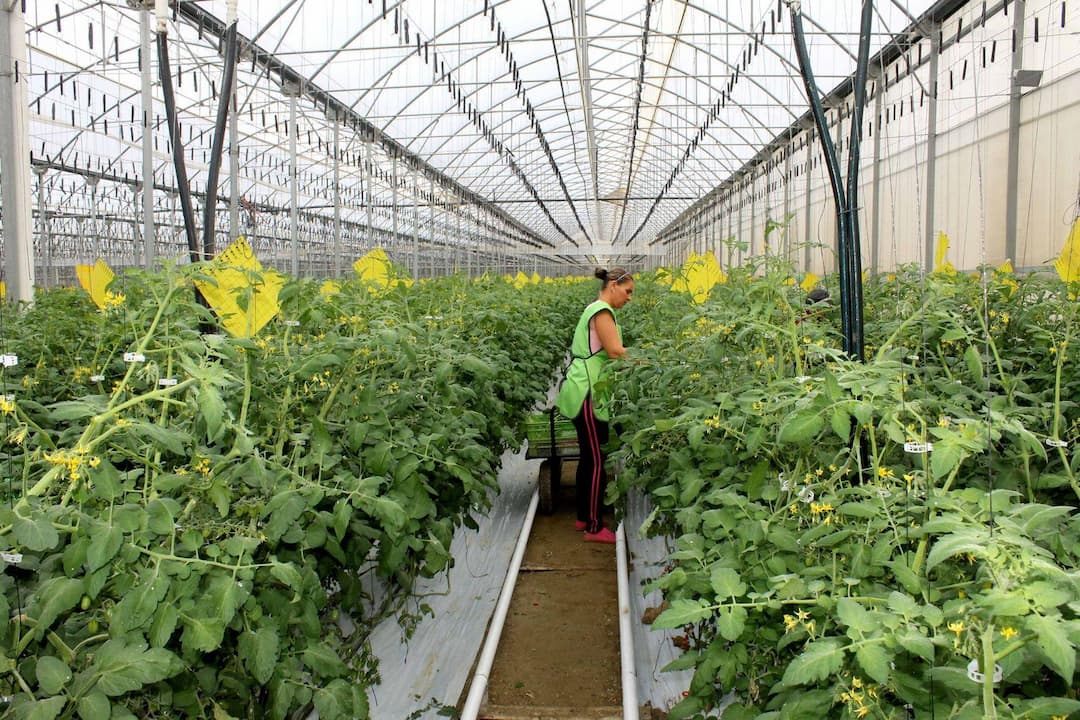
Almeria: In the plastic sea of greenhouses that supplies much of northern Europe with winter tomatoes and peppers, growers have long complained that the real money is made somewhere else entirely. A truckload of produce that fetches a few cents per kilo at the farm gate sells for several times that on a supermarket shelf in Hamburg or Rotterdam, and when a buyer in another country cancels an order at short notice or pays months late, the producer has had little recourse. A new EU regulation aims to close that gap.

The Council formally adopted rules on 5 March 2026 to combat cross-border unfair trading practices in the agricultural and food supply chain, completing a legislative file that the European Parliament had backed by an emphatic 555 votes to none, with 26 abstentions. The new law builds on the 2019 Unfair Trading Practices Directive, which banned conduct such as late payments, last-minute order cancellations and unilateral contract changes, but which proved difficult to police once a buyer and a seller sat in different member states.

The cross-border dimension is far from marginal. Roughly a fifth of the agricultural and food products consumed in the Union are produced in another member state, which means a large share of Europe’s grocery trade fell into an enforcement grey zone. A Spanish enforcement authority investigating a complaint about a German retailer faced jurisdictional limits and slow channels of cooperation; producers, often small and seasonal, rarely had the appetite to pursue a complaint across a border.

The regulation tries to remove those frictions in two ways. First, it obliges national enforcement authorities to cooperate, share information and assist one another when an abusive practice spans more than one country. Second, and more significantly, it allows authorities to act on their own initiative, opening and pursuing a case without waiting for a formal complaint from an aggrieved producer. That matters because fear of retaliation has always been the quiet reason farmers stay silent: a supplier who reports a powerful buyer risks losing the contract altogether.

For producing regions such as this one, the practical question is whether the new powers translate into faster payments and steadier orders. The legislation does not set prices or guarantee margins, and critics note that it addresses conduct rather than the underlying imbalance of bargaining power between fragmented farmers and concentrated retail chains. Supermarket groups, for their part, argue that competition keeps food affordable for consumers already squeezed by years of elevated prices, and warn against rules that raise compliance costs.

The Commission has framed the measure as one piece of a broader agenda to strengthen the farmer’s position in the supply chain, alongside earlier moves on written contracts and clearer rules for labelling products as fair. Implementation now falls to member states, which must designate and resource the authorities expected to wield the new powers. An implementation dialogue held in early March underlined that the law will only be as effective as the inspectors behind it.

For the growers of this corner of southern Europe, accustomed to watching value accrue downstream, the test will be felt at the bank rather than in the statute book. If a late payment from a foreign buyer now triggers an investigation that the producer never had to request, the regulation will have changed something real. If enforcement remains patchy and under-funded, it will join a long list of well-intentioned rules that looked better on paper than in the field.