Brussels: EU customs reform cleared its last legislative hurdle on 29 September 2026, when the European Parliament gave final approval to the most far-reaching overhaul of customs law since the Customs Union began. The Council had approved the text on 4 September, so the regulation now awaits signature and publication in the Official Journal. It enters into force the day after publication.
The Commission launched the proposal in May 2023, and the institutions needed more than three years to finish it. Most provisions will apply 12 months after entry into force, which gives traders and national administrations roughly one year to prepare. The Commission still has to adopt the delegated and implementing acts that fill in the technical detail of the EU customs reform.
The centrepiece is the EU Customs Data Hub, a central point where traders and customs authorities exchange data. It is meant to replace up to 27 national systems and let traders reuse data across consignments. The hub applies from 1 July 2028 to business-to-business e-commerce consignments, becomes available voluntarily to other traders from 1 March 2031, and turns mandatory for all importers from 1 March 2034.
A new EU Customs Authority, based in Lille, will oversee the hub and develop EU-level risk analysis and coordination. It is expected to start operations in 2027. National authorities keep responsibility for enforcement, so the reform moves data and risk analysis to the EU level without moving officers away from the border.
E-commerce sits at the heart of the package. Non-EU online platforms will count as the importer, which means they must handle customs formalities and pay duties themselves. Penalties for non-compliance include fines of up to 6% of the prior year’s annual import value, the loss of customs privileges and restrictions on access to online platforms.
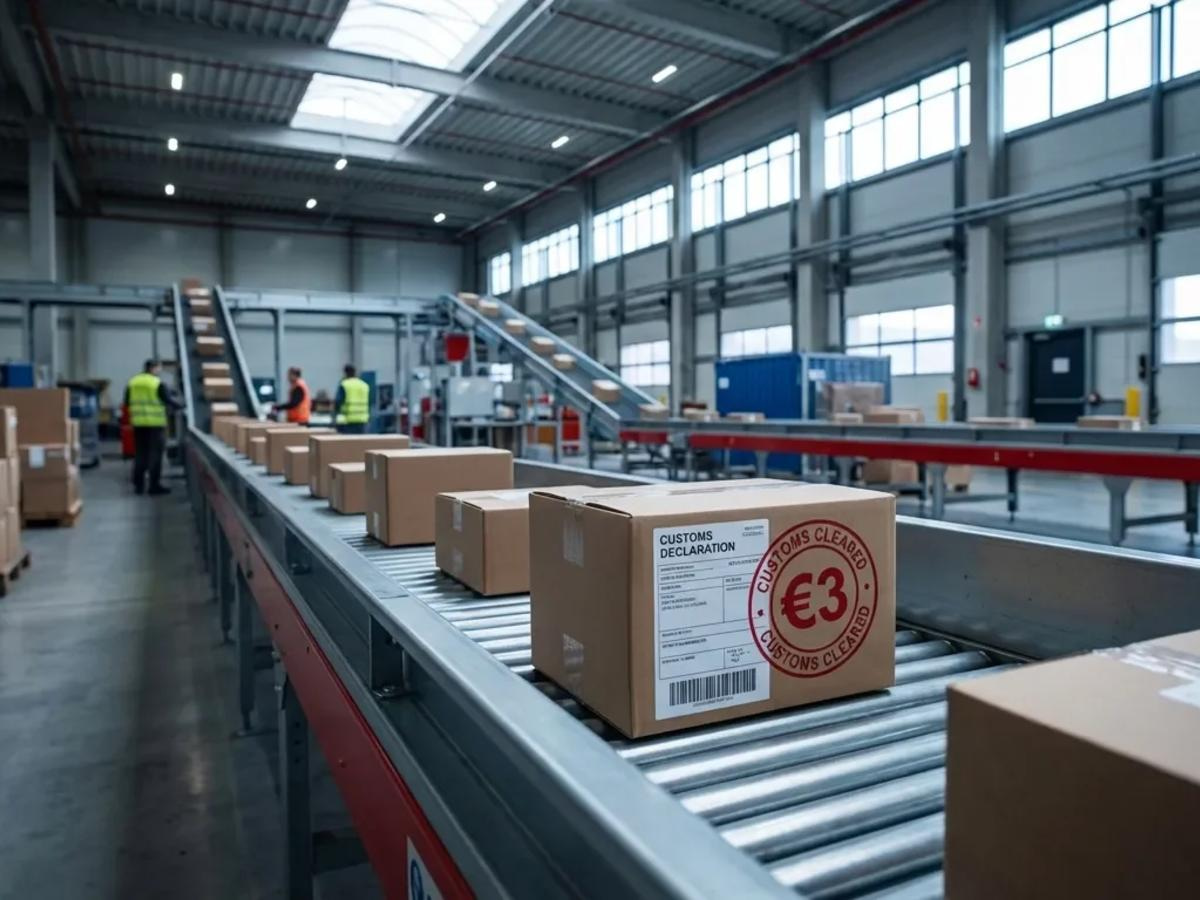
The small-parcel rules move first. A flat €3 duty on goods worth less than €150 is a transitional measure that lasts only until the Data Hub is operational on 1 July 2028. An EU-wide handling fee on small parcels is due by 1 November 2026, only days away, and it will show how quickly customs administrations can put the new scheme into practice.
For logistics firms, the EU customs reform changes the daily routine from filing declarations country by country to feeding one shared data environment. That promise explains why the Commission and the Council pushed the file for so long, and why traders lobbied on the details of the data fields. The reform can only succeed if 27 national administrations stop operating as 27 separate systems.
The package also answers a political worry. Policymakers have watched the surge of low-value parcels from non-EU platforms, and the importer status for those platforms gives customs authorities one party to hold to account. The transitional duty and the handling fee address the problem in the short term, while the EU customs reform and its data hub address it in the long term.
Businesses should treat the coming months as a planning window. Importers, platforms and logistics firms will study the delegated and implementing acts for details on data fields and penalties. Whether the EU customs reform delivers one coherent border will depend on how well those acts line up with the national systems that the data hub is meant to retire.