Kaunas: The argument over the next European budget has moved past headline numbers and settled on a harder question. Where does the money come from, and who notices when it leaves.
The Commission wants five new own resources inside the 2028 to 2034 framework, together raising roughly 58.2 billion euros a year. Three of them attach to existing policy machinery. Revenue from the emissions trading system and from the carbon border adjustment mechanism would flow partly to the common budget rather than entirely to national treasuries. A resource built on electrical and electronic waste adds a third strand.
The two remaining proposals are politically heavier. TEDOR would channel a share of tobacco excise duty upward. CORE, the corporate resource, would apply to companies with net annual turnover above 100 million euros, a threshold designed to spare small firms and to fall mainly on large operators that already trade across borders.
Own resources matter because the alternative is national contributions calculated from gross national income, which turns every budget round into a net-payer argument. Governments that write large cheques demand rebates. Governments that receive transfers defend them. The dispute consumes the negotiation and crowds out any discussion of what the money actually buys.
Parliament has pushed consistently for genuine own resources and adopted an interim report in May calling for a more ambitious framework than the Commission tabled. The Parliament research service tracks the file in detail, and its analysis notes that own resources decisions require unanimity plus ratification in every national parliament, a bar that has defeated ambitious revenue proposals before.
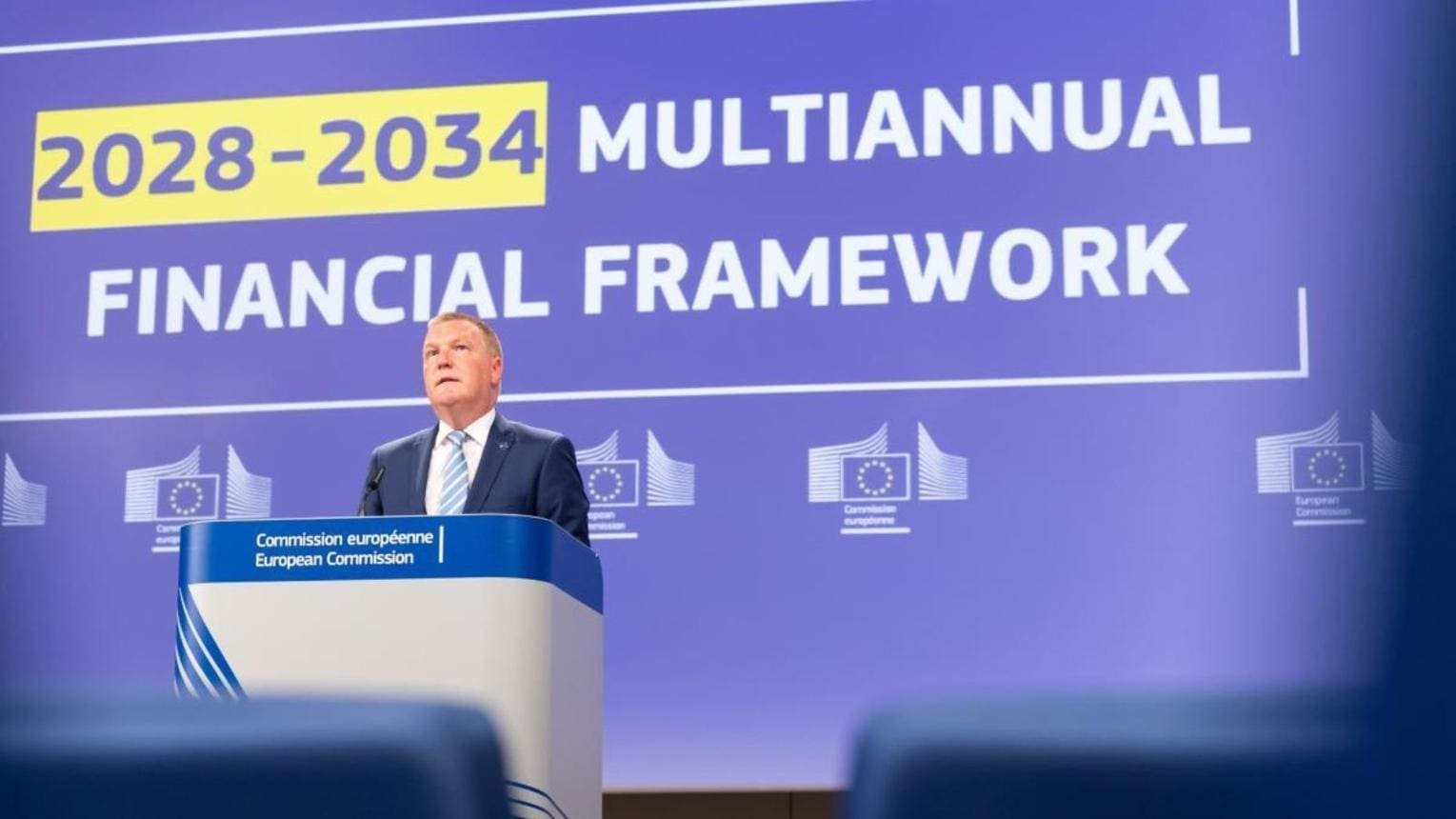
Three issues stay open across the whole negotiation: the overall size of the budget, the architecture of the structural funds, and precisely these new revenue sources. The Irish presidency took office in July with instructions to advance the negotiating box before the October summit, aiming at agreement by the end of the year so that spending programmes can start on schedule in January 2028.
Finance ministries in several capitals treat the corporate resource with visible suspicion. They read it as a tax on companies headquartered in their jurisdictions, collected for a budget they do not control. Commission officials counter that the base is turnover generated across the single market, not profit attributed to any one country, and that the design deliberately avoids touching national corporate tax rates.
Tobacco excise raises a different objection. Public health advocates welcome higher duties. Member states with large cross-border tobacco flows worry about smuggling incentives, and about handing a revenue stream to Brussels that they currently use to plug domestic gaps.
None of this resolves before autumn. If the own resources package fails, the framework still passes, funded the old way, and the argument about who pays what returns in 2034.