Frascati: The European Union’s space industrial complex moved a step closer to permanence this spring as the College of Commissioners signed off in early April on a legislative package designed to anchor the EU Agency for the Space Programme into the Union’s statute book without further renewals. The proposal, transmitted from the Berlaymont to Parliament and Council on 7 April, would replace the agency’s current renewable mandate with an open-ended legal footing, lifting EUSPA from a temporary fixture into an institutional actor with full operational responsibility over the bloc’s flagship orbital assets.
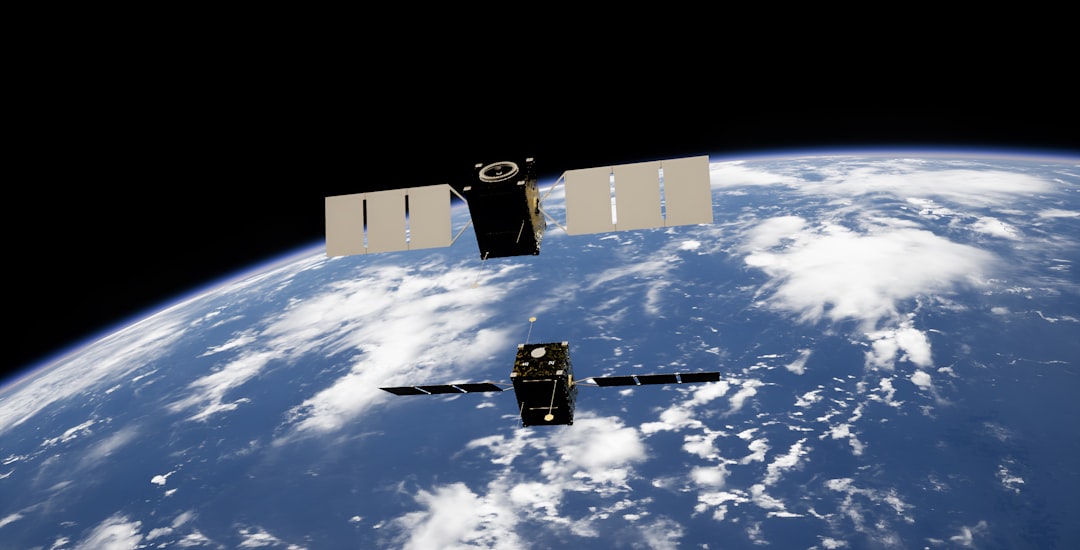
For the engineers working out of the ESRIN campus south of Rome and the Galileo control hub at Fucino, the timing carries weight. Deployment of IRIS², the third pillar of the EU Space Programme after Galileo and Copernicus, is now passing from procurement phase into delivery. Member States and the Commission expect 264 satellites in low Earth orbit at an altitude of 1,200 kilometres and 18 satellites in medium Earth orbit at 8,000 kilometres to be in place by 2027, with EUSPA designated to handle service provision once operational. The ESA branch in Frascati continues to oversee the technical architecture; EUSPA picks up the certification, downstream user interface, and security governance.
That division of labour, long disputed, becomes harder to unwind once the agency’s permanent statute clears the legislative pipeline. The Commission’s accompanying memorandum acknowledges that without a stable mandate, the contractual horizon for downstream contractors becomes shorter than the lifecycle of the satellites they integrate. Several large primes had raised the issue during the IRIS² procurement round, warning that the absence of a permanent service operator created uncertainty in the long-tail maintenance contracts that follow constellation deployment.
The proposal also reflects a defence pivot that has hardened over the past eighteen months. EUSPA’s remit, once narrowly framed around the civilian Galileo navigation signal and Copernicus Earth observation feeds, now stretches into secure communications under GOVSATCOM, encrypted PRS access for sensitive users, and an emerging awareness function tied to Member State security agencies. Commission staff have been clear in briefings that the dual-use trajectory will continue: a permanent agency makes it easier to embed classified service requirements into the standing programme rather than negotiating each contract through ad hoc instruments.
Parliament’s industry committee is expected to take the file on a fast track once the rapporteur is appointed before the summer recess. Among the lawmakers most engaged are members from countries hosting major space industrial sites, including Italy, France, Germany and Spain. National space agencies have signalled support but pressed for explicit guarantees that the EUSPA permanent mandate will not erode the role of national programmes, a sensitivity that has shaped every space file at the Union level since the Galileo design decisions of the late 2010s.
Outside the institutional question, the GOVSATCOM hub at the Spanish capital went live earlier this year under industrial leadership from GMV, marking the first time the Union has operated a sovereign secure satellite communications hub at the federal level. That milestone forms part of the operational backdrop against which the legislative proposal is being read. The combination, a live secure-communications hub, a constellation in deployment, and a draft statute giving EUSPA permanent status, points to a space programme that is no longer in build mode but in transition to full operations.
Whether the proposal lands before the end of the legislative term will depend on Council appetite. Several capitals have indicated readiness to move quickly. Others, with sensitivities about agency proliferation, may seek to extract concessions on governance.