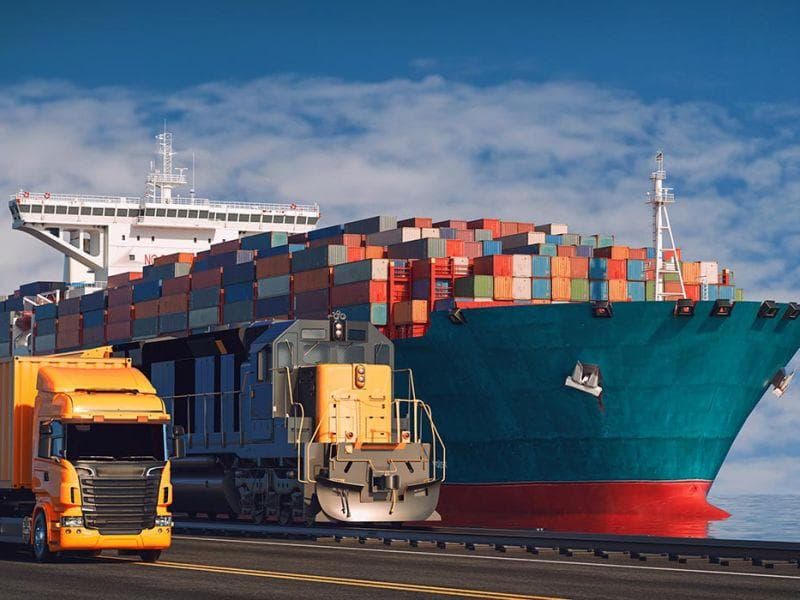
Hamburg: For years, comparing the carbon footprint of moving a container by ship, truck or train has been a guessing game, with every operator using its own assumptions and few numbers worth trusting. That changed at the start of June, when a common EU framework for calculating greenhouse-gas emissions from transport took effect, giving freight and passenger services a single, standardised method for measuring and reporting their climate impact.
The rules establish, for the first time across the bloc, an agreed way to quantify the emissions of a journey or a shipment, drawing on the international methodology that the logistics industry has been converging on. Rather than mandating an overnight cut in emissions, the framework attacks a more basic problem: the absence of comparable data. A retailer choosing between road and rail, a manufacturer reporting its supply-chain footprint, or a traveller weighing a flight against a train have until now confronted figures built on incompatible foundations. Harmonising the calculation is meant to make those comparisons meaningful and to make claims auditable.
The logic is that better measurement drives better choices. Once shippers can see, on a like-for-like basis, that one mode or route emits markedly less than another, the cleaner option becomes commercially visible in a way it rarely was before. Investors and large corporate customers increasingly demand credible emissions accounting from their suppliers, and a patchwork of self-devised methods has left that demand poorly served. A common standard also guards against a subtler risk: operators flattering their own numbers by quietly choosing favourable assumptions.
The framework dovetails with the bloc’s wider push to decarbonise a sector that has proved stubbornly resistant to emissions cuts. Transport remains one of the few parts of the European economy where greenhouse-gas output has barely fallen, and policymakers have leaned on a battery of measures, from extending carbon pricing to shipping to tightening fuel standards, to shift the curve. Reliable, standardised data underpins all of it; without trustworthy measurement, neither pricing signals nor efficiency targets can be properly enforced or evaluated.
For businesses, the early phase is largely about systems and capacity. Companies will need to gather activity data, apply the common methodology and integrate the results into the sustainability reporting many already file. Smaller operators may lean on freight platforms and software providers to do the calculation for them. Industry groups have broadly welcomed the clarity a single method brings, while cautioning that the value of the exercise depends on the quality of the underlying data fed into it.
The framework stops short of forcing anyone to publish or act on the figures in every case, which critics say blunts its impact. Its defenders argue that creating a trusted yardstick is the necessary first step, and that disclosure pressure from customers, investors and regulators will do the rest. Either way, Europe now has a common language for the carbon cost of getting goods and people from one place to another, something it has conspicuously lacked.