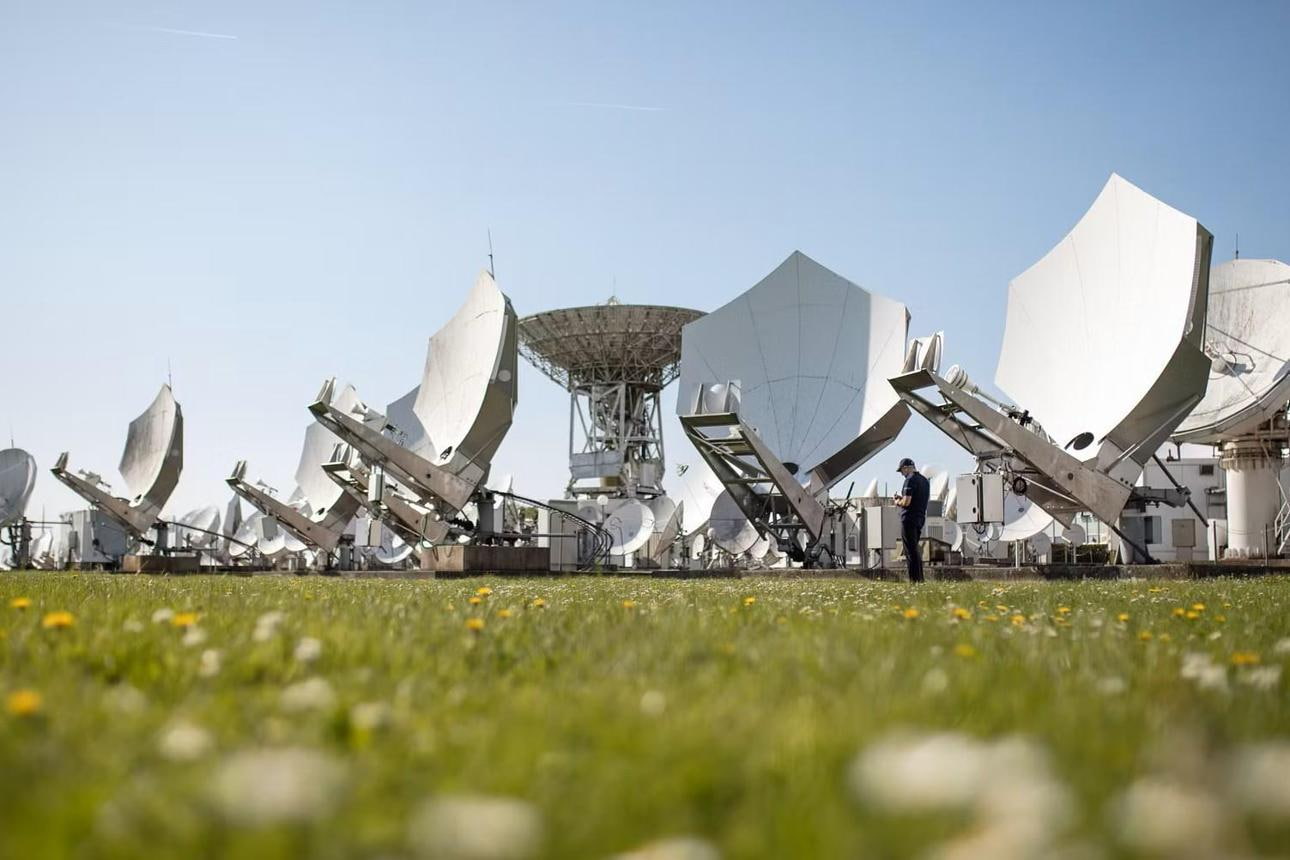
Cologne: Germany broke ground in June on a ground station that will help anchor Europe’s most ambitious space venture yet, a secure-communications hub in Cologne that forms part of the governmental backbone leading to the bloc’s IRIS2 satellite constellation. The facility is one of two planned physical nodes through which governments will route protected satellite traffic, and its construction marks a shift from paperwork and procurement to concrete and steel for a programme that has until now existed mostly on the drawing board.
IRIS2, shorthand for Infrastructure for Resilience, Interconnectivity and Security by Satellite, is the European Union’s third space flagship after the Galileo navigation system and the Copernicus earth-observation programme. Conceived as a sovereign answer to the private mega-constellations reshaping global connectivity, it is designed to deliver secure government communications and commercial broadband from a multi-orbit fleet of 264 satellites in low Earth orbit and 18 in medium orbit. The 10.6 billion euro effort is meant to guarantee that European institutions, armed forces and remote regions can stay connected without depending on infrastructure controlled outside the continent.
The governmental strand is the piece that matters most to member-state capitals, since it pools and shares secure satellite capacity for missions ranging from border surveillance and crisis response to military operations. The Cologne hub, together with a second facility, provides the terrestrial anchor points that make that pooling possible, connecting national users to the shared space assets under a common security umbrella. Breaking ground on the German site signals that the programme’s early services can begin to take shape even as the far larger satellite constellation remains years from full deployment.
That gap between ambition and delivery is the programme’s central challenge. The project timeline foresees design and development running to 2028, deployment across 2029 and 2030, and full exploitation only from 2030 through 2037, a schedule that leaves little room for the delays that have dogged past European space efforts. The partnership behind the constellation must build and launch hundreds of satellites on time and on budget, no small feat given the cost overruns that have troubled comparable ventures, while private rivals continue to expand their own networks at speed.
Supporters argue that the strategic case is unanswerable, that a bloc which depends on others for something as fundamental as secure communications is exposed in a way recent geopolitical shocks have made painfully clear. Sceptics question whether a publicly steered programme can move fast enough to matter, and whether 10.6 billion euros is the wisest way to close a gap that commercial providers are filling regardless. The ground breaking in Cologne will not settle that argument, but it does move IRIS2 a step closer from ambition toward orbit.