August 9, 2026
LATEST
New EU Gas Market Rules Take Effect With Consumer SafeguardsDeforestation Regulation Holds Its December Deadline Despite CutsDigital Omnibus Delays Europe’s High-Risk AI Deadline to 2027Europe’s Schools Confront a Widening Basic Skills GapRule of Law Report Finds Progress but Trust Still LagsIRIS2 Gains 66 Satellites as Brussels Signs the Rollout DealNature Restoration Plans Come Due as Member States Race a DeadlineECB Rates Hold at 2.25 Percent as Frankfurt Waits on the DataEU Budget Talks Turn to Cohesion as Ireland Takes OverWildfire Response Stretches Europe’s Emergency Fleet ThinCan Europe’s Quantum Plan Match Its Big Ambitions?Armenia Edges West as Moscow’s Grip Slips AwayEurope Inherits the World’s Aid Bill It Cannot Fully PayAir Passenger Rights Get Their First Overhaul in Two DecadesErasmus Opens a 5 Billion Euro Round for Skills and MobilityCeuta Crisis Pushes the EU Toward Faster Migrant ReturnsBulky Parcels Face a Packaging Crackdown From August 12Can Europe Build Its Drone Wall Before 2030 Arrives?Indonesia’s Trade Deal With Europe Nears Its Final SignatureEurope Leans on Beijing to Keep Climate Talks Alive Before AntalyaNew EU Gas Market Rules Take Effect With Consumer SafeguardsDeforestation Regulation Holds Its December Deadline Despite CutsDigital Omnibus Delays Europe’s High-Risk AI Deadline to 2027Europe’s Schools Confront a Widening Basic Skills GapRule of Law Report Finds Progress but Trust Still LagsIRIS2 Gains 66 Satellites as Brussels Signs the Rollout DealNature Restoration Plans Come Due as Member States Race a DeadlineECB Rates Hold at 2.25 Percent as Frankfurt Waits on the DataEU Budget Talks Turn to Cohesion as Ireland Takes OverWildfire Response Stretches Europe’s Emergency Fleet ThinCan Europe’s Quantum Plan Match Its Big Ambitions?Armenia Edges West as Moscow’s Grip Slips AwayEurope Inherits the World’s Aid Bill It Cannot Fully PayAir Passenger Rights Get Their First Overhaul in Two DecadesErasmus Opens a 5 Billion Euro Round for Skills and MobilityCeuta Crisis Pushes the EU Toward Faster Migrant ReturnsBulky Parcels Face a Packaging Crackdown From August 12Can Europe Build Its Drone Wall Before 2030 Arrives?Indonesia’s Trade Deal With Europe Nears Its Final SignatureEurope Leans on Beijing to Keep Climate Talks Alive Before Antalya
August 9, 2026
LATEST
New EU Gas Market Rules Take Effect With Consumer SafeguardsDeforestation Regulation Holds Its December Deadline Despite CutsDigital Omnibus Delays Europe’s High-Risk AI Deadline to 2027Europe’s Schools Confront a Widening Basic Skills GapRule of Law Report Finds Progress but Trust Still LagsIRIS2 Gains 66 Satellites as Brussels Signs the Rollout DealNature Restoration Plans Come Due as Member States Race a DeadlineECB Rates Hold at 2.25 Percent as Frankfurt Waits on the DataEU Budget Talks Turn to Cohesion as Ireland Takes OverWildfire Response Stretches Europe’s Emergency Fleet ThinCan Europe’s Quantum Plan Match Its Big Ambitions?Armenia Edges West as Moscow’s Grip Slips AwayEurope Inherits the World’s Aid Bill It Cannot Fully PayAir Passenger Rights Get Their First Overhaul in Two DecadesErasmus Opens a 5 Billion Euro Round for Skills and MobilityCeuta Crisis Pushes the EU Toward Faster Migrant ReturnsBulky Parcels Face a Packaging Crackdown From August 12Can Europe Build Its Drone Wall Before 2030 Arrives?Indonesia’s Trade Deal With Europe Nears Its Final SignatureEurope Leans on Beijing to Keep Climate Talks Alive Before AntalyaNew EU Gas Market Rules Take Effect With Consumer SafeguardsDeforestation Regulation Holds Its December Deadline Despite CutsDigital Omnibus Delays Europe’s High-Risk AI Deadline to 2027Europe’s Schools Confront a Widening Basic Skills GapRule of Law Report Finds Progress but Trust Still LagsIRIS2 Gains 66 Satellites as Brussels Signs the Rollout DealNature Restoration Plans Come Due as Member States Race a DeadlineECB Rates Hold at 2.25 Percent as Frankfurt Waits on the DataEU Budget Talks Turn to Cohesion as Ireland Takes OverWildfire Response Stretches Europe’s Emergency Fleet ThinCan Europe’s Quantum Plan Match Its Big Ambitions?Armenia Edges West as Moscow’s Grip Slips AwayEurope Inherits the World’s Aid Bill It Cannot Fully PayAir Passenger Rights Get Their First Overhaul in Two DecadesErasmus Opens a 5 Billion Euro Round for Skills and MobilityCeuta Crisis Pushes the EU Toward Faster Migrant ReturnsBulky Parcels Face a Packaging Crackdown From August 12Can Europe Build Its Drone Wall Before 2030 Arrives?Indonesia’s Trade Deal With Europe Nears Its Final SignatureEurope Leans on Beijing to Keep Climate Talks Alive Before Antalya

Gig Platform Workers Edge Toward Employee Status as Clock Ticks

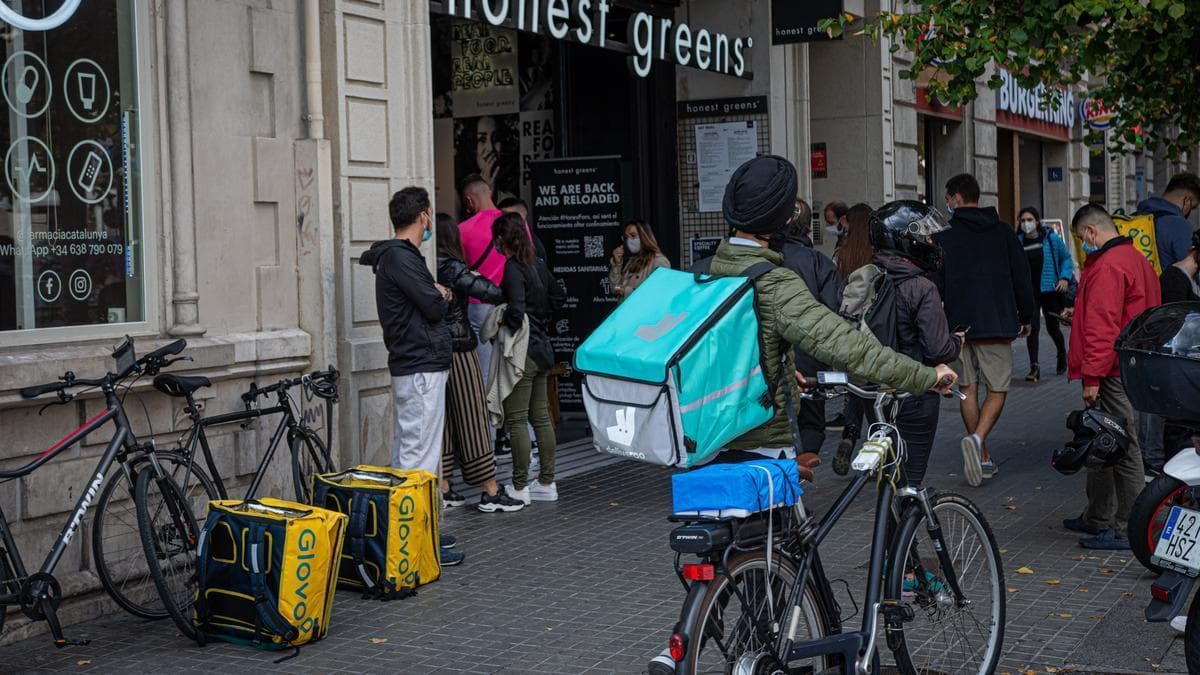
Barcelona: On the city’s congested avenues, the insulated boxes of food-delivery riders have become as much a fixture of the streetscape as the plane trees. Most of those riders are classified, on paper, as self-employed entrepreneurs running their own micro-businesses. A European law now bearing down on national governments is about to test whether that description survives contact with reality.

The Platform Work Directive, adopted by the Council in October 2024, must be written into the law of every member state by 2 December 2026. With the deadline now less than six months away, ministries across the bloc are racing to translate a politically fraught compromise into workable national rules, and the gap between the directive’s ambition and its drafting is becoming uncomfortably visible.

At the directive’s core is a single, deceptively simple idea: a rebuttable presumption of employment. Where the facts of a working relationship point to control and direction by a platform, the law will presume the worker is an employee rather than a contractor, and it falls to the company to prove otherwise. The original Commission proposal tried to anchor that presumption to a fixed checklist of criteria. National governments, wary of forcing reclassification on business models they did not fully understand, stripped out the rigid test and handed the definition of control back to each member state, to be read against national law, collective agreements and practice.

That concession is what makes the transposition phase so consequential. The same directive could, in practice, mean robust protection in one country and a hollow gesture in another, depending on how national legislators define the triggers for the presumption and how easily platforms can rebut it. Worker advocates fear a patchwork; platforms fear a wave of retroactive claims and social-security liabilities. Both are lobbying hard while the drafting is still wet.

The directive reaches beyond classification into territory that few labour laws have touched. It places limits on algorithmic management, the invisible systems that allocate shifts, score performance and, in some cases, terminate a worker’s account. Under the new rules a person cannot be dismissed by an automated decision alone; a human must be in the loop. Platforms are barred from processing certain categories of intimate data, including inferences about a worker’s emotional state, health or beliefs, and must give workers and their representatives meaningful information about how the algorithms that govern their day actually function.

For the millions who ride, drive and click their way through Europe’s platform economy, the practical stakes are immediate. Reclassification as an employee can unlock paid leave, minimum-wage guarantees, employer pension contributions and protection against arbitrary deactivation. It can also, platforms warn, reduce the flexibility that draws many people to the work in the first place, and push some operators to shrink their fleets or raise prices.

The coming months will reveal which fear was better founded. Governments that miss the December deadline risk infringement proceedings; those that transpose the directive too timidly risk litigation from unions; those that go furthest risk a confrontation with companies whose entire model assumes a self-employed workforce. The text has been agreed for nearly two years, but the argument it was meant to settle is only now reaching the streets where it will be decided.