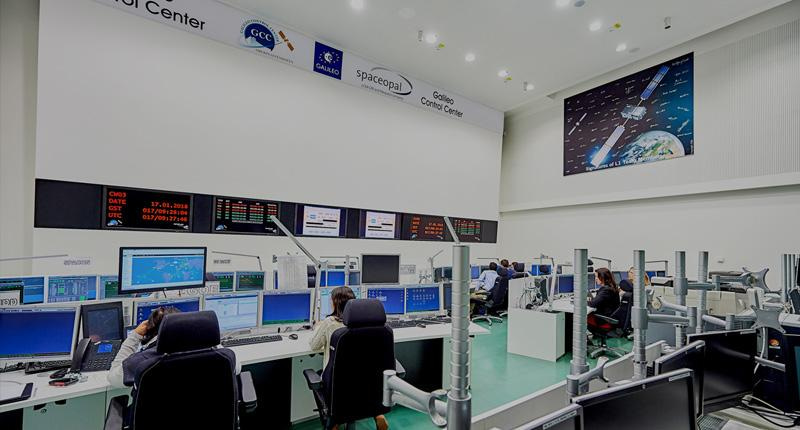
Cologne: The agency that keeps Europe’s satellites working has rebuilt itself to match a swelling workload, a quiet but telling sign of how far the Union’s space programme has grown. From 1 July the EU Agency for the Space Programme, known as EUSPA, adopted a new internal structure designed to handle the operational demands that now land on its desk.
The reorganisation groups the agency’s work into sharper units. A new positioning, navigation and timing department takes charge of Galileo and EGNOS, the satellite systems that guide everything from aircraft to farm tractors, and it owns their budgets, schedules and the rollout of new services. A dedicated operations department pulls together the real-time and near-real-time tasks that keep those signals flowing without interruption.
Security drove much of the change. A fresh situational awareness department folds in space surveillance and tracking, the work of watching for debris and collisions in an increasingly crowded orbit. As more satellites launch and old ones break apart, the risk of a chain reaction rises, and Europe wants a clearer command over the systems that guard its own hardware.
The restructuring also readies the agency for Galileo’s Public Regulated Service, an encrypted signal reserved for governments, emergency responders and defence users. That service demands round-the-clock reliability and tight security, and officials want a structure that can carry the responsibility as the capability reaches initial operation.
The agency does not work alone. On the ground, Germany broke ground in June on a hub in Cologne for the governmental satellite communications programme, one of two physical sites that will anchor secure links for public authorities. That project feeds into the Union’s larger ambition, a sovereign constellation meant to give Europe communications it controls without leaning on foreign providers.
The stakes have climbed as space has turned strategic. Precise timing and positioning underpin banking, power grids, telecoms and transport, and a disruption to those signals would ripple through daily life within minutes. Governments that once treated satellites as scientific luxuries now regard them as critical infrastructure, and they fund them accordingly.
Europe’s programme has matured in step with that shift. Galileo already delivers navigation to billions of devices, the Copernicus system watches the planet’s climate and coastlines, and the secure communications push aims to close the last big gap in the Union’s space autonomy. Managing all of it demands an agency built for operations rather than start-up experiments.
The new structure will not grab public attention, yet it shapes how reliably the signals arrive. A better-organised agency should respond faster to faults, coordinate more cleanly with member states, and absorb the security duties that keep piling up. EUSPA set out the reasoning behind the overhaul in its own announcement, and the coming months will test whether the redesign delivers.