August 9, 2026
LATEST
New EU Gas Market Rules Take Effect With Consumer SafeguardsDeforestation Regulation Holds Its December Deadline Despite CutsDigital Omnibus Delays Europe’s High-Risk AI Deadline to 2027Europe’s Schools Confront a Widening Basic Skills GapRule of Law Report Finds Progress but Trust Still LagsIRIS2 Gains 66 Satellites as Brussels Signs the Rollout DealNature Restoration Plans Come Due as Member States Race a DeadlineECB Rates Hold at 2.25 Percent as Frankfurt Waits on the DataEU Budget Talks Turn to Cohesion as Ireland Takes OverWildfire Response Stretches Europe’s Emergency Fleet ThinCan Europe’s Quantum Plan Match Its Big Ambitions?Armenia Edges West as Moscow’s Grip Slips AwayEurope Inherits the World’s Aid Bill It Cannot Fully PayAir Passenger Rights Get Their First Overhaul in Two DecadesErasmus Opens a 5 Billion Euro Round for Skills and MobilityCeuta Crisis Pushes the EU Toward Faster Migrant ReturnsBulky Parcels Face a Packaging Crackdown From August 12Can Europe Build Its Drone Wall Before 2030 Arrives?Indonesia’s Trade Deal With Europe Nears Its Final SignatureEurope Leans on Beijing to Keep Climate Talks Alive Before AntalyaNew EU Gas Market Rules Take Effect With Consumer SafeguardsDeforestation Regulation Holds Its December Deadline Despite CutsDigital Omnibus Delays Europe’s High-Risk AI Deadline to 2027Europe’s Schools Confront a Widening Basic Skills GapRule of Law Report Finds Progress but Trust Still LagsIRIS2 Gains 66 Satellites as Brussels Signs the Rollout DealNature Restoration Plans Come Due as Member States Race a DeadlineECB Rates Hold at 2.25 Percent as Frankfurt Waits on the DataEU Budget Talks Turn to Cohesion as Ireland Takes OverWildfire Response Stretches Europe’s Emergency Fleet ThinCan Europe’s Quantum Plan Match Its Big Ambitions?Armenia Edges West as Moscow’s Grip Slips AwayEurope Inherits the World’s Aid Bill It Cannot Fully PayAir Passenger Rights Get Their First Overhaul in Two DecadesErasmus Opens a 5 Billion Euro Round for Skills and MobilityCeuta Crisis Pushes the EU Toward Faster Migrant ReturnsBulky Parcels Face a Packaging Crackdown From August 12Can Europe Build Its Drone Wall Before 2030 Arrives?Indonesia’s Trade Deal With Europe Nears Its Final SignatureEurope Leans on Beijing to Keep Climate Talks Alive Before Antalya
August 9, 2026
LATEST
New EU Gas Market Rules Take Effect With Consumer SafeguardsDeforestation Regulation Holds Its December Deadline Despite CutsDigital Omnibus Delays Europe’s High-Risk AI Deadline to 2027Europe’s Schools Confront a Widening Basic Skills GapRule of Law Report Finds Progress but Trust Still LagsIRIS2 Gains 66 Satellites as Brussels Signs the Rollout DealNature Restoration Plans Come Due as Member States Race a DeadlineECB Rates Hold at 2.25 Percent as Frankfurt Waits on the DataEU Budget Talks Turn to Cohesion as Ireland Takes OverWildfire Response Stretches Europe’s Emergency Fleet ThinCan Europe’s Quantum Plan Match Its Big Ambitions?Armenia Edges West as Moscow’s Grip Slips AwayEurope Inherits the World’s Aid Bill It Cannot Fully PayAir Passenger Rights Get Their First Overhaul in Two DecadesErasmus Opens a 5 Billion Euro Round for Skills and MobilityCeuta Crisis Pushes the EU Toward Faster Migrant ReturnsBulky Parcels Face a Packaging Crackdown From August 12Can Europe Build Its Drone Wall Before 2030 Arrives?Indonesia’s Trade Deal With Europe Nears Its Final SignatureEurope Leans on Beijing to Keep Climate Talks Alive Before AntalyaNew EU Gas Market Rules Take Effect With Consumer SafeguardsDeforestation Regulation Holds Its December Deadline Despite CutsDigital Omnibus Delays Europe’s High-Risk AI Deadline to 2027Europe’s Schools Confront a Widening Basic Skills GapRule of Law Report Finds Progress but Trust Still LagsIRIS2 Gains 66 Satellites as Brussels Signs the Rollout DealNature Restoration Plans Come Due as Member States Race a DeadlineECB Rates Hold at 2.25 Percent as Frankfurt Waits on the DataEU Budget Talks Turn to Cohesion as Ireland Takes OverWildfire Response Stretches Europe’s Emergency Fleet ThinCan Europe’s Quantum Plan Match Its Big Ambitions?Armenia Edges West as Moscow’s Grip Slips AwayEurope Inherits the World’s Aid Bill It Cannot Fully PayAir Passenger Rights Get Their First Overhaul in Two DecadesErasmus Opens a 5 Billion Euro Round for Skills and MobilityCeuta Crisis Pushes the EU Toward Faster Migrant ReturnsBulky Parcels Face a Packaging Crackdown From August 12Can Europe Build Its Drone Wall Before 2030 Arrives?Indonesia’s Trade Deal With Europe Nears Its Final SignatureEurope Leans on Beijing to Keep Climate Talks Alive Before Antalya

ICES Pegs The 2026 North Sea Herring Quota At An Eleven-Year Low

Esbjerg: The annual ICES advice round dropped a difficult set of numbers across the pelagic fleet, and the autumn-spawning North Sea herring stock has taken the sharpest visible hit. The International Council for the Exploration of the Sea now recommends a total allowable catch of no more than 287,772 tonnes for 2026, a figure roughly thirty percent below the previous advice issued in April 2025 and the lowest published advice line since 2015. The reissue followed a joint request from the EU, the United Kingdom and Norway, asking the council to recalculate using a new Long-Term Management Strategy option known as MS3.

The recalculation is the technical key to understanding the number. MS3 reweights how recruitment uncertainty and stock biomass interact in the advice formula, and the result for North Sea herring is a more cautious catch line that absorbs the recent run of weaker year classes. For coastal-state negotiators, the methodological shift is also a political shift, because it makes it harder to argue against the advice on grounds of model conservatism alone. The recalculated number is the one the late-autumn TAC negotiations will work from when ministers meet to allocate the 2026 quota.

The other two big pelagics in the package land worse. ICES has recommended a blue whiting TAC of no more than 851,344 tonnes for 2026, a forty-one percent fall from the 2025 advice line. Northeast Atlantic mackerel takes the heaviest cut, with a recommendation of roughly 174,357 tonnes, almost seventy percent below the previous run. The scale of the mackerel reduction reflects the cumulative impact of fishing without an agreed sharing arrangement among coastal states, an issue that has now sat unresolved for a decade and is gradually working its way through the stock biology rather than the diplomacy.

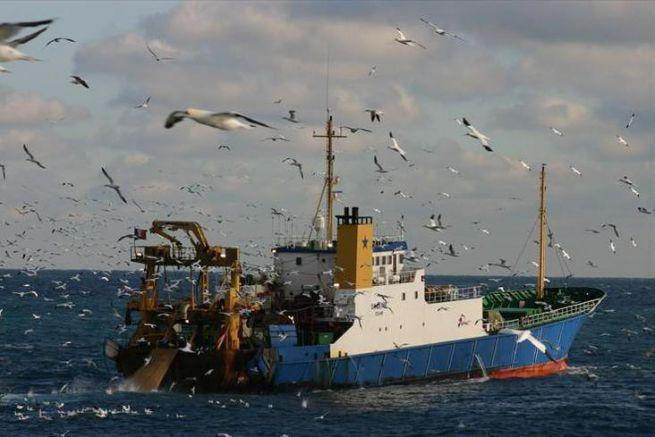
For Danish, Dutch, German and Irish pelagic operators, the cascade through the supply chain will start with vessel scheduling and crew planning over the summer. The Esbjerg fleet runs roughly half its annual revenue through pelagic catches, and a cut of this magnitude pushes some operators into break-even territory before fuel and maintenance costs are factored. The European Fisheries Control Agency will be asked to coordinate enforcement of the lower TACs across the Specific Control and Inspection Programme for the North Sea region, and the agency has been quietly building its joint deployment plan for the second half of 2026 to accommodate higher inspection intensity on landings.

The political track from advice to TAC runs through the AGRIFISH Council in December, with technical preparations in Council working parties from late summer onward. Coastal states have not yet agreed a sharing arrangement for the 2026 quotas, and the absence of one for mackerel is the headline risk to closing the negotiation cleanly. EU negotiators have signalled that they will press for an agreed sharing line as a precondition to any TAC, but the previous coastal-state meetings have ended without breakthrough, and the autumn round is expected to test the same fault lines once more.

The Commission’s medium-term frame for these stocks is the 2040 vision for the Common Fisheries Policy, which puts ecological resilience at the centre of allocation logic. The pelagic advice for 2026 is the first set of numbers that lands inside that frame, and how the December Council resolves the gap between scientific advice and economic exposure will be read as an early indicator of how serious the 2040 line is. For Esbjerg, Vlissingen and Killybegs, the read of that signal will land in livelihood terms before it lands in policy terms.