August 29, 2026
LATEST
Data Rules Agreed With Seoul Now Wait on Parliament’s ConsentChina Listed Fourteen European Firms and November Ends the TruceWhy Australia’s Finished Trade Deal Still Has No Signature DateLate Application Leaves Tokyo Outside the Defence Loan QueueCyber Resilience Rules Give Makers 24 Hours From SeptemberWinter Stocks Test Europe’s New Gas Storage Flexibility RulesInnovation Theory Meets Merger Control in a New Commission StudyMercosur Tariffs Fell in May and the Court Has Not Ruled YetBilaterals III Now Turns on Which Referendum Switzerland PicksDark Patterns Face the EU Digital Fairness ActFifteen Chapters Stand Between Montenegro and 2028Who Blinks First in the FP10 Research Budget FightCustoms Reform Landed in March and Its Data Hub Opens in 2028Victims Rights Gain an EU Helpline and Capitals Have Two YearsIreland Must Move the EU Budget Box Before the October SummitFertiliser Prices Sit 71 Percent Above Their 2024 Average LevelState Aid Exemptions Face a Rewrite With Four Months to SpareIrregular Crossings Fell 37 Percent and Spain Is the ExceptionSpring Growth Went to Ireland and Skipped Belgium EntirelyEurope’s Drought Pushed Four Great Rivers to Record LowsData Rules Agreed With Seoul Now Wait on Parliament’s ConsentChina Listed Fourteen European Firms and November Ends the TruceWhy Australia’s Finished Trade Deal Still Has No Signature DateLate Application Leaves Tokyo Outside the Defence Loan QueueCyber Resilience Rules Give Makers 24 Hours From SeptemberWinter Stocks Test Europe’s New Gas Storage Flexibility RulesInnovation Theory Meets Merger Control in a New Commission StudyMercosur Tariffs Fell in May and the Court Has Not Ruled YetBilaterals III Now Turns on Which Referendum Switzerland PicksDark Patterns Face the EU Digital Fairness ActFifteen Chapters Stand Between Montenegro and 2028Who Blinks First in the FP10 Research Budget FightCustoms Reform Landed in March and Its Data Hub Opens in 2028Victims Rights Gain an EU Helpline and Capitals Have Two YearsIreland Must Move the EU Budget Box Before the October SummitFertiliser Prices Sit 71 Percent Above Their 2024 Average LevelState Aid Exemptions Face a Rewrite With Four Months to SpareIrregular Crossings Fell 37 Percent and Spain Is the ExceptionSpring Growth Went to Ireland and Skipped Belgium EntirelyEurope’s Drought Pushed Four Great Rivers to Record Lows
August 29, 2026
LATEST
Data Rules Agreed With Seoul Now Wait on Parliament’s ConsentChina Listed Fourteen European Firms and November Ends the TruceWhy Australia’s Finished Trade Deal Still Has No Signature DateLate Application Leaves Tokyo Outside the Defence Loan QueueCyber Resilience Rules Give Makers 24 Hours From SeptemberWinter Stocks Test Europe’s New Gas Storage Flexibility RulesInnovation Theory Meets Merger Control in a New Commission StudyMercosur Tariffs Fell in May and the Court Has Not Ruled YetBilaterals III Now Turns on Which Referendum Switzerland PicksDark Patterns Face the EU Digital Fairness ActFifteen Chapters Stand Between Montenegro and 2028Who Blinks First in the FP10 Research Budget FightCustoms Reform Landed in March and Its Data Hub Opens in 2028Victims Rights Gain an EU Helpline and Capitals Have Two YearsIreland Must Move the EU Budget Box Before the October SummitFertiliser Prices Sit 71 Percent Above Their 2024 Average LevelState Aid Exemptions Face a Rewrite With Four Months to SpareIrregular Crossings Fell 37 Percent and Spain Is the ExceptionSpring Growth Went to Ireland and Skipped Belgium EntirelyEurope’s Drought Pushed Four Great Rivers to Record LowsData Rules Agreed With Seoul Now Wait on Parliament’s ConsentChina Listed Fourteen European Firms and November Ends the TruceWhy Australia’s Finished Trade Deal Still Has No Signature DateLate Application Leaves Tokyo Outside the Defence Loan QueueCyber Resilience Rules Give Makers 24 Hours From SeptemberWinter Stocks Test Europe’s New Gas Storage Flexibility RulesInnovation Theory Meets Merger Control in a New Commission StudyMercosur Tariffs Fell in May and the Court Has Not Ruled YetBilaterals III Now Turns on Which Referendum Switzerland PicksDark Patterns Face the EU Digital Fairness ActFifteen Chapters Stand Between Montenegro and 2028Who Blinks First in the FP10 Research Budget FightCustoms Reform Landed in March and Its Data Hub Opens in 2028Victims Rights Gain an EU Helpline and Capitals Have Two YearsIreland Must Move the EU Budget Box Before the October SummitFertiliser Prices Sit 71 Percent Above Their 2024 Average LevelState Aid Exemptions Face a Rewrite With Four Months to SpareIrregular Crossings Fell 37 Percent and Spain Is the ExceptionSpring Growth Went to Ireland and Skipped Belgium EntirelyEurope’s Drought Pushed Four Great Rivers to Record Lows

Internal Border Checks Now Stretch to December in Eight States

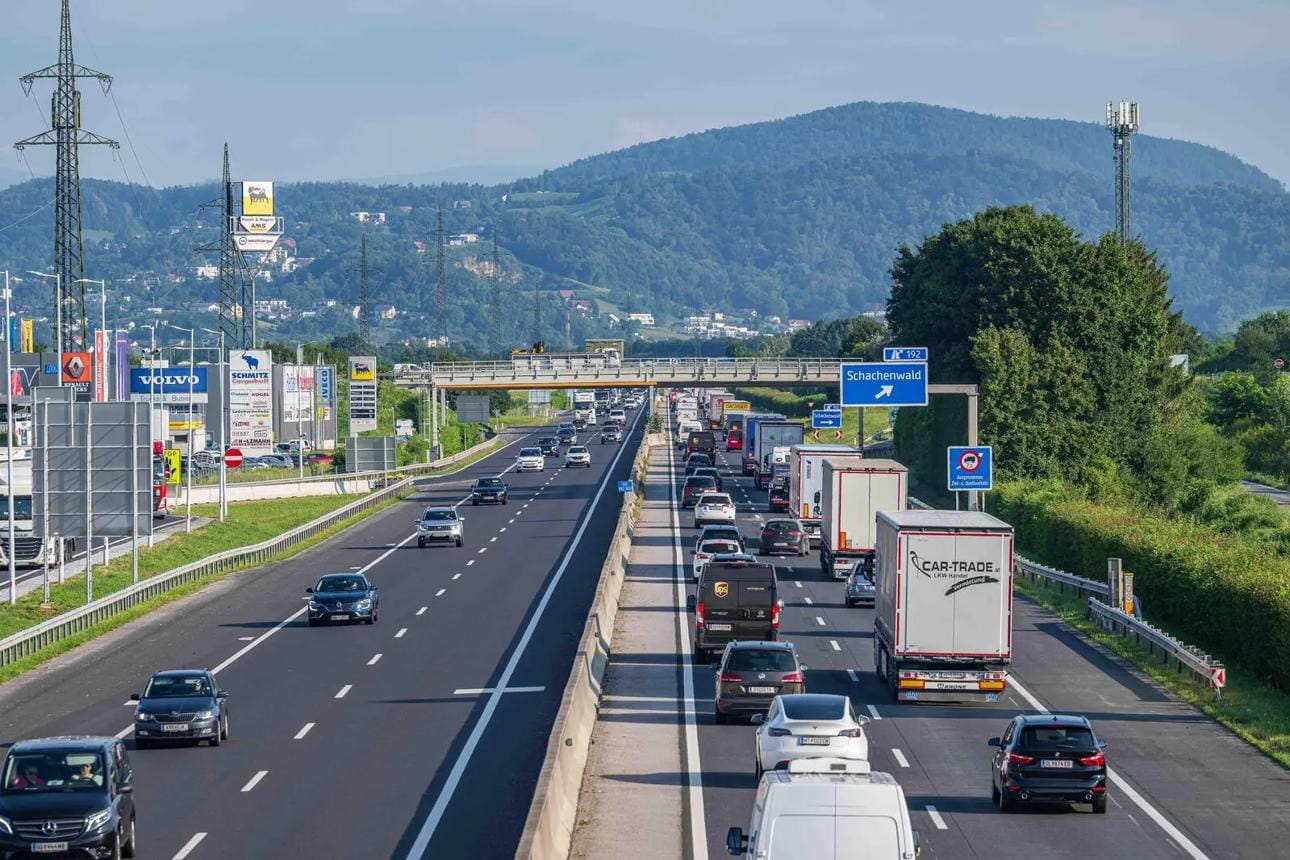
Salzburg: The queue on the A8 approach road tells the story better than any legal notice. Austrian officers still wave cars aside for spot checks on a stretch of motorway that Schengen was supposed to render invisible, and they will keep doing so well past the summer. Eight governments have now told the Commission they intend to hold their internal border controls in place through September, with several running the clock to December.

Austria, France, Germany, Italy, the Netherlands, Norway, Poland and Sweden all cite some blend of irregular migration, terrorism and organised crime. The Schengen Borders Code allows temporary reintroduction, but it frames the measure as exceptional and time-limited. Several of these notifications now run into their fourth consecutive year. Exceptional has quietly become the operating baseline across a corridor that carries most of the bloc’s road freight.

The governments defend the practice on numbers they read as encouraging. Detections at the external border dropped sharply over the first seven months of the year, and interior ministries argue that internal checks helped push the figure down. Critics read the same data the opposite way, arguing that falling pressure removes the justification for measures that cost hauliers hours and commuters their tempers. Neither side can prove causation, because nobody runs a controlled experiment on a continent.

The Commission holds a weak hand here. It can question a notification, request proportionality evidence and publish an opinion, but it cannot simply switch the checks off. Enforcement would mean an infringement action against eight capitals at once, several of them large, and the political arithmetic makes that unlikely before the next mandate settles. So Berlin, Paris and the rest renew, the Commission notes its concerns, and the barriers stay up.

A second file complicates the picture. The Commission plans to publish a revision of the Frontex mandate this quarter, and the draft is expected to expand the agency’s role in returns and in countering hybrid threats at the external frontier. Parliament researchers have already flagged the tension: capitals demand a stronger external border as the price of dropping internal ones, then keep the internal ones anyway. Reinforcing Frontex will not automatically buy the trust that Schengen assumes.

Freight operators want a harder deadline than goodwill. Their trade bodies have asked for a firm sunset clause, so that any reintroduction beyond two years triggers automatic review with binding consequences. Interior ministries resist, arguing that threat assessments cannot run on a calendar. That argument sounds reasonable until you notice it has now justified the same measure for four years running. Read the Council’s external borders file and the Parliament’s Frontex mandate briefing side by side and the gap is obvious. Salzburg’s queue will be there in December.