August 9, 2026
LATEST
New EU Gas Market Rules Take Effect With Consumer SafeguardsDeforestation Regulation Holds Its December Deadline Despite CutsDigital Omnibus Delays Europe’s High-Risk AI Deadline to 2027Europe’s Schools Confront a Widening Basic Skills GapRule of Law Report Finds Progress but Trust Still LagsIRIS2 Gains 66 Satellites as Brussels Signs the Rollout DealNature Restoration Plans Come Due as Member States Race a DeadlineECB Rates Hold at 2.25 Percent as Frankfurt Waits on the DataEU Budget Talks Turn to Cohesion as Ireland Takes OverWildfire Response Stretches Europe’s Emergency Fleet ThinCan Europe’s Quantum Plan Match Its Big Ambitions?Armenia Edges West as Moscow’s Grip Slips AwayEurope Inherits the World’s Aid Bill It Cannot Fully PayAir Passenger Rights Get Their First Overhaul in Two DecadesErasmus Opens a 5 Billion Euro Round for Skills and MobilityCeuta Crisis Pushes the EU Toward Faster Migrant ReturnsBulky Parcels Face a Packaging Crackdown From August 12Can Europe Build Its Drone Wall Before 2030 Arrives?Indonesia’s Trade Deal With Europe Nears Its Final SignatureEurope Leans on Beijing to Keep Climate Talks Alive Before AntalyaNew EU Gas Market Rules Take Effect With Consumer SafeguardsDeforestation Regulation Holds Its December Deadline Despite CutsDigital Omnibus Delays Europe’s High-Risk AI Deadline to 2027Europe’s Schools Confront a Widening Basic Skills GapRule of Law Report Finds Progress but Trust Still LagsIRIS2 Gains 66 Satellites as Brussels Signs the Rollout DealNature Restoration Plans Come Due as Member States Race a DeadlineECB Rates Hold at 2.25 Percent as Frankfurt Waits on the DataEU Budget Talks Turn to Cohesion as Ireland Takes OverWildfire Response Stretches Europe’s Emergency Fleet ThinCan Europe’s Quantum Plan Match Its Big Ambitions?Armenia Edges West as Moscow’s Grip Slips AwayEurope Inherits the World’s Aid Bill It Cannot Fully PayAir Passenger Rights Get Their First Overhaul in Two DecadesErasmus Opens a 5 Billion Euro Round for Skills and MobilityCeuta Crisis Pushes the EU Toward Faster Migrant ReturnsBulky Parcels Face a Packaging Crackdown From August 12Can Europe Build Its Drone Wall Before 2030 Arrives?Indonesia’s Trade Deal With Europe Nears Its Final SignatureEurope Leans on Beijing to Keep Climate Talks Alive Before Antalya
August 9, 2026
LATEST
New EU Gas Market Rules Take Effect With Consumer SafeguardsDeforestation Regulation Holds Its December Deadline Despite CutsDigital Omnibus Delays Europe’s High-Risk AI Deadline to 2027Europe’s Schools Confront a Widening Basic Skills GapRule of Law Report Finds Progress but Trust Still LagsIRIS2 Gains 66 Satellites as Brussels Signs the Rollout DealNature Restoration Plans Come Due as Member States Race a DeadlineECB Rates Hold at 2.25 Percent as Frankfurt Waits on the DataEU Budget Talks Turn to Cohesion as Ireland Takes OverWildfire Response Stretches Europe’s Emergency Fleet ThinCan Europe’s Quantum Plan Match Its Big Ambitions?Armenia Edges West as Moscow’s Grip Slips AwayEurope Inherits the World’s Aid Bill It Cannot Fully PayAir Passenger Rights Get Their First Overhaul in Two DecadesErasmus Opens a 5 Billion Euro Round for Skills and MobilityCeuta Crisis Pushes the EU Toward Faster Migrant ReturnsBulky Parcels Face a Packaging Crackdown From August 12Can Europe Build Its Drone Wall Before 2030 Arrives?Indonesia’s Trade Deal With Europe Nears Its Final SignatureEurope Leans on Beijing to Keep Climate Talks Alive Before AntalyaNew EU Gas Market Rules Take Effect With Consumer SafeguardsDeforestation Regulation Holds Its December Deadline Despite CutsDigital Omnibus Delays Europe’s High-Risk AI Deadline to 2027Europe’s Schools Confront a Widening Basic Skills GapRule of Law Report Finds Progress but Trust Still LagsIRIS2 Gains 66 Satellites as Brussels Signs the Rollout DealNature Restoration Plans Come Due as Member States Race a DeadlineECB Rates Hold at 2.25 Percent as Frankfurt Waits on the DataEU Budget Talks Turn to Cohesion as Ireland Takes OverWildfire Response Stretches Europe’s Emergency Fleet ThinCan Europe’s Quantum Plan Match Its Big Ambitions?Armenia Edges West as Moscow’s Grip Slips AwayEurope Inherits the World’s Aid Bill It Cannot Fully PayAir Passenger Rights Get Their First Overhaul in Two DecadesErasmus Opens a 5 Billion Euro Round for Skills and MobilityCeuta Crisis Pushes the EU Toward Faster Migrant ReturnsBulky Parcels Face a Packaging Crackdown From August 12Can Europe Build Its Drone Wall Before 2030 Arrives?Indonesia’s Trade Deal With Europe Nears Its Final SignatureEurope Leans on Beijing to Keep Climate Talks Alive Before Antalya

Jobs After Coal Mid-Term Tracks Asturian JTF Path Toward 2027 Mark

Avilés: The Asturian industrial port that anchors Spain’s coal-dependent transition is preparing for a Just Transition Fund mid-term review that will gauge whether the largest single-purpose EU instrument for closing the carbon-intensive industrial age is delivering on its promises. The mid-term assessment of national JTF programmes, scheduled across the second half of 2026, comes as the Commission’s wider cohesion mid-term review unlocks fresh prepayment and reallocation flexibilities for Member States ready to redirect funds toward strategic technologies under the STEP framework.

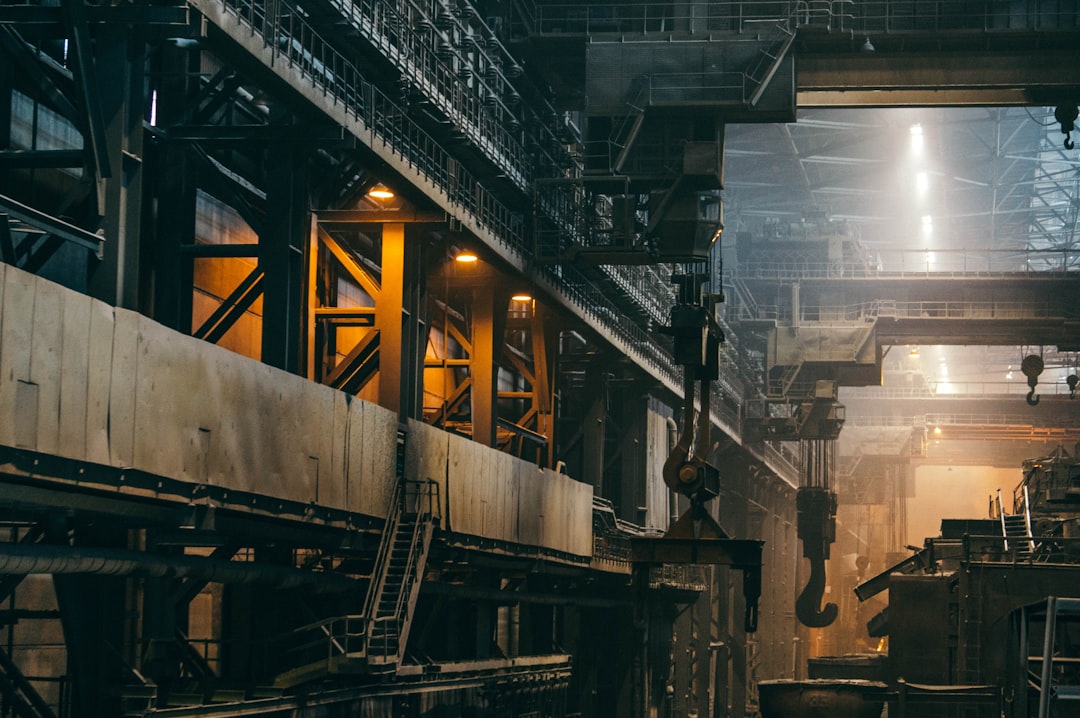
The Just Transition Fund commands an overall envelope of €17.5 billion across the 2021–2027 period, of which €7.5 billion comes from the standard multi-annual financial framework and the remaining €10 billion is financed under NextGenerationEU. Spain’s allocation is among the larger Member State envelopes, with Asturias one of the most concentrated single recipients given its long-standing reliance on coal mining and integrated steel production. The reconversion challenge confronting Avilés, Mieres and the Caudal valley has been at the heart of national reporting on the fund.

The Commission’s mid-term review framework permits Member States to redirect cohesion policy envelopes, including the Just Transition Fund, toward STEP priorities and to unlock one-off additional pre-financing if at least 10 percent of total allocation is moved to new priorities, with a 7 percent threshold for certain special programme categories. Programmes that completed reprogramming by 31 December 2025 received the boosted 1.5 percent prepayment, rising to 9.5 percent in regions bordering Russia or Ukraine. The MTR also lifted the previous 20 percent cap on STEP allocation, allowing the strategic technologies push to absorb a larger slice of cohesion funding where Member States choose.

For Asturias, the political calculus around the mid-term review is not only fiscal. The regional government has prioritised investments in clean steel, hydrogen and digital industry, areas that fall comfortably within both Just Transition and STEP scopes. Avilés-based projects benefiting from JTF support include the green steel decarbonisation programme led by ArcelorMittal at the Gijón–Avilés axis, alongside reskilling investments aimed at workers leaving the coal value chain. The mid-term review will offer the Commission and national authorities the first systematic opportunity to assess whether spending has matched the original programme intervention logic.

Across the broader EU coal-region landscape, the picture is mixed. Poland’s Silesia and Greater Poland regions, Germany’s Lusatia and Czech regions in Moravia-Silesia have all reported delivery delays and uneven absorption. The European Court of Auditors raised concerns in earlier opinions about whether the fund’s intervention logic was sufficiently focused on the workers it was designed to support, and the mid-term reviews are expected to test those critiques against the operational record.

Inside the Commission’s Directorate-General for Regional and Urban Policy, the mid-term review process is designed to combine reporting on physical and financial implementation with strategic redirection of envelopes. Member States have been urged to view the exercise not as a routine compliance step but as a chance to course-correct ahead of the final implementation push. The 2027 closure deadline looms large in the planning conversations.

Spanish authorities are expected to submit their formal mid-term submission package during the autumn. The package will include an analysis of the territorial just transition plans, a financial implementation snapshot and a proposal on any reallocation under STEP. Stakeholders along the Asturian industrial corridor are already lobbying for greater concentration of the remaining envelope on the green steel and hydrogen agenda, arguing that scaling industrial demonstrators is now the binding constraint on actual workforce transition rather than reskilling alone.

The Parliament’s Committee on Regional Development will hold a hearing on Just Transition implementation in early autumn, where rapporteurs are expected to push for guarantees that the fund’s social inclusion focus is not diluted by the STEP redirection logic. The Asturian case is likely to feature prominently in the parliamentary debate.