Madrid: The Spanish government has positioned itself as one of the most enthusiastic implementers of the European Commission’s AccelerateEU catalogue, the package of replicable energy measures presented on 13 May 2026 in an attempt to compress the gap between the bloc’s 2030 emissions targets and the much sharper 2040 trajectory. The catalogue, drawn from an assessment of what has actually worked across member states since the 2022 supply crisis, is less a fresh legislative push than a stocktake of practical interventions: industrial-scale heat pumps, district heating retrofits, and demand-response contracts that allow grid operators to dim large consumers during peak hours. For Spain, which has spent the last three years absorbing record volumes of solar generation without sufficient transmission capacity to evacuate it, the catalogue arrives as a politically useful checklist.
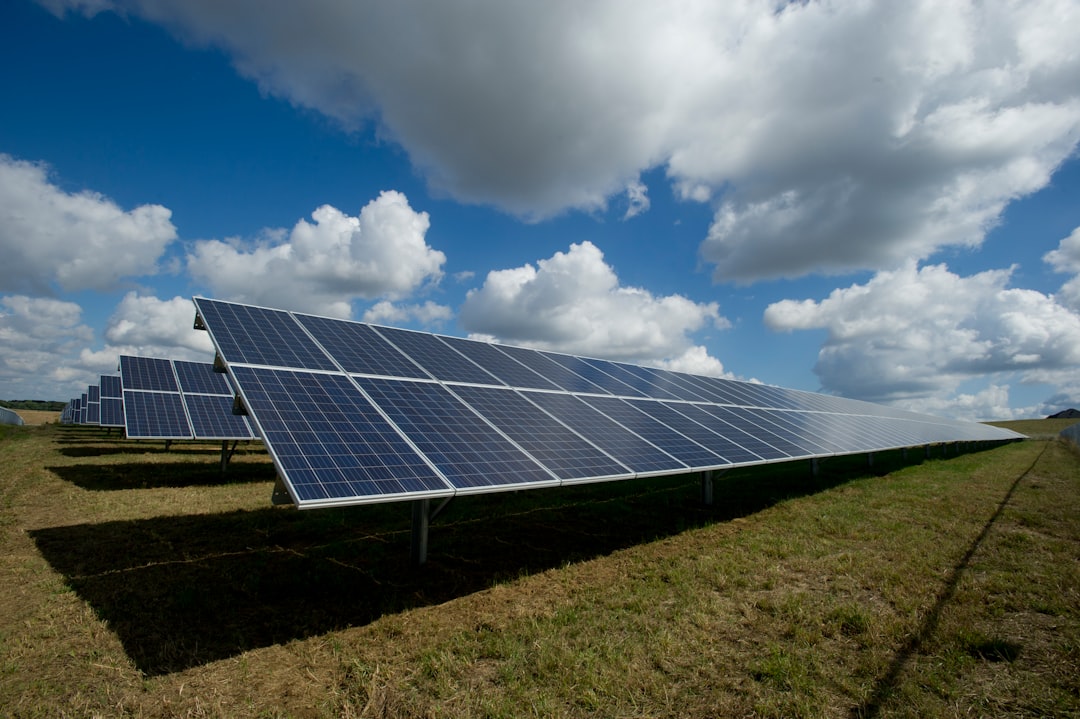
The Ministry for the Ecological Transition signalled that nine of the catalogue’s measures will be folded into the next revision of Spain’s National Energy and Climate Plan, due before the end of the year. Officials in Madrid are particularly focused on the energy-savings auctions piloted in the Netherlands and Denmark, which pay industrial users to switch off during forecast surplus periods rather than curtailing renewables. With Spanish solar curtailment running at roughly seven percent of theoretical output during spring midday hours, the financial logic is straightforward. The harder question is whether the regulatory authority, the CNMC, can stand up an auction mechanism quickly enough to matter before the summer demand peak.
The catalogue also revives a debate the Commission has been reluctant to engage with directly. By codifying the substitution of fossil fuels with what it calls homegrown clean energy, AccelerateEU implicitly endorses faster permitting for renewables, electrolysers, and grid infrastructure. The Corporate Europe Observatory published a critical assessment the same week arguing that the same permitting acceleration is being extended to fossil-linked projects under the banner of strategic autonomy, including liquefied natural gas terminals and hydrogen blending facilities that depend on natural gas feedstocks. The watchdog’s claim, contested by the Directorate-General for Energy, is that the energy crisis has functioned as a continuous justification for environmental deregulation now in its fourth year.
Spain occupies an awkward middle position in this argument. Its renewable build-out is among the bloc’s fastest, but it has also commissioned two new regasification expansions on the Atlantic coast since 2024, and Enagás continues to lobby for the Midcat pipeline revival under a hydrogen-ready label. Madrid’s defenders argue that an integrated southern corridor is a precondition for replacing Russian gas in central European markets, and that the same infrastructure can be repurposed for green hydrogen once Iberian electrolyser capacity scales. Critics counter that the corridor’s economics depend on gas throughput well into the 2040s.
The post-2030 framework remains the larger backdrop. The Commission’s Fit for 90 package, expected in the second half of 2026, will translate the proposed 90 percent net emissions cut by 2040 into sectoral obligations. The Emissions Trading System review, the carbon removal certification scheme, and the still-unfinished negotiations on the EU’s long-term budget are all converging on the same political window. For Madrid, AccelerateEU is a useful interim tool, but the real test will be whether the Iberian peninsula’s grid interconnections with France finally clear the political bottlenecks that have throttled exports for the past decade. Until then, the question of who pays for curtailed solar will continue to dominate Spanish energy debates more than any catalogue from Brussels.