August 9, 2026
LATEST
New EU Gas Market Rules Take Effect With Consumer SafeguardsDeforestation Regulation Holds Its December Deadline Despite CutsDigital Omnibus Delays Europe’s High-Risk AI Deadline to 2027Europe’s Schools Confront a Widening Basic Skills GapRule of Law Report Finds Progress but Trust Still LagsIRIS2 Gains 66 Satellites as Brussels Signs the Rollout DealNature Restoration Plans Come Due as Member States Race a DeadlineECB Rates Hold at 2.25 Percent as Frankfurt Waits on the DataEU Budget Talks Turn to Cohesion as Ireland Takes OverWildfire Response Stretches Europe’s Emergency Fleet ThinCan Europe’s Quantum Plan Match Its Big Ambitions?Armenia Edges West as Moscow’s Grip Slips AwayEurope Inherits the World’s Aid Bill It Cannot Fully PayAir Passenger Rights Get Their First Overhaul in Two DecadesErasmus Opens a 5 Billion Euro Round for Skills and MobilityCeuta Crisis Pushes the EU Toward Faster Migrant ReturnsBulky Parcels Face a Packaging Crackdown From August 12Can Europe Build Its Drone Wall Before 2030 Arrives?Indonesia’s Trade Deal With Europe Nears Its Final SignatureEurope Leans on Beijing to Keep Climate Talks Alive Before AntalyaNew EU Gas Market Rules Take Effect With Consumer SafeguardsDeforestation Regulation Holds Its December Deadline Despite CutsDigital Omnibus Delays Europe’s High-Risk AI Deadline to 2027Europe’s Schools Confront a Widening Basic Skills GapRule of Law Report Finds Progress but Trust Still LagsIRIS2 Gains 66 Satellites as Brussels Signs the Rollout DealNature Restoration Plans Come Due as Member States Race a DeadlineECB Rates Hold at 2.25 Percent as Frankfurt Waits on the DataEU Budget Talks Turn to Cohesion as Ireland Takes OverWildfire Response Stretches Europe’s Emergency Fleet ThinCan Europe’s Quantum Plan Match Its Big Ambitions?Armenia Edges West as Moscow’s Grip Slips AwayEurope Inherits the World’s Aid Bill It Cannot Fully PayAir Passenger Rights Get Their First Overhaul in Two DecadesErasmus Opens a 5 Billion Euro Round for Skills and MobilityCeuta Crisis Pushes the EU Toward Faster Migrant ReturnsBulky Parcels Face a Packaging Crackdown From August 12Can Europe Build Its Drone Wall Before 2030 Arrives?Indonesia’s Trade Deal With Europe Nears Its Final SignatureEurope Leans on Beijing to Keep Climate Talks Alive Before Antalya
August 9, 2026
LATEST
New EU Gas Market Rules Take Effect With Consumer SafeguardsDeforestation Regulation Holds Its December Deadline Despite CutsDigital Omnibus Delays Europe’s High-Risk AI Deadline to 2027Europe’s Schools Confront a Widening Basic Skills GapRule of Law Report Finds Progress but Trust Still LagsIRIS2 Gains 66 Satellites as Brussels Signs the Rollout DealNature Restoration Plans Come Due as Member States Race a DeadlineECB Rates Hold at 2.25 Percent as Frankfurt Waits on the DataEU Budget Talks Turn to Cohesion as Ireland Takes OverWildfire Response Stretches Europe’s Emergency Fleet ThinCan Europe’s Quantum Plan Match Its Big Ambitions?Armenia Edges West as Moscow’s Grip Slips AwayEurope Inherits the World’s Aid Bill It Cannot Fully PayAir Passenger Rights Get Their First Overhaul in Two DecadesErasmus Opens a 5 Billion Euro Round for Skills and MobilityCeuta Crisis Pushes the EU Toward Faster Migrant ReturnsBulky Parcels Face a Packaging Crackdown From August 12Can Europe Build Its Drone Wall Before 2030 Arrives?Indonesia’s Trade Deal With Europe Nears Its Final SignatureEurope Leans on Beijing to Keep Climate Talks Alive Before AntalyaNew EU Gas Market Rules Take Effect With Consumer SafeguardsDeforestation Regulation Holds Its December Deadline Despite CutsDigital Omnibus Delays Europe’s High-Risk AI Deadline to 2027Europe’s Schools Confront a Widening Basic Skills GapRule of Law Report Finds Progress but Trust Still LagsIRIS2 Gains 66 Satellites as Brussels Signs the Rollout DealNature Restoration Plans Come Due as Member States Race a DeadlineECB Rates Hold at 2.25 Percent as Frankfurt Waits on the DataEU Budget Talks Turn to Cohesion as Ireland Takes OverWildfire Response Stretches Europe’s Emergency Fleet ThinCan Europe’s Quantum Plan Match Its Big Ambitions?Armenia Edges West as Moscow’s Grip Slips AwayEurope Inherits the World’s Aid Bill It Cannot Fully PayAir Passenger Rights Get Their First Overhaul in Two DecadesErasmus Opens a 5 Billion Euro Round for Skills and MobilityCeuta Crisis Pushes the EU Toward Faster Migrant ReturnsBulky Parcels Face a Packaging Crackdown From August 12Can Europe Build Its Drone Wall Before 2030 Arrives?Indonesia’s Trade Deal With Europe Nears Its Final SignatureEurope Leans on Beijing to Keep Climate Talks Alive Before Antalya

Mediterranean Tuna Fleets Face Tighter Bluefin Catch Controls

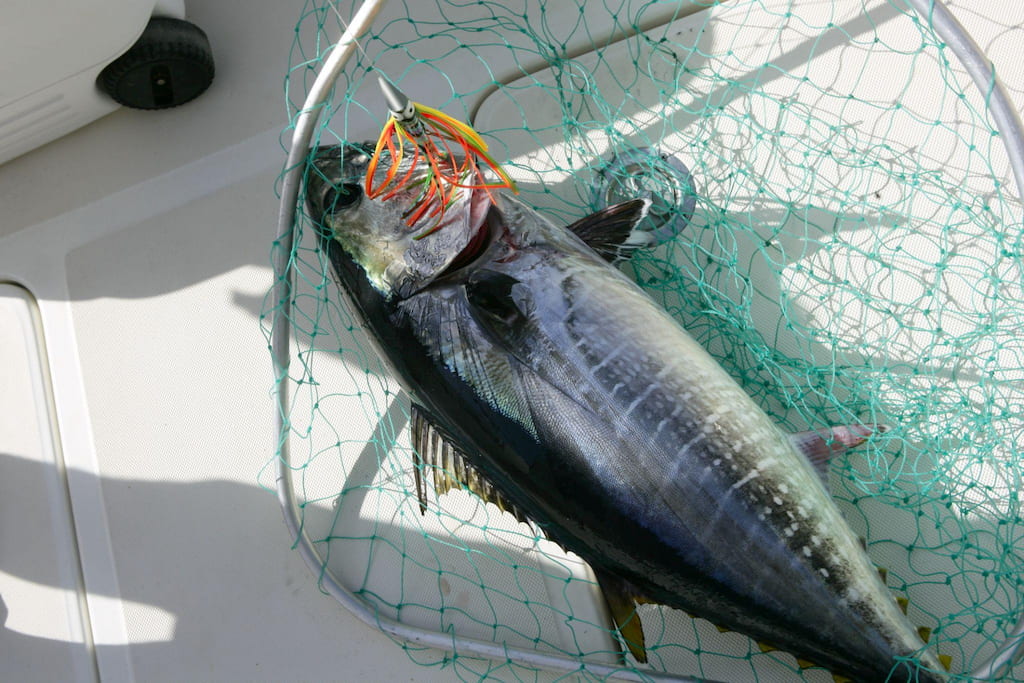
Sète: From the quays of this old Languedoc fishing town, the start of June marks the moment when one of the Mediterranean’s most valuable and most fraught harvests begins under fresh scrutiny. The European Commission has put forward a proposal to amend the rules governing bluefin tuna in the eastern Atlantic and the Mediterranean, tightening the management and control measures that decide who may fish, how much, and when.

The proposed regulation reworks the bloc’s transposition of decisions taken by the International Commission for the Conservation of Atlantic Tunas, the body that sets the international ground rules for a stock that was, not so long ago, considered to be in serious trouble. It also amends the existing multiannual management plan for bluefin tuna agreed in 2023, the framework that translates years of recovery measures into binding catch limits and seasonal windows. Among the more technical provisions is a narrow rule on smaller fish: specimens between roughly eight and thirty kilograms, destined for farming and fattening operations, may only be caught between the first of June and the end of December.

That sort of granular sequencing is the legacy of a hard-won rebuild. Bluefin tuna, prized in sushi markets from Asia to the United States, was for years a byword for overfishing and quota-busting in the Mediterranean. A long and unglamorous regime of catch ceilings, vessel registers, electronic documentation and observer schemes is widely credited with pulling the stock back from the brink, and the conservation body has cautiously expanded fishing opportunities as numbers recovered. The Commission’s argument is that the gains are real but reversible, and that the control architecture has to keep pace with a fishery worth a great deal of money to a relatively small number of operators.

Enforcement is the part that rarely makes headlines but does most of the work. The European Fisheries Control Agency coordinates inspection effort across member states through a joint deployment plan, and for the bluefin campaign that effort runs from the tail end of May through to the close of the season. Patrol vessels, aerial surveillance and cross-checks of catch documentation are meant to ensure that what is landed matches what is declared, and that fish moved into Mediterranean cages for fattening can be traced back to a legal catch. In a fishery where a single bluefin can fetch a small fortune, the temptation to cut corners has never entirely vanished.

For the fleets tied up at Sète and at ports across Spain, Italy, Malta and Greece, the practical effect is a season hemmed in by paperwork as much as by weather. Skippers must work within national quotas that flow from the international ceilings, log their catches electronically, and accept that an inspector may be watching from the air or the next berth over. Industry voices tend to grumble that the burden falls hardest on the law-abiding, while conservation groups counter that the controls are precisely why there are fish left to argue over.

The proposal still has to make its way through the Council and the Parliament before it hardens into law, and the detail will be picked over by fisheries ministers with one eye on their coastal communities. But the direction is clear enough. A decade after the Mediterranean’s bluefin was a cautionary tale, the lesson the Commission wants to lock in is that recovery is not a finish line but a discipline that has to be maintained, season after season, fish by fish.