Podgorica: Accession talk in this capital has changed register. For a decade the conversation was about whether Europe still meant it. Now it is about whether the paperwork can physically be finished in time.
Montenegro has provisionally closed eighteen negotiating chapters, having added competition and customs to the tally over the summer. All thirty-three are open. The Irish presidency says it wants the remainder closed before the year ends, and the government targets membership in 2028. That timetable would have sounded fanciful in 2023. It now sounds tight rather than impossible.
Closing a chapter provisionally is not the same as being ready. It records that the Commission and member states accept a country’s legislation and administrative capacity in one policy area, subject to reopening if performance slips. The chapters left standing are the ones that always come last, because they touch judiciary, corruption, media freedom and public procurement. Those are the areas where a determined government can pass laws quickly and still fail to change behaviour, and where member states have grown reluctant to accept promises in place of records.
Albania sits a step behind on a similar path. Tirana has closed science and research, education and culture, and external relations, and its negotiations are meant to conclude in 2027. Both frontrunners benefit from a simple political fact. After years in which enlargement functioned as a rhetorical commitment with little operational content, capitals want a success they can point to, and two small states with manageable economies offer the least disruptive version of one.
That instrumental logic cuts both ways. Enthusiasm driven by geopolitics can accelerate a process, and it can also tempt governments to accept thinner compliance than they would demand in calmer conditions. Several member states have said openly that they will not repeat what they consider the mistakes of 2007, when accession preceded rather than followed judicial reform. Successive Council conclusions keep restating that benchmarks are met on evidence, not on calendars.
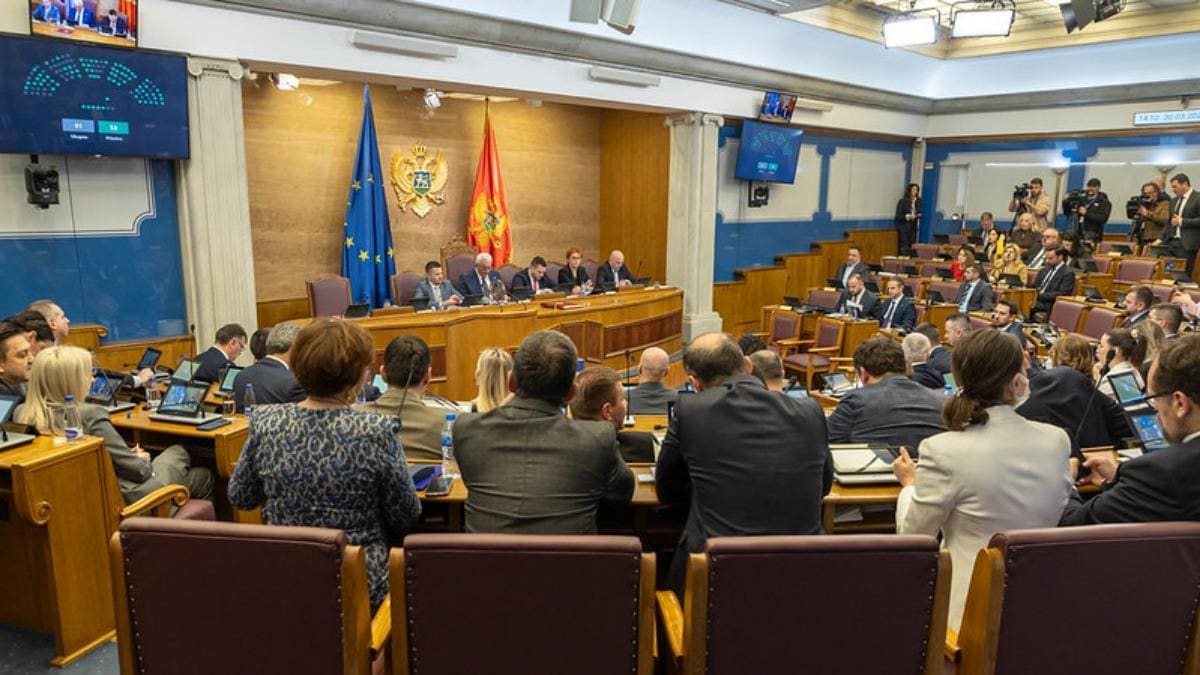
Domestic politics supply the other constraint. Montenegro’s parliamentary arithmetic has been unstable for years, and reforms that require constitutional majorities depend on coalitions that shift faster than the negotiating schedule. Judicial appointments have repeatedly stalled for exactly this reason. Closing the remaining chapters by December therefore depends less on Brussels goodwill than on whether Podgorica can hold a majority together through autumn.
There is also the question nobody in the region enjoys asking. Even a finished negotiation produces only a draft accession treaty, which every member state must then ratify, and several have domestic procedures that invite delay or referendum. The gap between concluding talks and joining has historically run to years.
Still, the shift in tone is real. Montenegro is being treated as a country working through a checklist rather than as a candidate held in indefinite suspension, and that distinction shapes investment decisions, civil service recruitment and how seriously young people here plan a future at home.