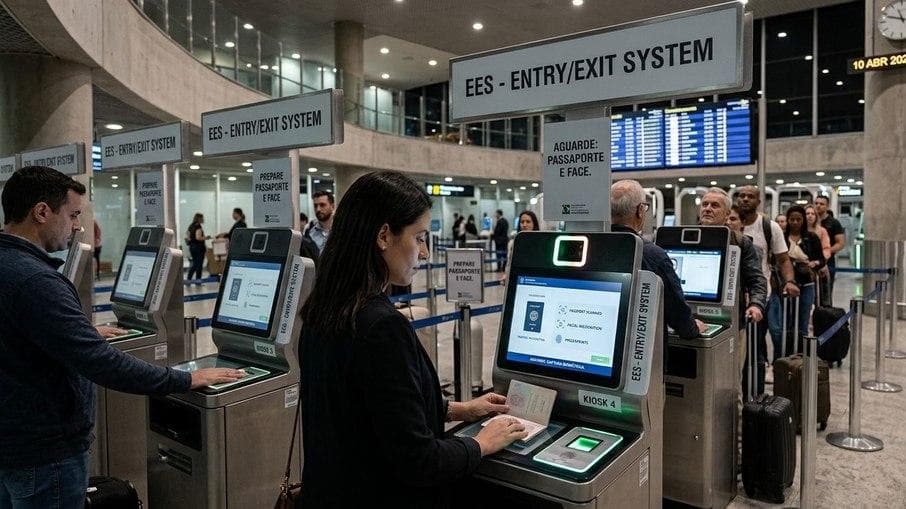
Warsaw: With seventeen days separating the Commission’s 8 May progress report from the Pact on Migration and Asylum’s full date of application on 12 June 2026, the operational picture across the bloc is one of legal readiness without infrastructural readiness. The report acknowledged the obvious headline — the legislative framework will become enforceable on schedule, and the first Annual Solidarity Pool has been adopted by the Council, which together close the political loop on the most contested elements of the package. What the report did not paper over is that several of the systems that make the new architecture function in practice will not be ready on day one.
Poland sits in the middle of that gap. As the member state with the longest external EU land border under sustained instrumentalised migration pressure, the Polish screening capacity, asylum-procedure rooms and Eurodac-3 connectivity have all been at the centre of contingency planning. The redesigned Eurodac — the biometric database that underpins the responsibility allocation between member states and the new screening regulation — is the technical pinch point flagged most often by national interior ministries during the May reporting cycle. The Commission has confirmed that the testing phase has slipped in several capitals and that some functions, including the matching of children’s biometrics under the lowered age threshold, will only be fully live in stages.
The border-procedure infrastructure picture is similarly uneven. The Pact requires member states to apply the new accelerated examination of certain asylum claims at or close to the external border, with detention-equivalent guarantees. Greece, Italy, Spain and Bulgaria have been receiving Commission-backed support for the construction or refit of dedicated facilities, but completion timelines stretch into late 2026 and 2027. The Pact does not strictly require those facilities to exist on day one — fallback arrangements remain available — but the political signal that asylum at the border now means a structurally different process is what the package is meant to deliver.
The solidarity mechanism is the other element under live operational test. Member states will have a menu of contributions to the pool — relocations, financial transfers worth 20,000 euro per case in lieu of relocation, or operational support — and the first cycle will measure both who takes responsibility for what share of the pool and whether the cases the pool is meant to redistribute actually move. Frontline states have been signalling that the pool’s credibility depends on whether the first relocations occur in measurable numbers in the second half of 2026.
Three quieter gaps will define how the Pact actually beds in. The first is the operationalisation of the fundamental-rights monitoring mechanism that runs parallel to the screening procedure — the legal safeguard most NGOs have flagged as the difference between a procedure and a containment regime. The second is anti-absconding measures, where national legislation diverges sharply, particularly around alternatives to detention. The third is the rules on responsibility and transfers, where the Dublin successor architecture inside the Pact requires bilateral verification of identity data and case files at a tempo that previous systems never approached.
For the Polish authorities, and the other capitals where the border story will be measured most concretely, the message from the Commission is that 12 June marks the start of a long implementation runway rather than the end of one. The legal architecture switches on. The infrastructure, the systems integration and the political stamina to make solidarity work are still being built.