August 9, 2026
LATEST
New EU Gas Market Rules Take Effect With Consumer SafeguardsDeforestation Regulation Holds Its December Deadline Despite CutsDigital Omnibus Delays Europe’s High-Risk AI Deadline to 2027Europe’s Schools Confront a Widening Basic Skills GapRule of Law Report Finds Progress but Trust Still LagsIRIS2 Gains 66 Satellites as Brussels Signs the Rollout DealNature Restoration Plans Come Due as Member States Race a DeadlineECB Rates Hold at 2.25 Percent as Frankfurt Waits on the DataEU Budget Talks Turn to Cohesion as Ireland Takes OverWildfire Response Stretches Europe’s Emergency Fleet ThinCan Europe’s Quantum Plan Match Its Big Ambitions?Armenia Edges West as Moscow’s Grip Slips AwayEurope Inherits the World’s Aid Bill It Cannot Fully PayAir Passenger Rights Get Their First Overhaul in Two DecadesErasmus Opens a 5 Billion Euro Round for Skills and MobilityCeuta Crisis Pushes the EU Toward Faster Migrant ReturnsBulky Parcels Face a Packaging Crackdown From August 12Can Europe Build Its Drone Wall Before 2030 Arrives?Indonesia’s Trade Deal With Europe Nears Its Final SignatureEurope Leans on Beijing to Keep Climate Talks Alive Before AntalyaNew EU Gas Market Rules Take Effect With Consumer SafeguardsDeforestation Regulation Holds Its December Deadline Despite CutsDigital Omnibus Delays Europe’s High-Risk AI Deadline to 2027Europe’s Schools Confront a Widening Basic Skills GapRule of Law Report Finds Progress but Trust Still LagsIRIS2 Gains 66 Satellites as Brussels Signs the Rollout DealNature Restoration Plans Come Due as Member States Race a DeadlineECB Rates Hold at 2.25 Percent as Frankfurt Waits on the DataEU Budget Talks Turn to Cohesion as Ireland Takes OverWildfire Response Stretches Europe’s Emergency Fleet ThinCan Europe’s Quantum Plan Match Its Big Ambitions?Armenia Edges West as Moscow’s Grip Slips AwayEurope Inherits the World’s Aid Bill It Cannot Fully PayAir Passenger Rights Get Their First Overhaul in Two DecadesErasmus Opens a 5 Billion Euro Round for Skills and MobilityCeuta Crisis Pushes the EU Toward Faster Migrant ReturnsBulky Parcels Face a Packaging Crackdown From August 12Can Europe Build Its Drone Wall Before 2030 Arrives?Indonesia’s Trade Deal With Europe Nears Its Final SignatureEurope Leans on Beijing to Keep Climate Talks Alive Before Antalya
August 9, 2026
LATEST
New EU Gas Market Rules Take Effect With Consumer SafeguardsDeforestation Regulation Holds Its December Deadline Despite CutsDigital Omnibus Delays Europe’s High-Risk AI Deadline to 2027Europe’s Schools Confront a Widening Basic Skills GapRule of Law Report Finds Progress but Trust Still LagsIRIS2 Gains 66 Satellites as Brussels Signs the Rollout DealNature Restoration Plans Come Due as Member States Race a DeadlineECB Rates Hold at 2.25 Percent as Frankfurt Waits on the DataEU Budget Talks Turn to Cohesion as Ireland Takes OverWildfire Response Stretches Europe’s Emergency Fleet ThinCan Europe’s Quantum Plan Match Its Big Ambitions?Armenia Edges West as Moscow’s Grip Slips AwayEurope Inherits the World’s Aid Bill It Cannot Fully PayAir Passenger Rights Get Their First Overhaul in Two DecadesErasmus Opens a 5 Billion Euro Round for Skills and MobilityCeuta Crisis Pushes the EU Toward Faster Migrant ReturnsBulky Parcels Face a Packaging Crackdown From August 12Can Europe Build Its Drone Wall Before 2030 Arrives?Indonesia’s Trade Deal With Europe Nears Its Final SignatureEurope Leans on Beijing to Keep Climate Talks Alive Before AntalyaNew EU Gas Market Rules Take Effect With Consumer SafeguardsDeforestation Regulation Holds Its December Deadline Despite CutsDigital Omnibus Delays Europe’s High-Risk AI Deadline to 2027Europe’s Schools Confront a Widening Basic Skills GapRule of Law Report Finds Progress but Trust Still LagsIRIS2 Gains 66 Satellites as Brussels Signs the Rollout DealNature Restoration Plans Come Due as Member States Race a DeadlineECB Rates Hold at 2.25 Percent as Frankfurt Waits on the DataEU Budget Talks Turn to Cohesion as Ireland Takes OverWildfire Response Stretches Europe’s Emergency Fleet ThinCan Europe’s Quantum Plan Match Its Big Ambitions?Armenia Edges West as Moscow’s Grip Slips AwayEurope Inherits the World’s Aid Bill It Cannot Fully PayAir Passenger Rights Get Their First Overhaul in Two DecadesErasmus Opens a 5 Billion Euro Round for Skills and MobilityCeuta Crisis Pushes the EU Toward Faster Migrant ReturnsBulky Parcels Face a Packaging Crackdown From August 12Can Europe Build Its Drone Wall Before 2030 Arrives?Indonesia’s Trade Deal With Europe Nears Its Final SignatureEurope Leans on Beijing to Keep Climate Talks Alive Before Antalya

Pact Implementation Report Maps Screening Gap Before 12 June Trigger

Valletta: The European Commission’s eighth of May report on Member State readiness for the New Pact on Migration and Asylum lays out, for the first time in detail, the operational gaps that remain before the regulation cluster becomes binding on the twelfth of June. The report is not a scorecard in the traditional sense, but the underlying picture it sketches is one of significant variation across the twenty-seven capitals, with the heaviest pressure concentrated on Mediterranean front-line states.

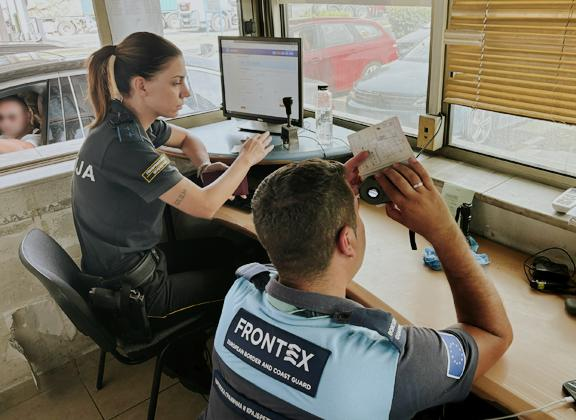
Screening infrastructure is the single most cited gap. Under the new framework, every arriving applicant has to be screened within seven days, with biometric capture, identity verification and a preliminary safety assessment running in parallel through the integrated information system that eu-LISA has been building since 2024. The report identifies five Member States where the physical screening hub network is not yet operational at the volumes that summer arrivals will require, and a further four where the hub network is operational but staffing levels are below the target ratios that the European Union Agency for Asylum has set out as a minimum.

Malta sits in the cluster where infrastructure has been built but throughput is the constraint. The Marsa hub, completed earlier in the year, can process roughly two hundred and forty arrivals per day at design capacity, against expected peak summer arrivals that in past years have run higher for short windows. The Maltese authorities have requested forty additional Frontex screening experts and ten EUAA case officers to bridge the gap through autumn. Italy, Greece, Cyprus and Spain have placed comparable requests, with the aggregate figure pushing the operational deployment higher than at any point in the last decade.

The border procedure file is the other pressure point. The pact’s accelerated track applies to applicants from countries with a recognition rate below twenty percent in the previous calendar year, a definition that captures a large share of arrivals through the central and eastern Mediterranean routes. Member States are required to keep accepted applicants in designated facilities while the procedure runs, which has triggered a wave of construction tenders for closed centres. The European Court of Auditors has separately flagged that the financial envelope under the Asylum, Migration and Integration Fund may be insufficient to cover the scale of facility expansion now under contract.

Solidarity contributions are the third strand. Under the new responsibility framework, Member States that opt out of physical relocations from front-line states must contribute either financial transfers or operational support. The Commission report indicates that fourteen capitals have submitted draft pledges, with the financial alternative being chosen disproportionately by Visegrad and Baltic states. The aggregate financial pledge stands below the indicative reference figure, leaving the geographic distribution of relocations heavier than the original solidarity architecture envisaged.

Returns remain the most operationally sensitive segment. The Return Border Procedure, which links the asylum decision and the return decision in a single track for applicants from designated countries, requires functional readmission arrangements with countries of origin. The new EU returns coordinator has been working through bilateral negotiations through spring, with progress on Tunisia and Egypt but standstill with several West African partners. Frontex is preparing standby Return Operations capacity, with charter slots blocked through summer.

The Commission has signalled that the twelfth of June date will not slip.