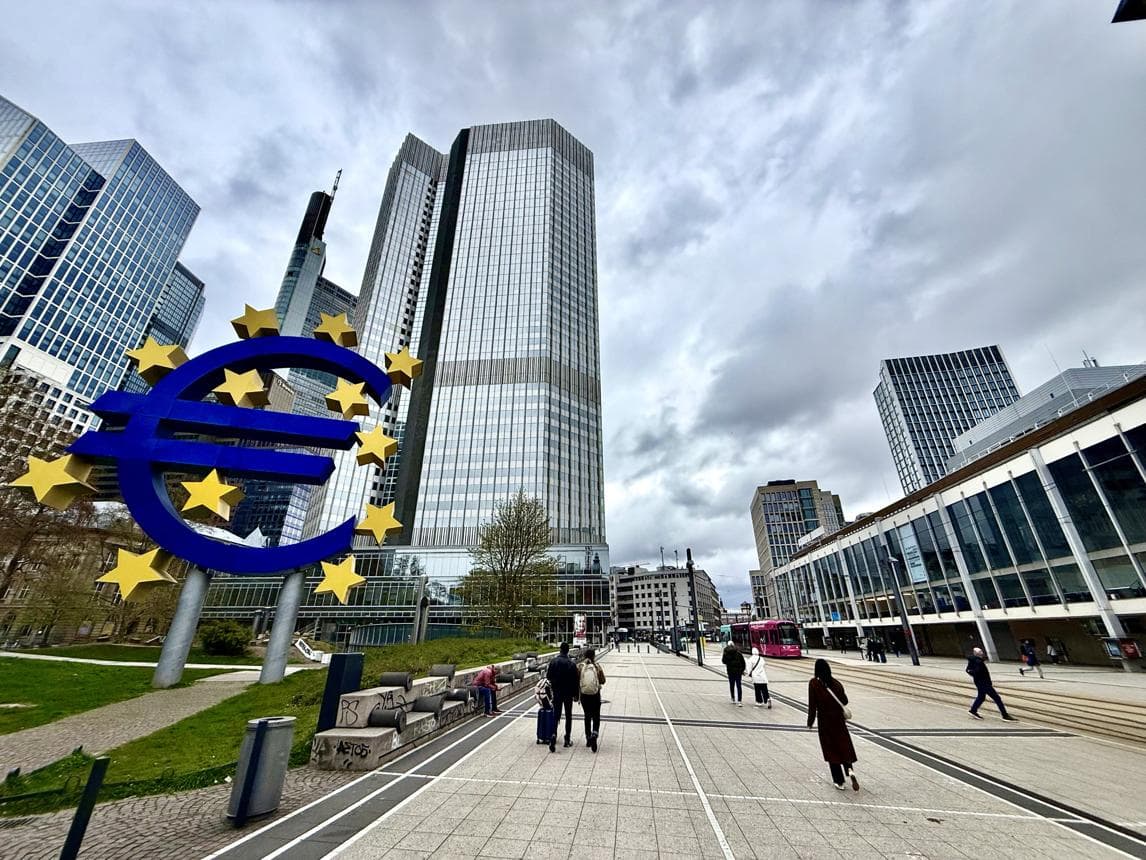
Frankfurt: For the first time in nearly three years, the European Central Bank has raised interest rates, ending a long cycle of cuts and signalling that a fresh inflation threat has overtaken its worries about weak growth. On 11 June the Governing Council lifted its three key rates by a quarter of a percentage point, pushing the closely watched deposit rate to 2.25 percent, the main refinancing rate to 2.40 percent and the marginal lending rate to 2.65 percent, all effective from 17 June.
The move is a sharp reversal. The ECB had delivered eight consecutive cuts between June 2024 and June 2025 as it nursed the euro area through a soft patch, and markets had grown comfortable with the idea that rates would stay low or fall further. This is the first increase since the aggressive tightening campaign that ended in September 2023, and it puts the bank back on the offensive against prices.
The trigger is geopolitical. Conflict in the Middle East has driven up energy and commodity costs, feeding through to headline inflation across the bloc. The bank’s new staff projections now see inflation averaging 3.0 percent this year before easing to 2.3 percent in 2027 and settling at its 2 percent target in 2028. President Christine Lagarde framed the decision as robust across a range of scenarios for how the shock might evolve, a phrase meant to reassure markets that the bank has thought through the uncertainty rather than reacting to a single month’s data.
Growth, meanwhile, is taking the strain. The Eurosystem now expects the economy to expand just 0.8 percent in 2026, a downgrade it attributes to the war’s impact on commodity markets, household real incomes and business confidence. The figures climb to 1.2 percent in 2027 and 1.5 percent in 2028, but the near-term picture is one of an economy squeezed between rising prices and faltering momentum, the textbook discomfort of stagflation.
That combination leaves the ECB walking a tightrope. Raise too far and it risks choking a recovery that is already fragile; move too slowly and it lets an external price shock seep into wages and expectations, the kind of second-round effect central bankers fear most. The quarter-point increase is calibrated as a warning shot rather than the start of a steep climb, but Lagarde declined to commit to a path, repeating the bank’s now-familiar insistence that it will decide meeting by meeting.
For governments, the timing is awkward. Several capitals are wrestling with heavy debt loads, and higher borrowing costs ripple quickly through their budgets. For households, mortgages and loans that had begun to cheapen will steady or tick up again. The decision underscores how thoroughly events beyond Europe’s borders now dictate the cost of money within them, and how little room the bank believes it has to look through an inflation surge it did not cause.