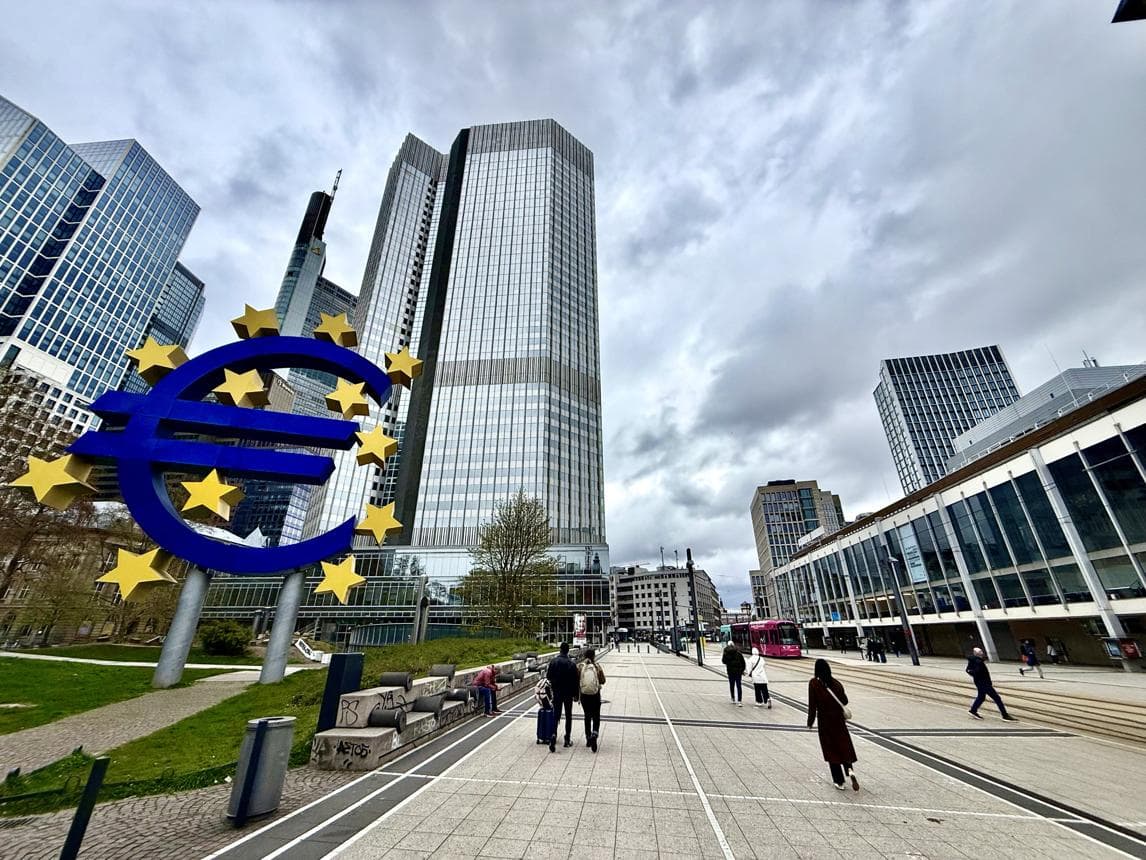
Sintra: When the Governing Council left its three key interest rates untouched at the April meeting, the decision read less like complacency than like a deliberate pause. Policymakers said the incoming data had been broadly consistent with their earlier read of the inflation path, yet they were unusually candid about the cross-currents pulling that path in opposite directions. Upside risks to prices and downside risks to growth, they warned, had both intensified at once – a combination that leaves little room for a clean narrative.
The immediate culprit is energy. Conflict in the Middle East has driven a sharp run-up in gas and oil quotations, feeding straight into headline inflation while simultaneously denting business and consumer sentiment across the bloc. For a central bank that spent two years bringing price growth back toward target, the prospect of an externally imposed energy shock is exactly the kind of supply-side disturbance that monetary tools handle awkwardly. Raise rates too hard and you compound the hit to demand; sit still and you risk letting expectations drift.
Markets have largely made up their own minds. Pricing ahead of the 11 June meeting leans toward a 25 basis-point adjustment, with at least one further move embedded in expectations before the year is out. That tilt reflects a judgement that the energy-driven leg of inflation is sticky enough to demand a response, even as the growth picture softens. Whether the Council validates that bet is another matter; recent communications have stressed a meeting-by-meeting, data-dependent stance precisely to avoid being boxed in by market consensus.
Beyond the rate question, the bank has been quietly reshaping the plumbing of European money. The Governing Council approved a broad payments strategy that knits together wholesale, business-to-business, retail and cross-border flows under a single forward-looking frame. The logic is defensive as much as visionary: as private digital payment rails proliferate, often routed through non-European providers, the central bank wants to preserve the anchoring role of central bank money. The digital euro sits at the centre of that ambition, less as a gadget than as insurance against a future where everyday settlement migrates outside the public monetary system.
The two threads – the near-term rate call and the longer arc of payments modernisation – are not as separate as they look. Both turn on credibility. A central bank that loses control of inflation forfeits trust in the value of its money; one that cedes the payments layer to foreign platforms forfeits trust in its relevance. Officials appear determined to defend both flanks at the same time.
For households and firms, the practical signal is one of caution rather than relief. Borrowing costs may inch lower in June, but the energy overhang means the easing cycle, if it resumes, will be slow and conditional. Anyone hoping for a decisive pivot is likely to be disappointed. The more honest reading is that the Council has chosen optionality – keeping the door open in both directions – because the shocks now buffeting the euro area refuse to point cleanly one way. The June statement will be parsed not for what it does, but for how much room it leaves to change course.