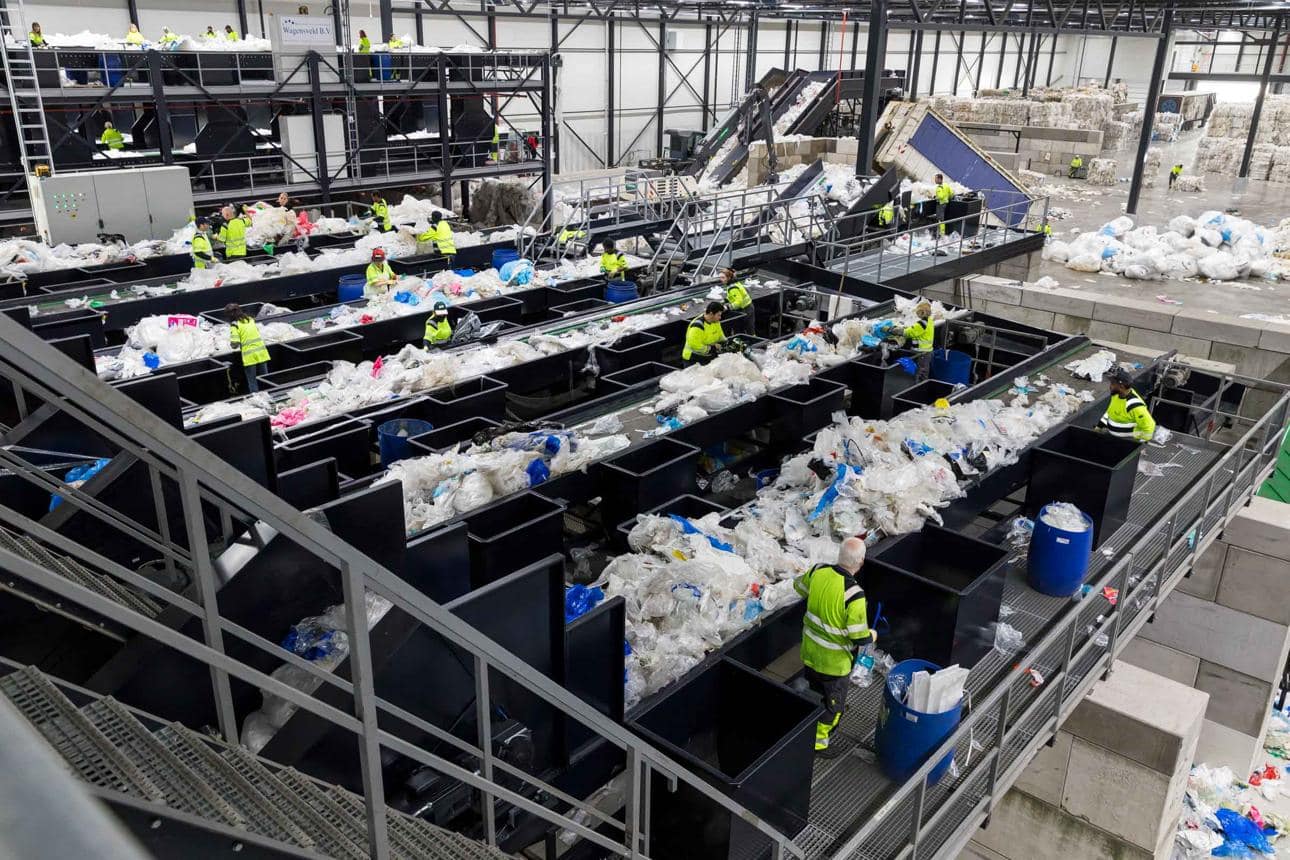
Rotterdam: In the shadow of the port’s sorting halls, where crushed plastic and scrap metal move by the tonne, recyclers are waiting on a law that could finally give their trade a stable market. The European Commission is preparing a circular economy act, expected as a legislative proposal in the third quarter of this year, and the sector sees it as the first serious attempt to knit together a fragmented recovery system.
The plan grows out of a simple frustration. Europe still buries or burns most of what it throws away, and recycled materials struggle to compete with cheap virgin inputs. The Commission wants to change that by building a genuine single market for secondary raw materials, one where a bale of recycled plastic sorted in the Netherlands can be sold and used in Poland without hitting a wall of clashing national rules.
Three levers sit at the centre of the coming proposal. Officials plan to amend the Waste Framework and Landfill Directives, tighten the rules on electrical and electronic waste, and set clearer end-of-waste criteria so that recovered material stops counting as rubbish the moment it is fit for reuse. Extended producer responsibility schemes, which make manufacturers pay for the disposal of what they sell, would be streamlined and harmonised across borders.
Campaigners argue the act should go further and impose a hard cap on residual waste, the leftover fraction that ends up in landfill or an incinerator. Without a ceiling, they warn, member states will keep sliding back into a disposal debate rather than designing products to be reused in the first place. The Ellen MacArthur Foundation has called the moment a rare opening to lock circularity into industrial policy.
Industry reads the file through a competitiveness lens. A reliable supply of recycled feedstock shields manufacturers from volatile commodity prices and from the geopolitics of importing raw materials. The Commission has framed the act in exactly those terms, presenting recycling less as an environmental chore and more as a route to strategic autonomy. Its stated goal is to double the bloc’s circular material use rate by the end of the decade.
Businesses now face months of uncertainty as they wait to see how prescriptive the text becomes. A public consultation last year drew heavy engagement, and the Commission has kept talking to national capitals and industry since. The Commission’s circular economy team insists the design will reward companies that build durable, repairable goods rather than punish them.
For the recyclers watching from Rotterdam, the promise is concrete. A common rulebook could turn a patchwork of local schemes into a continent-sized market, and give the material passing through their sorting lines a value that finally holds.