Katowice: For decades the cohesion funds that flowed into regions like this former coal heartland of southern Poland carried a clear promise: money targeted at the places left behind, spent on the roads, training and businesses that markets alone would not provide. A mid-term overhaul of the Union’s regional spending is testing how firmly that promise still holds.
Through the review, member states and the Commission have redirected some 34.6 billion euros of cohesion money toward a new set of priorities, a sum equal to nearly a tenth of the 367 billion euro budget for the 2021 to 2027 period. The reallocation, made possible by a regulation the co-legislators adopted in late 2025, prompted amendments to 186 national and regional programmes across 25 member states, a restructuring largely completed by the spring.
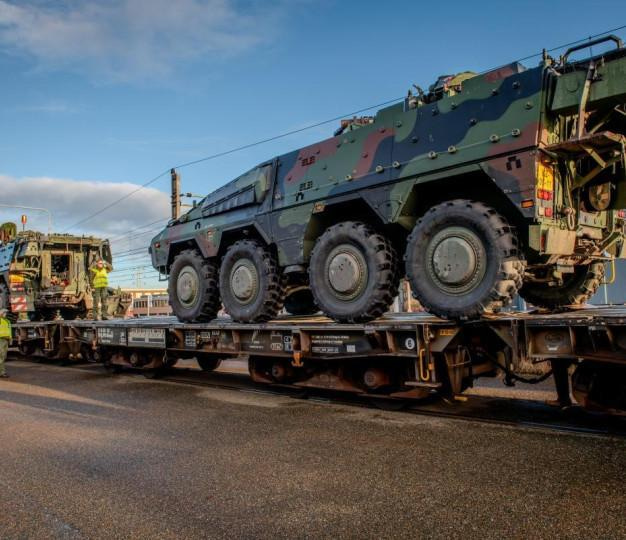
The direction of travel is striking. By far the largest share, around 11.9 billion euros, has been steered toward defence capabilities, military mobility and civil preparedness, reflecting a continent rearming in response to war on its borders. A further 3.3 billion euros is earmarked for affordable housing, an acknowledgement that a cost-of-living crisis has become a regional development problem in its own right. Water resilience claims roughly 3.1 billion, and energy security and industrial decarbonisation about 1.2 billion. To encourage governments to move quickly, the framework offers financial incentives, including higher pre-financing for redirected funds.
The rationale is that cohesion policy, the Union’s largest investment instrument, cannot remain frozen against priorities set before war, inflation and energy shocks reshaped the landscape. Supporters argue that flexibility is a strength, that money sitting unspent in slow-moving programmes does no one any good, and that regions themselves asked for room to respond to new pressures such as housing and water.
Yet the shift unsettles many in the regional development world, and the unease is sharpest in places that depend most on the funds. Cohesion policy was conceived as a place-based instrument, governed in partnership with regional and local authorities and aimed at narrowing the gaps between richer and poorer parts of the bloc. Critics fear that bending it toward defence and centrally defined strategic goals, however urgent, erodes that founding logic and turns a development fund into a flexible reserve to be raided whenever Brussels and national capitals face a new emergency.
The debate matters well beyond this budget cycle, because it previews a larger fight already under way over the Union’s next long-term finances. A bloc of net recipients, the self-styled friends of cohesion, is resisting proposals that would fold regional money into broader national plans and dilute the role of regions in deciding how it is spent. The mid-term reallocation, with its tilt toward security and centrally set priorities, reads to them as a sign of where that argument is heading.
In Katowice, where European money helped finance the long pivot away from coal toward services and clean industry, officials are pragmatic about the need to adapt while wary of losing control over funds that shaped the region’s transformation. The reallocation answers a real and pressing set of needs. The unresolved question is whether a policy built to lift up Europe’s regions can keep that purpose as it is asked to do ever more besides.