August 9, 2026
LATEST
New EU Gas Market Rules Take Effect With Consumer SafeguardsDeforestation Regulation Holds Its December Deadline Despite CutsDigital Omnibus Delays Europe’s High-Risk AI Deadline to 2027Europe’s Schools Confront a Widening Basic Skills GapRule of Law Report Finds Progress but Trust Still LagsIRIS2 Gains 66 Satellites as Brussels Signs the Rollout DealNature Restoration Plans Come Due as Member States Race a DeadlineECB Rates Hold at 2.25 Percent as Frankfurt Waits on the DataEU Budget Talks Turn to Cohesion as Ireland Takes OverWildfire Response Stretches Europe’s Emergency Fleet ThinCan Europe’s Quantum Plan Match Its Big Ambitions?Armenia Edges West as Moscow’s Grip Slips AwayEurope Inherits the World’s Aid Bill It Cannot Fully PayAir Passenger Rights Get Their First Overhaul in Two DecadesErasmus Opens a 5 Billion Euro Round for Skills and MobilityCeuta Crisis Pushes the EU Toward Faster Migrant ReturnsBulky Parcels Face a Packaging Crackdown From August 12Can Europe Build Its Drone Wall Before 2030 Arrives?Indonesia’s Trade Deal With Europe Nears Its Final SignatureEurope Leans on Beijing to Keep Climate Talks Alive Before AntalyaNew EU Gas Market Rules Take Effect With Consumer SafeguardsDeforestation Regulation Holds Its December Deadline Despite CutsDigital Omnibus Delays Europe’s High-Risk AI Deadline to 2027Europe’s Schools Confront a Widening Basic Skills GapRule of Law Report Finds Progress but Trust Still LagsIRIS2 Gains 66 Satellites as Brussels Signs the Rollout DealNature Restoration Plans Come Due as Member States Race a DeadlineECB Rates Hold at 2.25 Percent as Frankfurt Waits on the DataEU Budget Talks Turn to Cohesion as Ireland Takes OverWildfire Response Stretches Europe’s Emergency Fleet ThinCan Europe’s Quantum Plan Match Its Big Ambitions?Armenia Edges West as Moscow’s Grip Slips AwayEurope Inherits the World’s Aid Bill It Cannot Fully PayAir Passenger Rights Get Their First Overhaul in Two DecadesErasmus Opens a 5 Billion Euro Round for Skills and MobilityCeuta Crisis Pushes the EU Toward Faster Migrant ReturnsBulky Parcels Face a Packaging Crackdown From August 12Can Europe Build Its Drone Wall Before 2030 Arrives?Indonesia’s Trade Deal With Europe Nears Its Final SignatureEurope Leans on Beijing to Keep Climate Talks Alive Before Antalya
August 9, 2026
LATEST
New EU Gas Market Rules Take Effect With Consumer SafeguardsDeforestation Regulation Holds Its December Deadline Despite CutsDigital Omnibus Delays Europe’s High-Risk AI Deadline to 2027Europe’s Schools Confront a Widening Basic Skills GapRule of Law Report Finds Progress but Trust Still LagsIRIS2 Gains 66 Satellites as Brussels Signs the Rollout DealNature Restoration Plans Come Due as Member States Race a DeadlineECB Rates Hold at 2.25 Percent as Frankfurt Waits on the DataEU Budget Talks Turn to Cohesion as Ireland Takes OverWildfire Response Stretches Europe’s Emergency Fleet ThinCan Europe’s Quantum Plan Match Its Big Ambitions?Armenia Edges West as Moscow’s Grip Slips AwayEurope Inherits the World’s Aid Bill It Cannot Fully PayAir Passenger Rights Get Their First Overhaul in Two DecadesErasmus Opens a 5 Billion Euro Round for Skills and MobilityCeuta Crisis Pushes the EU Toward Faster Migrant ReturnsBulky Parcels Face a Packaging Crackdown From August 12Can Europe Build Its Drone Wall Before 2030 Arrives?Indonesia’s Trade Deal With Europe Nears Its Final SignatureEurope Leans on Beijing to Keep Climate Talks Alive Before AntalyaNew EU Gas Market Rules Take Effect With Consumer SafeguardsDeforestation Regulation Holds Its December Deadline Despite CutsDigital Omnibus Delays Europe’s High-Risk AI Deadline to 2027Europe’s Schools Confront a Widening Basic Skills GapRule of Law Report Finds Progress but Trust Still LagsIRIS2 Gains 66 Satellites as Brussels Signs the Rollout DealNature Restoration Plans Come Due as Member States Race a DeadlineECB Rates Hold at 2.25 Percent as Frankfurt Waits on the DataEU Budget Talks Turn to Cohesion as Ireland Takes OverWildfire Response Stretches Europe’s Emergency Fleet ThinCan Europe’s Quantum Plan Match Its Big Ambitions?Armenia Edges West as Moscow’s Grip Slips AwayEurope Inherits the World’s Aid Bill It Cannot Fully PayAir Passenger Rights Get Their First Overhaul in Two DecadesErasmus Opens a 5 Billion Euro Round for Skills and MobilityCeuta Crisis Pushes the EU Toward Faster Migrant ReturnsBulky Parcels Face a Packaging Crackdown From August 12Can Europe Build Its Drone Wall Before 2030 Arrives?Indonesia’s Trade Deal With Europe Nears Its Final SignatureEurope Leans on Beijing to Keep Climate Talks Alive Before Antalya

Sole quotas slashed forty-four percent under 2026 fishing deal

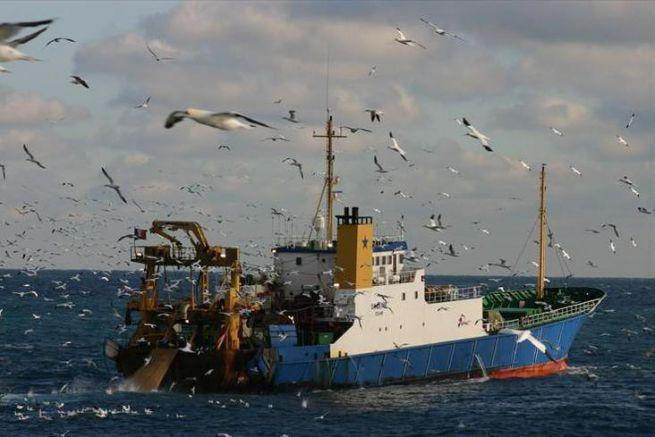
Vigo: Galicia’s fishing fleet entered the second quarter of 2026 working under one of the most heavily redistributed catch regimes in years, the result of Council Regulation (EU) 2026/249 of 26 January, which fixed total allowable catches across Union waters under a December 2025 political deal that protected some southwestern Atlantic stocks while imposing painful reductions on others. The agreement, brokered after a thirty-hour ministerial session, set fishing opportunities for the 2026 calendar year and, for certain stocks, for 2027 and 2028.

The headline gains accrued in Iberian waters. Anchovy in the Cantabrian Sea–western Iberian zone received a 60 percent TAC increase, reflecting scientific advice from the International Council for the Exploration of the Sea that the stock had rebuilt above precautionary reference points. Megrim caught the same regulatory wind, with an 11 percent uplift, and Norway lobster in the Cantabrian increased by 23 percent. Bay of Biscay vessels received separate boosts: anchovy up 8 percent and Norway lobster a striking 49 percent. For the Vigo and Gijón harbours, these increases translate into roughly an additional 7,200 tonnes of authorised catch in 2026 compared with the previous year.

The reductions were more painful and concentrated. Pollack across the Bay of Biscay, the Cantabrian Sea and Iberian waters fell 13 percent. Whiting in the Bay of Biscay was cut 27 percent, a figure that exceeds the threshold smaller pelagic vessels can absorb without operational restructuring. The most dramatic cut hit sole in Skagerrak-Kattegat at minus 44 percent, with a smaller but still substantial nine percent cut for the Iberian sole stock. The cuts implement the legal obligation under the Common Fisheries Policy to bring stocks below maximum sustainable yield onto a recovery trajectory, regardless of the short-term sector impact.

The most visible omission was mackerel. Despite what officials described as sustained efforts by the EU negotiating team, no TAC was set, because the United Kingdom, Norway, the Faroe Islands and Iceland did not reach a coastal-states agreement at the December round. The European Union has imposed a provisional unilateral quota for the first half of 2026, calibrated against ICES advice and intended to bridge to a resumed coastal-states process expected in autumn. Spanish, Portuguese and French mackerel operators have been operating against the provisional figure since January.

International negotiations have produced a brighter result in the Indian Ocean. At the Indian Ocean Tuna Commission’s 2026 plenary, the EU delegation, joined by Europêche representatives, secured a tighter management package for yellowfin tuna, including catch caps tied more strictly to compliance histories and stricter rules on small-scale fleet exemptions. Vigo’s distant-water tuna fleet, which sources roughly thirty percent of its tonnage from IOTC-managed waters, is one of the principal beneficiaries of the more disciplined framework.

The political background is shifting. The 2026 quota agreement is the last one negotiated under the current multiannual management plans for several Western Waters stocks, and the Commission is preparing the legislative groundwork for revised plans that will sit alongside the new Oceans Pact expected later this year. Spanish, Portuguese and French ministers have argued for a more granular regional-management approach that treats Western Waters as a single bio-economic unit rather than a patchwork of stock-specific quotas, on the model used in the Baltic.

For Vigo’s port complex, the largest of its kind in Europe by volume, the immediate operational task is recalibrating monthly landings forecasts. The macroeconomic picture for the wider Galician fishing economy in 2026 is mixed. The gains in anchovy and Norway lobster offset some, but not all, of the income compression caused by the whiting and pollack cuts. Local processing plants are reorganising their procurement calendars accordingly.