August 9, 2026
LATEST
New EU Gas Market Rules Take Effect With Consumer SafeguardsDeforestation Regulation Holds Its December Deadline Despite CutsDigital Omnibus Delays Europe’s High-Risk AI Deadline to 2027Europe’s Schools Confront a Widening Basic Skills GapRule of Law Report Finds Progress but Trust Still LagsIRIS2 Gains 66 Satellites as Brussels Signs the Rollout DealNature Restoration Plans Come Due as Member States Race a DeadlineECB Rates Hold at 2.25 Percent as Frankfurt Waits on the DataEU Budget Talks Turn to Cohesion as Ireland Takes OverWildfire Response Stretches Europe’s Emergency Fleet ThinCan Europe’s Quantum Plan Match Its Big Ambitions?Armenia Edges West as Moscow’s Grip Slips AwayEurope Inherits the World’s Aid Bill It Cannot Fully PayAir Passenger Rights Get Their First Overhaul in Two DecadesErasmus Opens a 5 Billion Euro Round for Skills and MobilityCeuta Crisis Pushes the EU Toward Faster Migrant ReturnsBulky Parcels Face a Packaging Crackdown From August 12Can Europe Build Its Drone Wall Before 2030 Arrives?Indonesia’s Trade Deal With Europe Nears Its Final SignatureEurope Leans on Beijing to Keep Climate Talks Alive Before AntalyaNew EU Gas Market Rules Take Effect With Consumer SafeguardsDeforestation Regulation Holds Its December Deadline Despite CutsDigital Omnibus Delays Europe’s High-Risk AI Deadline to 2027Europe’s Schools Confront a Widening Basic Skills GapRule of Law Report Finds Progress but Trust Still LagsIRIS2 Gains 66 Satellites as Brussels Signs the Rollout DealNature Restoration Plans Come Due as Member States Race a DeadlineECB Rates Hold at 2.25 Percent as Frankfurt Waits on the DataEU Budget Talks Turn to Cohesion as Ireland Takes OverWildfire Response Stretches Europe’s Emergency Fleet ThinCan Europe’s Quantum Plan Match Its Big Ambitions?Armenia Edges West as Moscow’s Grip Slips AwayEurope Inherits the World’s Aid Bill It Cannot Fully PayAir Passenger Rights Get Their First Overhaul in Two DecadesErasmus Opens a 5 Billion Euro Round for Skills and MobilityCeuta Crisis Pushes the EU Toward Faster Migrant ReturnsBulky Parcels Face a Packaging Crackdown From August 12Can Europe Build Its Drone Wall Before 2030 Arrives?Indonesia’s Trade Deal With Europe Nears Its Final SignatureEurope Leans on Beijing to Keep Climate Talks Alive Before Antalya
August 9, 2026
LATEST
New EU Gas Market Rules Take Effect With Consumer SafeguardsDeforestation Regulation Holds Its December Deadline Despite CutsDigital Omnibus Delays Europe’s High-Risk AI Deadline to 2027Europe’s Schools Confront a Widening Basic Skills GapRule of Law Report Finds Progress but Trust Still LagsIRIS2 Gains 66 Satellites as Brussels Signs the Rollout DealNature Restoration Plans Come Due as Member States Race a DeadlineECB Rates Hold at 2.25 Percent as Frankfurt Waits on the DataEU Budget Talks Turn to Cohesion as Ireland Takes OverWildfire Response Stretches Europe’s Emergency Fleet ThinCan Europe’s Quantum Plan Match Its Big Ambitions?Armenia Edges West as Moscow’s Grip Slips AwayEurope Inherits the World’s Aid Bill It Cannot Fully PayAir Passenger Rights Get Their First Overhaul in Two DecadesErasmus Opens a 5 Billion Euro Round for Skills and MobilityCeuta Crisis Pushes the EU Toward Faster Migrant ReturnsBulky Parcels Face a Packaging Crackdown From August 12Can Europe Build Its Drone Wall Before 2030 Arrives?Indonesia’s Trade Deal With Europe Nears Its Final SignatureEurope Leans on Beijing to Keep Climate Talks Alive Before AntalyaNew EU Gas Market Rules Take Effect With Consumer SafeguardsDeforestation Regulation Holds Its December Deadline Despite CutsDigital Omnibus Delays Europe’s High-Risk AI Deadline to 2027Europe’s Schools Confront a Widening Basic Skills GapRule of Law Report Finds Progress but Trust Still LagsIRIS2 Gains 66 Satellites as Brussels Signs the Rollout DealNature Restoration Plans Come Due as Member States Race a DeadlineECB Rates Hold at 2.25 Percent as Frankfurt Waits on the DataEU Budget Talks Turn to Cohesion as Ireland Takes OverWildfire Response Stretches Europe’s Emergency Fleet ThinCan Europe’s Quantum Plan Match Its Big Ambitions?Armenia Edges West as Moscow’s Grip Slips AwayEurope Inherits the World’s Aid Bill It Cannot Fully PayAir Passenger Rights Get Their First Overhaul in Two DecadesErasmus Opens a 5 Billion Euro Round for Skills and MobilityCeuta Crisis Pushes the EU Toward Faster Migrant ReturnsBulky Parcels Face a Packaging Crackdown From August 12Can Europe Build Its Drone Wall Before 2030 Arrives?Indonesia’s Trade Deal With Europe Nears Its Final SignatureEurope Leans on Beijing to Keep Climate Talks Alive Before Antalya

Textile Producer Fees Take Shape Ahead of June 2027 EU Deadline

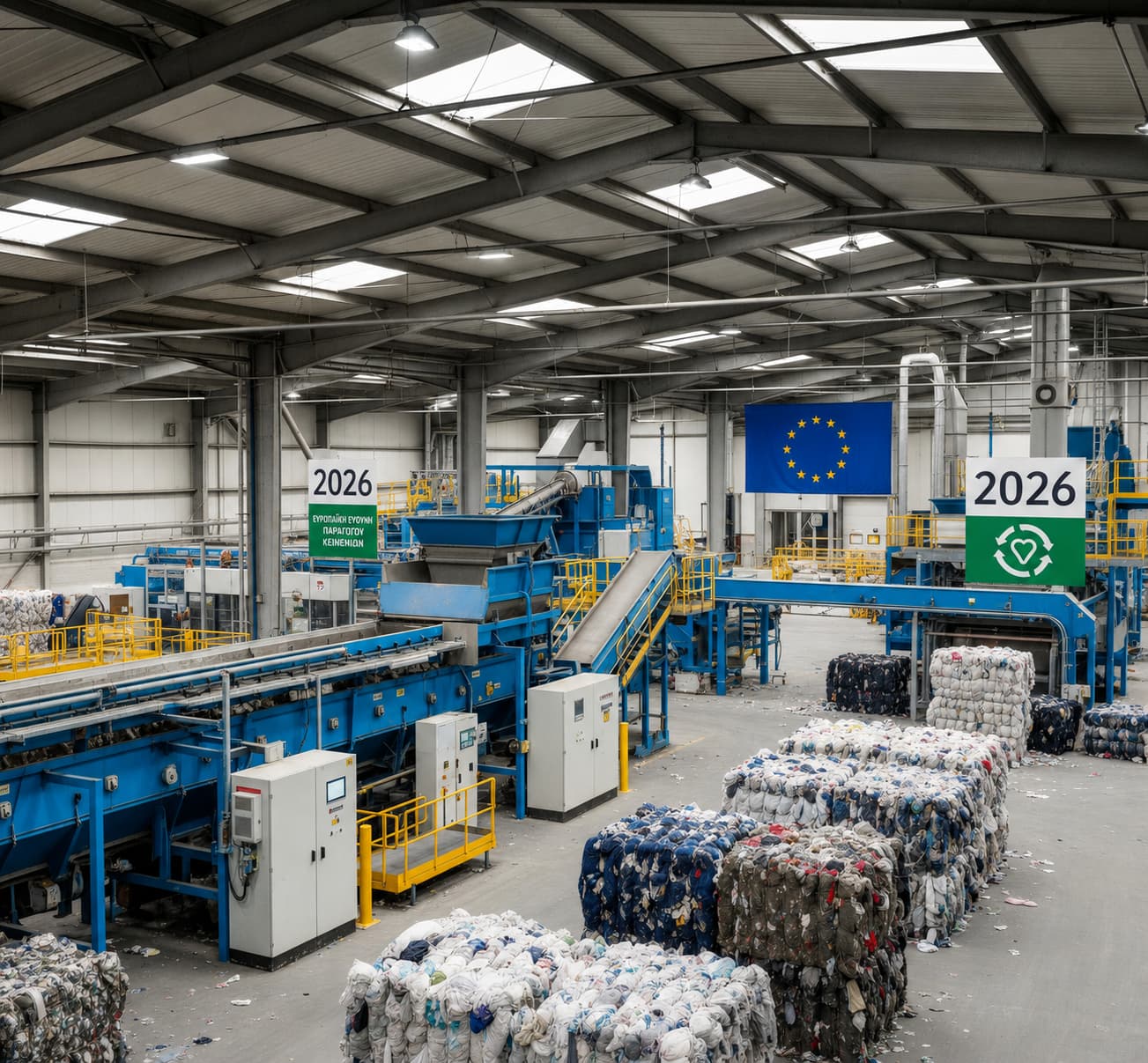
Ghent: Inside the Flemish recycling cluster that has spent the past decade trying to industrialise the sorting of post-consumer textiles, engineers have been studying the small print of the revised Waste Framework Directive that entered into force on 16 October 2025. The text introduces a Union-wide architecture for extended producer responsibility on textiles and footwear, and it gives member states twenty months to transpose the rules into national law and thirty months to put fully functioning schemes in place. That puts the operational deadline at 17 June 2027 for transposition and 17 April 2028 for scheme rollout, leaving administrations and producers with a tight runway in which to design a regime that has no Union precedent at this scale.

The core obligation is simple in principle. Every producer placing textile or footwear products on the market will pay a fee for each item, and the revenue will finance collection, sorting, reuse, preparation for reuse, recycling and ultimate disposal of waste textiles. The fees will be eco-modulated, which means they will rise for durable, repairable and recyclable products to be set at lower levels and for items designed against circularity principles to attract a heavier charge. The modulation criteria will be drawn from the delegated acts developed under the Ecodesign for Sustainable Products Regulation, locking the two regimes together in a way that lawyers are calling the most consequential textile policy alignment since the Basel Convention amendments on waste exports.

The Belgian sorting industry has been an early test bed for what the new system will mean operationally. Roughly two thirds of post-consumer textiles collected in northern Belgium currently leave the country as graded reuse stock or downcycled feedstock, mostly destined for African and Middle Eastern markets. The mandatory separate collection of textiles, which has been in force since 1 January 2025, has already pushed volumes up by an estimated fifteen per cent year-on-year, exposing the sorting bottleneck that the new producer-funded model is designed to fix. Operators expect EPR fees of between five and twelve cents per garment depending on category, with hand-knitted natural fibres at the low end and ultra-fast fashion synthetic blends at the high end.

A further point of contention is the carve-out for social-economy operators. The directive exempts not-for-profit collectors and reuse organisations from EPR fees, allowing them to run their own collection systems and to have their residual waste managed at no cost under producer-funded arrangements. The text was tightened during the trilogue to ensure that the carve-out does not allow large commercial operators to relabel subsidiaries as social enterprises, but the Commission has acknowledged that the verification of social-economy status will fall to national bodies, raising the prospect of divergent interpretations between member states with strong charity sectors and those where the textile reuse market is dominated by commercial actors.

The regulation pulls in a separate ban on the destruction of unsold textiles introduced under the Ecodesign for Sustainable Products Regulation, and several producer-responsibility organisations are now lobbying for the two regimes to be administered through a single national one-stop shop. The Commission has signalled openness to this approach in a non-paper circulated to environment attachés, and a coordination mechanism is expected to be proposed alongside the implementing acts due before the end of the year.

The bigger commercial question is how the new costs will be allocated across the value chain. Fast-fashion brands operating through online platforms face the largest immediate exposure, since the directive places the legal obligation on the entity that first places the product on the market in a member state, which may be the platform operator rather than the brand. The Commission’s impact assessment estimates that the system will internalise around 3.5 billion euro of currently external costs annually once fully phased in, a figure that will reshape margin calculations across the sector and, retailers concede, eventually push through into shelf prices.