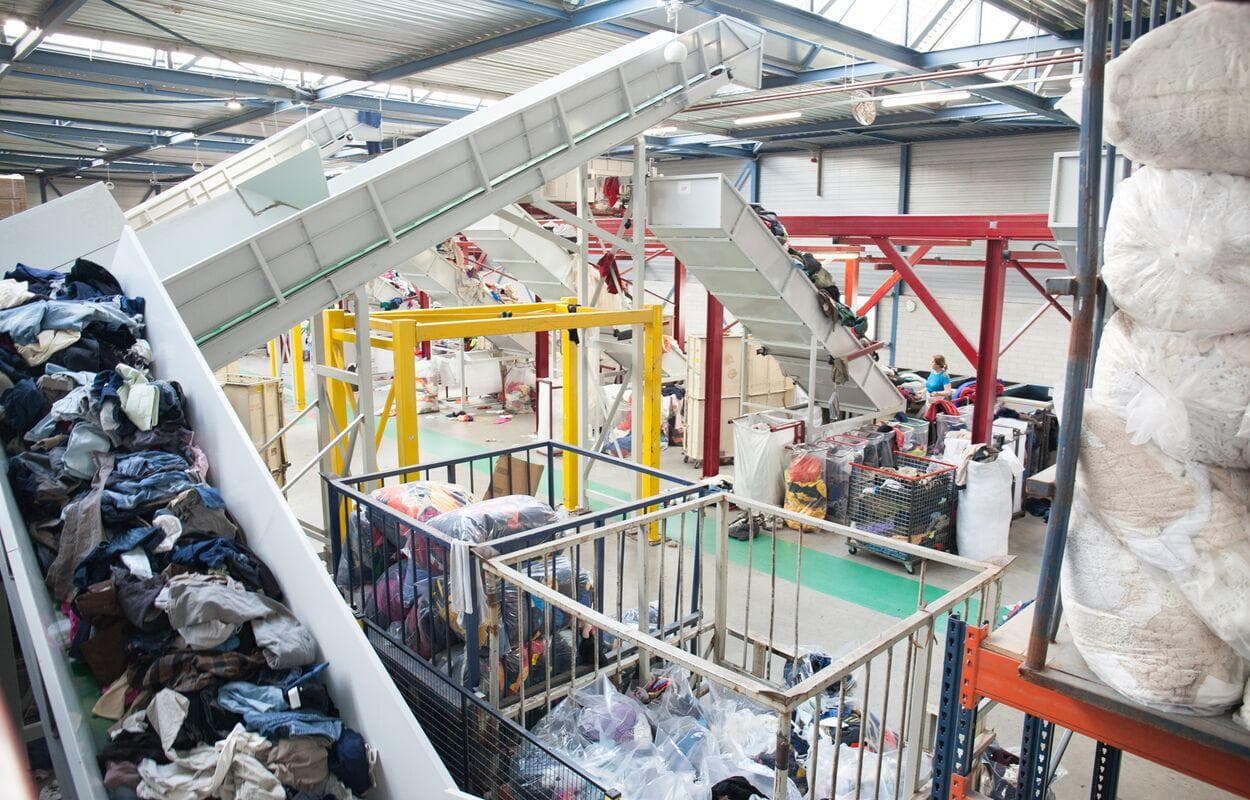
Prato: Sorting halls in this Tuscan textile district have processed Europe’s cast-off clothing for generations, largely on commercial terms and largely without help. That model is about to change, because the revised Waste Framework Directive obliges producers rather than municipalities to pay for what happens to garments after their owners discard them.
The amendment entered into force on 16 October 2025 and creates harmonised extended producer responsibility for textiles across the Union. Member states must transpose it by June 2027 and have operational schemes running by April 2028. The obligation covers clothing, accessories, household linen and footwear.
Separate collection of textile waste already applies. Member states were required to collect textiles separately from January 2025, which produced an immediate and awkward result. Collection volumes rose sharply while the markets that once absorbed used clothing shrank, leaving sorters holding material that costs more to handle than it earns.
Producer responsibility fees are meant to close that gap. Brands and retailers, including online sellers based outside the Union, will fund collection, sorting and recycling in proportion to what they place on the market. The directive also pushes eco-modulation, meaning a durable garment designed for repair should attract a lower fee than a synthetic blend engineered for a single season.
Whether eco-modulation bites depends on numbers that national authorities have not yet set. Fee schedules are a member state competence, and early drafts circulating in the Netherlands and France differ by a factor of several. Operators in Prato argue that fees pitched too low will subsidise disposal rather than fund genuine fibre-to-fibre recycling, which remains capital intensive and thinly deployed.
There is a second design question. Roughly half the textiles collected in Europe are exported, much of it to east Africa and south Asia, and the directive tightens the rules distinguishing waste shipments from genuine reuse. Sorters welcome the clarity and fear the volume, since anything that cannot be exported must find a domestic outlet that does not yet exist at scale.
Recyclers make the opposite argument, and it is a reasonable one. Guaranteed producer funding is precisely what unlocks investment in mechanical and chemical recycling capacity, because a plant needs predictable feedstock and predictable revenue before a lender will finance it. On that reading the awkward middle years are the price of building an industry.
Fast fashion sits at the centre of the fight. Retailers selling very large volumes at very low prices will face fees calculated on tonnage, which for some business models represents a material new cost. Trade associations have asked for phase-ins. Environmental groups reply that internalising disposal costs is the entire point.
Prato’s operators are preparing for both outcomes. Several have invested in automated fibre identification, betting that whoever can sort accurately will capture the funded volumes when the schemes finally switch on in 2028.