August 10, 2026
LATEST
Europe’s Air Quality Improves but WHO Limits LoomTwelve New EU Medicines Win a Green Light from EMAFIFA Agent Rules Must Answer to Europe’s CourtsTachograph Rules Now Reach Vans Crossing Europe’s BordersNature Restoration Plans Come Due as a Hard Deadline NearsBrussels Opens a State Aid Probe Into Spain’s Renewables PayoutBrussels Extends Its Tariff Suspension on US Goods IndefinitelyFarmers Win Stronger Contract Rights Across the EU Supply ChainEurope Finally Locks In Its 348-Satellite Answer to StarlinkPlatform Work Rules Face a National Scramble Before DecemberDuty-Free Parcels Reach the End of the Line for EU ShoppersAfter Nine Years, Europe and Australia Seal a Trade PactBeijing Answers Europe’s Russia Sanctions in KindOne Year On, the EU-Japan Alliance Faces Its First TestEurope’s Chip Ambitions Still Run Through Taiwan’s FabsWhy South Korea Bet Its Research Future on Europe’s ProgrammeEurope and Japan Deepen Their Economic Alliance as Rivals CircleFive Joint Defence Projects Launch Europe’s Military ShieldElectrification Plan Aims to Make Europe First Electro ContinentHorizon Europe Budget Fight Heats Up as Ministers Push BackEurope’s Air Quality Improves but WHO Limits LoomTwelve New EU Medicines Win a Green Light from EMAFIFA Agent Rules Must Answer to Europe’s CourtsTachograph Rules Now Reach Vans Crossing Europe’s BordersNature Restoration Plans Come Due as a Hard Deadline NearsBrussels Opens a State Aid Probe Into Spain’s Renewables PayoutBrussels Extends Its Tariff Suspension on US Goods IndefinitelyFarmers Win Stronger Contract Rights Across the EU Supply ChainEurope Finally Locks In Its 348-Satellite Answer to StarlinkPlatform Work Rules Face a National Scramble Before DecemberDuty-Free Parcels Reach the End of the Line for EU ShoppersAfter Nine Years, Europe and Australia Seal a Trade PactBeijing Answers Europe’s Russia Sanctions in KindOne Year On, the EU-Japan Alliance Faces Its First TestEurope’s Chip Ambitions Still Run Through Taiwan’s FabsWhy South Korea Bet Its Research Future on Europe’s ProgrammeEurope and Japan Deepen Their Economic Alliance as Rivals CircleFive Joint Defence Projects Launch Europe’s Military ShieldElectrification Plan Aims to Make Europe First Electro ContinentHorizon Europe Budget Fight Heats Up as Ministers Push Back
August 10, 2026
LATEST
Europe’s Air Quality Improves but WHO Limits LoomTwelve New EU Medicines Win a Green Light from EMAFIFA Agent Rules Must Answer to Europe’s CourtsTachograph Rules Now Reach Vans Crossing Europe’s BordersNature Restoration Plans Come Due as a Hard Deadline NearsBrussels Opens a State Aid Probe Into Spain’s Renewables PayoutBrussels Extends Its Tariff Suspension on US Goods IndefinitelyFarmers Win Stronger Contract Rights Across the EU Supply ChainEurope Finally Locks In Its 348-Satellite Answer to StarlinkPlatform Work Rules Face a National Scramble Before DecemberDuty-Free Parcels Reach the End of the Line for EU ShoppersAfter Nine Years, Europe and Australia Seal a Trade PactBeijing Answers Europe’s Russia Sanctions in KindOne Year On, the EU-Japan Alliance Faces Its First TestEurope’s Chip Ambitions Still Run Through Taiwan’s FabsWhy South Korea Bet Its Research Future on Europe’s ProgrammeEurope and Japan Deepen Their Economic Alliance as Rivals CircleFive Joint Defence Projects Launch Europe’s Military ShieldElectrification Plan Aims to Make Europe First Electro ContinentHorizon Europe Budget Fight Heats Up as Ministers Push BackEurope’s Air Quality Improves but WHO Limits LoomTwelve New EU Medicines Win a Green Light from EMAFIFA Agent Rules Must Answer to Europe’s CourtsTachograph Rules Now Reach Vans Crossing Europe’s BordersNature Restoration Plans Come Due as a Hard Deadline NearsBrussels Opens a State Aid Probe Into Spain’s Renewables PayoutBrussels Extends Its Tariff Suspension on US Goods IndefinitelyFarmers Win Stronger Contract Rights Across the EU Supply ChainEurope Finally Locks In Its 348-Satellite Answer to StarlinkPlatform Work Rules Face a National Scramble Before DecemberDuty-Free Parcels Reach the End of the Line for EU ShoppersAfter Nine Years, Europe and Australia Seal a Trade PactBeijing Answers Europe’s Russia Sanctions in KindOne Year On, the EU-Japan Alliance Faces Its First TestEurope’s Chip Ambitions Still Run Through Taiwan’s FabsWhy South Korea Bet Its Research Future on Europe’s ProgrammeEurope and Japan Deepen Their Economic Alliance as Rivals CircleFive Joint Defence Projects Launch Europe’s Military ShieldElectrification Plan Aims to Make Europe First Electro ContinentHorizon Europe Budget Fight Heats Up as Ministers Push Back

Top EU Judges Clear Mandatory Vaccination for Soldiers Alone

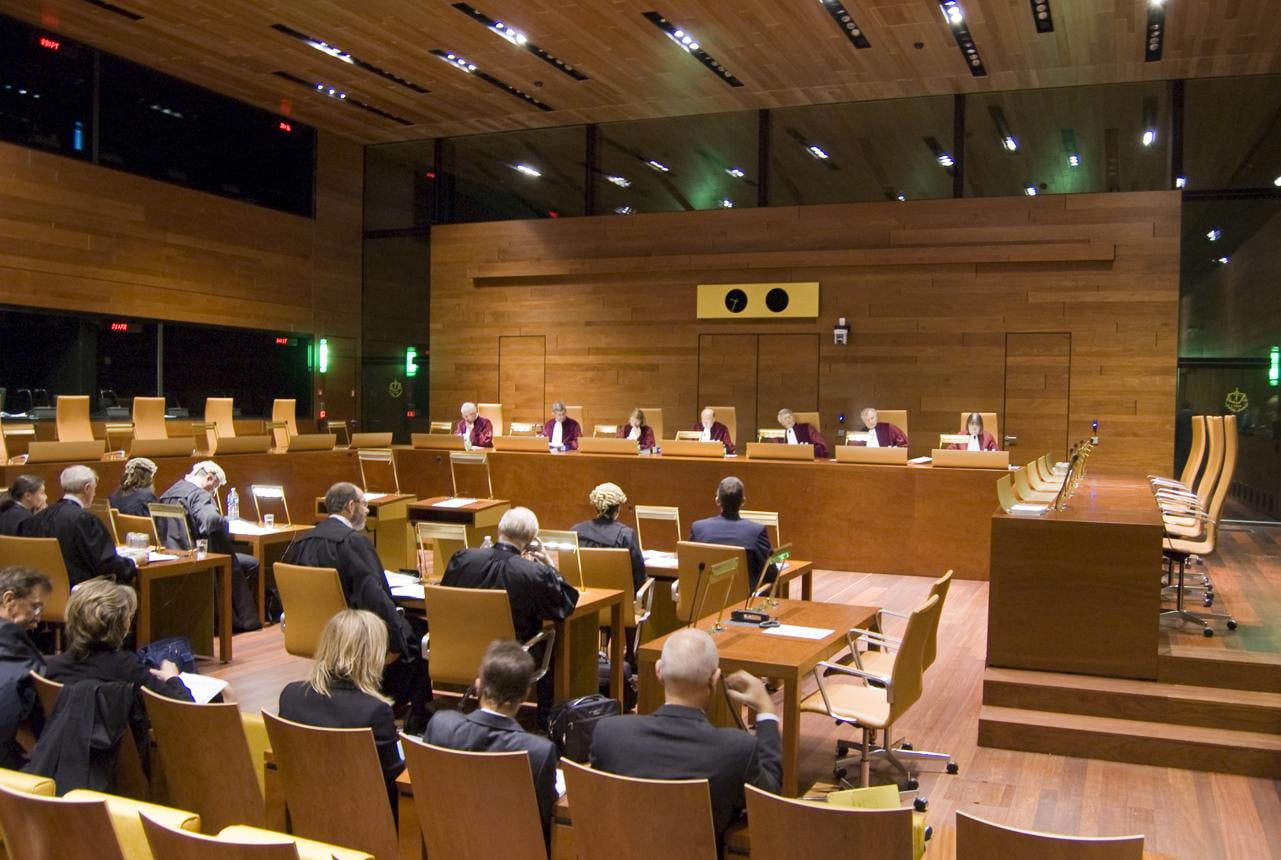
Luxembourg: The Court of Justice of the European Union has ruled that a member state may impose compulsory vaccination on its armed forces without breaching the bloc’s equal-treatment rules, provided the obligation is confined to military personnel and tied to the specific demands of service. The judgment, handed down on 18 June, draws a careful line between a legitimate operational requirement and the kind of blanket coercion that EU law would not tolerate.

The case reached Luxembourg after a serving officer challenged a national rule requiring soldiers, but not civilians, to be immunised against SARS-CoV-2. The officer argued that singling out one professional group amounted to unequal treatment under the bloc’s anti-discrimination framework. The Court disagreed. Judges accepted that armed forces operate under conditions, close quarters, rapid deployment, and postings abroad, that have no genuine civilian equivalent, and that a government may reasonably decide a unit’s readiness depends on keeping infection out of the barracks. Differential treatment, the Court said, is not discrimination when the two groups being compared are not truly comparable in the first place.

What makes the ruling significant is less the outcome than the reasoning that surrounds it. The Court declined to hand governments an unconditional free pass. It insisted that any vaccination mandate must remain proportionate: narrowly targeted, grounded in evidence, and limited to what the military mission actually requires. A measure that swept in office-based reservists or civilian contractors on identical terms might well fail that test. The proportionality filter, in other words, survives even where the headline claim of discrimination falls away, leaving national legislatures with discretion but not a blank cheque.

The decision lands at a sensitive moment. Across Europe, defence ministries are rebuilding readiness against a backdrop of heightened security anxiety, and questions of conscription, medical fitness and the obligations a state may place on those in uniform are once again live. By validating a tightly drawn mandate while insisting on strict justification, the Court has given governments a usable template without endorsing the broader compulsory-vaccination schemes that proved so divisive during the pandemic years.

For fundamental-rights lawyers, the judgment is a reminder that the Charter rarely yields absolutes. Bodily integrity and private life remain protected, but they are weighed against the duties that attach to particular forms of public service. The Court’s message is that context determines the balance: an obligation acceptable for a deployable infantry battalion is not automatically acceptable for the wider population, and courts will keep scrutinising where the line is drawn.

The ruling binds national courts handling similar disputes and will shape how ministries draft future health requirements for personnel. Its lasting contribution may prove procedural rather than substantive, a confirmation that comparability and proportionality, not slogans about freedom or duty, are the questions that decide such cases. For now, soldiers may face a needle their civilian neighbours do not, and EU law sees nothing unequal in that.