August 9, 2026
LATEST
New EU Gas Market Rules Take Effect With Consumer SafeguardsDeforestation Regulation Holds Its December Deadline Despite CutsDigital Omnibus Delays Europe’s High-Risk AI Deadline to 2027Europe’s Schools Confront a Widening Basic Skills GapRule of Law Report Finds Progress but Trust Still LagsIRIS2 Gains 66 Satellites as Brussels Signs the Rollout DealNature Restoration Plans Come Due as Member States Race a DeadlineECB Rates Hold at 2.25 Percent as Frankfurt Waits on the DataEU Budget Talks Turn to Cohesion as Ireland Takes OverWildfire Response Stretches Europe’s Emergency Fleet ThinCan Europe’s Quantum Plan Match Its Big Ambitions?Armenia Edges West as Moscow’s Grip Slips AwayEurope Inherits the World’s Aid Bill It Cannot Fully PayAir Passenger Rights Get Their First Overhaul in Two DecadesErasmus Opens a 5 Billion Euro Round for Skills and MobilityCeuta Crisis Pushes the EU Toward Faster Migrant ReturnsBulky Parcels Face a Packaging Crackdown From August 12Can Europe Build Its Drone Wall Before 2030 Arrives?Indonesia’s Trade Deal With Europe Nears Its Final SignatureEurope Leans on Beijing to Keep Climate Talks Alive Before AntalyaNew EU Gas Market Rules Take Effect With Consumer SafeguardsDeforestation Regulation Holds Its December Deadline Despite CutsDigital Omnibus Delays Europe’s High-Risk AI Deadline to 2027Europe’s Schools Confront a Widening Basic Skills GapRule of Law Report Finds Progress but Trust Still LagsIRIS2 Gains 66 Satellites as Brussels Signs the Rollout DealNature Restoration Plans Come Due as Member States Race a DeadlineECB Rates Hold at 2.25 Percent as Frankfurt Waits on the DataEU Budget Talks Turn to Cohesion as Ireland Takes OverWildfire Response Stretches Europe’s Emergency Fleet ThinCan Europe’s Quantum Plan Match Its Big Ambitions?Armenia Edges West as Moscow’s Grip Slips AwayEurope Inherits the World’s Aid Bill It Cannot Fully PayAir Passenger Rights Get Their First Overhaul in Two DecadesErasmus Opens a 5 Billion Euro Round for Skills and MobilityCeuta Crisis Pushes the EU Toward Faster Migrant ReturnsBulky Parcels Face a Packaging Crackdown From August 12Can Europe Build Its Drone Wall Before 2030 Arrives?Indonesia’s Trade Deal With Europe Nears Its Final SignatureEurope Leans on Beijing to Keep Climate Talks Alive Before Antalya
August 9, 2026
LATEST
New EU Gas Market Rules Take Effect With Consumer SafeguardsDeforestation Regulation Holds Its December Deadline Despite CutsDigital Omnibus Delays Europe’s High-Risk AI Deadline to 2027Europe’s Schools Confront a Widening Basic Skills GapRule of Law Report Finds Progress but Trust Still LagsIRIS2 Gains 66 Satellites as Brussels Signs the Rollout DealNature Restoration Plans Come Due as Member States Race a DeadlineECB Rates Hold at 2.25 Percent as Frankfurt Waits on the DataEU Budget Talks Turn to Cohesion as Ireland Takes OverWildfire Response Stretches Europe’s Emergency Fleet ThinCan Europe’s Quantum Plan Match Its Big Ambitions?Armenia Edges West as Moscow’s Grip Slips AwayEurope Inherits the World’s Aid Bill It Cannot Fully PayAir Passenger Rights Get Their First Overhaul in Two DecadesErasmus Opens a 5 Billion Euro Round for Skills and MobilityCeuta Crisis Pushes the EU Toward Faster Migrant ReturnsBulky Parcels Face a Packaging Crackdown From August 12Can Europe Build Its Drone Wall Before 2030 Arrives?Indonesia’s Trade Deal With Europe Nears Its Final SignatureEurope Leans on Beijing to Keep Climate Talks Alive Before AntalyaNew EU Gas Market Rules Take Effect With Consumer SafeguardsDeforestation Regulation Holds Its December Deadline Despite CutsDigital Omnibus Delays Europe’s High-Risk AI Deadline to 2027Europe’s Schools Confront a Widening Basic Skills GapRule of Law Report Finds Progress but Trust Still LagsIRIS2 Gains 66 Satellites as Brussels Signs the Rollout DealNature Restoration Plans Come Due as Member States Race a DeadlineECB Rates Hold at 2.25 Percent as Frankfurt Waits on the DataEU Budget Talks Turn to Cohesion as Ireland Takes OverWildfire Response Stretches Europe’s Emergency Fleet ThinCan Europe’s Quantum Plan Match Its Big Ambitions?Armenia Edges West as Moscow’s Grip Slips AwayEurope Inherits the World’s Aid Bill It Cannot Fully PayAir Passenger Rights Get Their First Overhaul in Two DecadesErasmus Opens a 5 Billion Euro Round for Skills and MobilityCeuta Crisis Pushes the EU Toward Faster Migrant ReturnsBulky Parcels Face a Packaging Crackdown From August 12Can Europe Build Its Drone Wall Before 2030 Arrives?Indonesia’s Trade Deal With Europe Nears Its Final SignatureEurope Leans on Beijing to Keep Climate Talks Alive Before Antalya

Trust Ownership Data Goes Public Again After Luxembourg Verdict

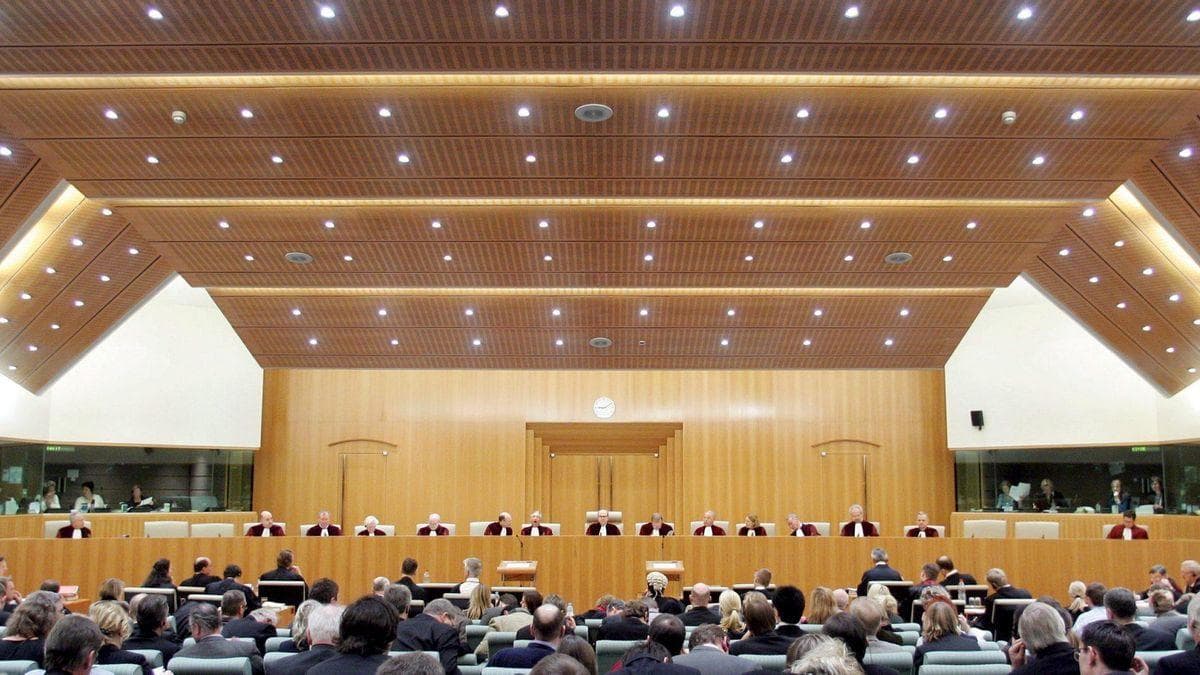
Milan: A ruling from the Court of Justice has reopened one of the most contested questions in the European fight against dirty money – how far the public should be able to see who really sits behind opaque legal structures. In a judgment handed down on 21 May, the Court found that, subject to a demonstrated legitimate interest, members of the public may access information on the beneficial ownership of trust mandates governed by Italian law. The decision threads a careful needle between transparency and privacy, and its reasoning will ripple well beyond the Italian case that prompted it.

The backdrop matters. In late 2022 the same Court struck down a provision of the anti-money-laundering directive that had given the general public unconditional access to beneficial ownership registers for companies, finding the blanket approach a disproportionate interference with the rights to private life and data protection. That ruling forced national registers across the bloc to slam shut overnight, frustrating journalists, campaigners and compliance teams who had come to rely on them. The question ever since has been where, exactly, the line should be redrawn.

The new judgment offers part of the answer for trusts, a vehicle long prized for discretion. By tying access to a legitimate interest rather than throwing the doors fully open, the Court signals that transparency and fundamental rights need not be cast as irreconcilable opposites. Someone who can show a genuine stake – an investigative reporter tracing illicit flows, a counterparty conducting due diligence, a civil-society body monitoring sanctions evasion – should be able to look behind the curtain. The merely curious should not.

That compromise will satisfy few completely. Transparency advocates will note that a legitimate-interest test invites gatekeeping, inconsistent national practice and litigation over who qualifies. Privacy defenders will counter that any public access to sensitive ownership data carries risk, particularly for beneficiaries who are minors or otherwise vulnerable. Both criticisms have force, and both were plainly in the Court’s mind as it weighed the competing charter rights.

For practitioners, the immediate task is operational. Member States that froze trust registers after the 2022 decision now have a clearer template for reopening them on a conditioned basis, and supervisory authorities will need guidance on how a legitimate-interest claim is assessed, evidenced and, where refused, appealed. The risk is a patchwork in which the same claim succeeds in one capital and fails in another, undermining the single market for compliance that the anti-money-laundering framework was meant to build.

The larger significance lies in the Court’s method. Rather than treating financial transparency as an absolute good to be maximised, it has insisted that each intrusion be justified and proportionate. That is an uncomfortable discipline for a policy field that has spent a decade equating openness with virtue. But it is also the only durable footing, because rules that ignore fundamental rights tend to be struck down, leaving the system weaker than before. The verdict points toward a transparency regime that is narrower in reach but firmer in law – and therefore harder to dismantle in the next round of litigation.