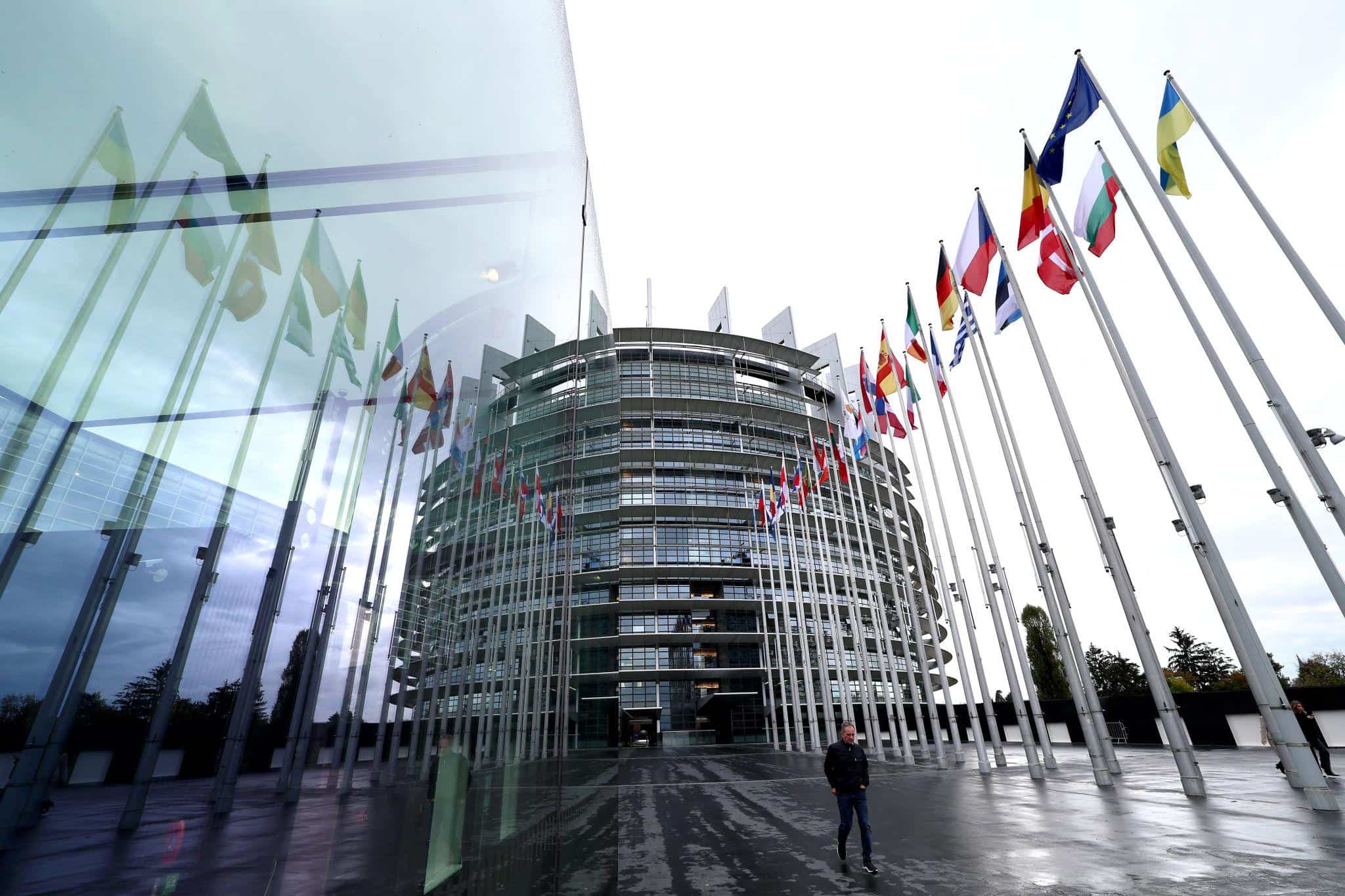
Strasbourg: Negotiations on the European Union’s next long-term budget have opened with a Commission proposal of approximately two trillion euros for the 2028 to 2034 Multiannual Financial Framework. The package, tabled on 16 July 2025, reorganises the spending architecture around four pillars — competitiveness and innovation, cohesion and social investment, security and defence readiness, and external action — and consolidates dozens of legacy programmes into larger flexibility instruments designed to respond to shocks without requiring the unanimous mid-term revisions that characterised the previous cycle.
The Commission has proposed that 35 per cent of the envelope be dedicated to climate and environment objectives, a share that civil society organisations have criticised as insufficient given the scale of investment needs identified in the Draghi competitiveness report and in the European Climate Advisory Board’s 2026 progress assessment. The internal coherence of the proposal is structured around four headings: a renewed Cohesion Policy with adjusted criteria for funding allocation, an enhanced Common Agricultural Policy under the proposed 2028 to 2034 regulation, a strengthened external action heading covering enlargement and neighbourhood instruments, and a competitiveness fund designed to absorb the European Defence Industry Programme and Horizon Europe’s successor.
Own resources reform has moved from the periphery to the centre of negotiations. The Commission has proposed activating the second basket of own resources, including revenues from the Emissions Trading System extension, the Carbon Border Adjustment Mechanism, and a corporate-statistic-based contribution. The proposed package, if adopted, would reduce reliance on the Gross National Income-based contribution that currently accounts for the majority of the EU’s revenue, and would establish more direct links between Union policies and Union financing. Net contributors have signalled openness to own resources reform conditional on overall envelope discipline.
The Recovery and Resilience Facility, the 800-billion-euro debt-financed instrument established in 2020 to address the pandemic, is scheduled to conclude in 2026. The Commission has not formally proposed a successor borrowing facility for the new MFF cycle, but the legislative train indicates that bridging instruments may be necessary to cover ongoing reconstruction and reform investments, particularly for Ukraine and Moldova in the run-up to enlargement.
The European Parliament’s Budget Committee has signalled its priorities through its preliminary report. MEPs argue that the proposed envelope is too modest to absorb new political commitments — defence readiness, enlargement, climate transition and competitiveness — without sacrificing existing programmes. The Parliament’s leverage on the MFF is constrained by the requirement of Council unanimity for the Own Resources Decision, but the Parliament holds genuine power over annual budgets and over sectoral regulations, which collectively shape implementation of MFF headings.
The enlargement dimension is the most politically sensitive. Internal Commission modelling cited by the Bundestag estimates that maintaining current EU policies and programmes in their current form for a Union of 35 Member States would require a budget increase of approximately 21 per cent. Ukraine alone would expand the agricultural area covered by the CAP by around one quarter, and reconstruction would draw heavily on cohesion funds intended for poorer regions. The Commission’s response — phased integration mechanisms and accession-related adjustments — has been welcomed cautiously by net contributors, who insist that internal reform must accompany external enlargement.
The Cohesion Policy framework has produced the sharpest internal divides. Frontline beneficiaries — Poland, Romania, Bulgaria, the Baltic States, Greece, Portugal and the Visegrad capitals — have signalled resistance to any reduction in their allocations. Net contributors have countered that cohesion funding should be tied more strictly to performance benchmarks and to the green and digital transitions. The compromise architecture is likely to involve continued unconditional allocations alongside a more flexible policy-objective layer.
Anti-fraud and financial control measures are being strengthened through the parallel revision of the Financial Regulation, which sets the rules for Union budget implementation. The European Anti-Fraud Office has expanded its case load, and the European Public Prosecutor’s Office now operates with full enforcement powers across 24 participating Member States. Investigations into misuse of EU funds in agricultural, cohesion and recovery instruments have produced indictments and recoveries that reached record levels in 2025. The reform of the Financial Regulation under negotiation includes new provisions on conflict-of-interest screening, beneficial ownership transparency and digital traceability of funds — measures that anti-corruption advocates consider overdue.