August 9, 2026
LATEST
New EU Gas Market Rules Take Effect With Consumer SafeguardsDeforestation Regulation Holds Its December Deadline Despite CutsDigital Omnibus Delays Europe’s High-Risk AI Deadline to 2027Europe’s Schools Confront a Widening Basic Skills GapRule of Law Report Finds Progress but Trust Still LagsIRIS2 Gains 66 Satellites as Brussels Signs the Rollout DealNature Restoration Plans Come Due as Member States Race a DeadlineECB Rates Hold at 2.25 Percent as Frankfurt Waits on the DataEU Budget Talks Turn to Cohesion as Ireland Takes OverWildfire Response Stretches Europe’s Emergency Fleet ThinCan Europe’s Quantum Plan Match Its Big Ambitions?Armenia Edges West as Moscow’s Grip Slips AwayEurope Inherits the World’s Aid Bill It Cannot Fully PayAir Passenger Rights Get Their First Overhaul in Two DecadesErasmus Opens a 5 Billion Euro Round for Skills and MobilityCeuta Crisis Pushes the EU Toward Faster Migrant ReturnsBulky Parcels Face a Packaging Crackdown From August 12Can Europe Build Its Drone Wall Before 2030 Arrives?Indonesia’s Trade Deal With Europe Nears Its Final SignatureEurope Leans on Beijing to Keep Climate Talks Alive Before AntalyaNew EU Gas Market Rules Take Effect With Consumer SafeguardsDeforestation Regulation Holds Its December Deadline Despite CutsDigital Omnibus Delays Europe’s High-Risk AI Deadline to 2027Europe’s Schools Confront a Widening Basic Skills GapRule of Law Report Finds Progress but Trust Still LagsIRIS2 Gains 66 Satellites as Brussels Signs the Rollout DealNature Restoration Plans Come Due as Member States Race a DeadlineECB Rates Hold at 2.25 Percent as Frankfurt Waits on the DataEU Budget Talks Turn to Cohesion as Ireland Takes OverWildfire Response Stretches Europe’s Emergency Fleet ThinCan Europe’s Quantum Plan Match Its Big Ambitions?Armenia Edges West as Moscow’s Grip Slips AwayEurope Inherits the World’s Aid Bill It Cannot Fully PayAir Passenger Rights Get Their First Overhaul in Two DecadesErasmus Opens a 5 Billion Euro Round for Skills and MobilityCeuta Crisis Pushes the EU Toward Faster Migrant ReturnsBulky Parcels Face a Packaging Crackdown From August 12Can Europe Build Its Drone Wall Before 2030 Arrives?Indonesia’s Trade Deal With Europe Nears Its Final SignatureEurope Leans on Beijing to Keep Climate Talks Alive Before Antalya
August 9, 2026
LATEST
New EU Gas Market Rules Take Effect With Consumer SafeguardsDeforestation Regulation Holds Its December Deadline Despite CutsDigital Omnibus Delays Europe’s High-Risk AI Deadline to 2027Europe’s Schools Confront a Widening Basic Skills GapRule of Law Report Finds Progress but Trust Still LagsIRIS2 Gains 66 Satellites as Brussels Signs the Rollout DealNature Restoration Plans Come Due as Member States Race a DeadlineECB Rates Hold at 2.25 Percent as Frankfurt Waits on the DataEU Budget Talks Turn to Cohesion as Ireland Takes OverWildfire Response Stretches Europe’s Emergency Fleet ThinCan Europe’s Quantum Plan Match Its Big Ambitions?Armenia Edges West as Moscow’s Grip Slips AwayEurope Inherits the World’s Aid Bill It Cannot Fully PayAir Passenger Rights Get Their First Overhaul in Two DecadesErasmus Opens a 5 Billion Euro Round for Skills and MobilityCeuta Crisis Pushes the EU Toward Faster Migrant ReturnsBulky Parcels Face a Packaging Crackdown From August 12Can Europe Build Its Drone Wall Before 2030 Arrives?Indonesia’s Trade Deal With Europe Nears Its Final SignatureEurope Leans on Beijing to Keep Climate Talks Alive Before AntalyaNew EU Gas Market Rules Take Effect With Consumer SafeguardsDeforestation Regulation Holds Its December Deadline Despite CutsDigital Omnibus Delays Europe’s High-Risk AI Deadline to 2027Europe’s Schools Confront a Widening Basic Skills GapRule of Law Report Finds Progress but Trust Still LagsIRIS2 Gains 66 Satellites as Brussels Signs the Rollout DealNature Restoration Plans Come Due as Member States Race a DeadlineECB Rates Hold at 2.25 Percent as Frankfurt Waits on the DataEU Budget Talks Turn to Cohesion as Ireland Takes OverWildfire Response Stretches Europe’s Emergency Fleet ThinCan Europe’s Quantum Plan Match Its Big Ambitions?Armenia Edges West as Moscow’s Grip Slips AwayEurope Inherits the World’s Aid Bill It Cannot Fully PayAir Passenger Rights Get Their First Overhaul in Two DecadesErasmus Opens a 5 Billion Euro Round for Skills and MobilityCeuta Crisis Pushes the EU Toward Faster Migrant ReturnsBulky Parcels Face a Packaging Crackdown From August 12Can Europe Build Its Drone Wall Before 2030 Arrives?Indonesia’s Trade Deal With Europe Nears Its Final SignatureEurope Leans on Beijing to Keep Climate Talks Alive Before Antalya

Western Balkans Growth Plan Disburses First Tranche to Six Capitals

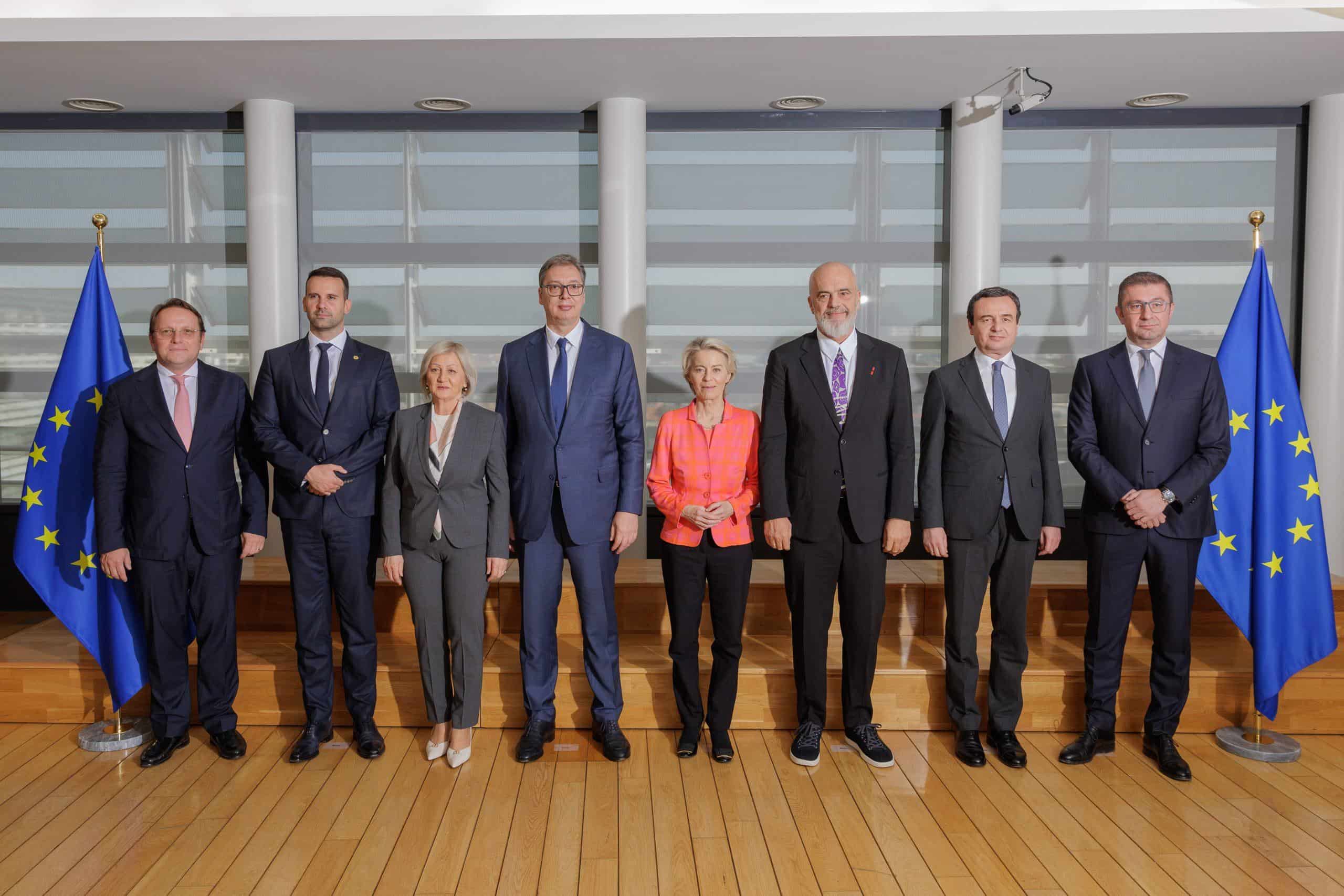
Tirana: The first tranche of the Western Balkans Growth Plan was paid out last week, with the European Commission disbursing two point one billion euros to the six pre-accession states under a programme designed to bring the candidates’ economies closer to Union levels of income before formal membership. Six capitals each signed individual reform agendas with the Commission earlier this year and have now met the initial conditionality criteria.

The Growth Plan, formally adopted under Regulation (EU) 2024/1666, is a six billion euro envelope of grants and loans for the 2024-2027 period. Two billion comes in grants, four billion in concessional loans channelled through the European Investment Bank’s Western Balkans Window. The funding is conditional on a structured reform programme covering competitiveness, the rule of law, public administration and the alignment of national legislation with the Union acquis.

The disbursement architecture marks a departure from earlier pre-accession instruments. Rather than the project-based logic of the previous IPA framework, the Growth Plan operates on a payment-against-results model. Each reform agenda contains forty to fifty milestones, with payment instalments released only when the Commission’s verification mission confirms that milestones have been satisfactorily met. The methodology borrows directly from the Recovery and Resilience Facility.

Albania’s reform agenda is built around three blocs. The first covers competition policy and the single market, including amendments to the public procurement code, the creation of an asset declaration register for senior officials and the establishment of a competition authority with enforcement powers approaching Union standards. The second covers the green and digital transitions, with specific obligations on grid connectivity to the European integrated electricity market. The third covers human capital and labour mobility, including alignment with the European Skills Agenda.

Across the region, the most demanding milestones concern the rule of law. Each reform agenda contains specific commitments on judicial independence, anti-corruption institutions, media freedom and the management of the public administration. Compliance has been uneven. Two reform agendas required modification before the first disbursement, with Commission staff insisting on more granular indicators for judicial appointment procedures.

The economic logic of the Growth Plan rests on a simple insight. The income gap between the Western Balkans and the Union has narrowed only marginally over two decades of pre-accession engagement. Per capita gross domestic product in the region remains at thirty to fifty percent of the Union average. Without faster convergence, accession risks producing a second-class membership status that strains both political legitimacy and budgetary resources after enlargement. The Growth Plan attempts to front-load convergence before formal membership rather than after it.

Three open issues will define the next phase. The first is absorption capacity. Several beneficiaries have limited administrative resources to implement reform programmes of this complexity. Technical assistance from Member State experts has been mobilised but its coordination with national administrations has been uneven. The second is the political fragility of reform commitments in electoral cycles. The third is the interaction with parallel financing from international financial institutions, including the European Bank for Reconstruction and Development.

For now, the first disbursement signals that a more demanding but more transformative path for pre-accession finance has been chosen. Whether it delivers the convergence its drafters seek remains to be tested.