September 19, 2026
LATEST
Small Parcels Get a Handling Fee as Europe’s Customs Reform ClearsManila Must Open Public Contracts Before Europe Signs AnythingEurope’s KIDS Act Would Put Parents Back in Charge of AccountsArmenian Apricots Reach Europe Only Through Narrow Tariff QuotasMyanmar’s Crisis Outgrows the Aid Envelope Europe Built for ItJapan Joins Horizon Europe for the Price of a Rounding ErrorIndia’s Trade Deal Now Waits on the Council and Two ParliamentsBeijing Gets an October Date and a Very Short Deliverables ListJudges Strike Down Estonia’s Deposit for European CandidatesSolidarity Fund Pays for Storms Eight Months After the WaterFreight Tariffs Decide Whether the Middle Corridor Reaches ScaleFolding the Diplomatic Service Into the Commission Needs UnanimityCritical Raw Materials Corporation Tests EU StockpilingHeatwave Plan Tests Europe’s Climate Adaptation GapEuropean Security Council Faces a Missing Legal BaseNature Restoration Plans Arrive With a Year of Haggling AheadPlatform Work Rules Arrive in December With Most States UnreadyDominant Firms Face Europe’s First Rulebook on Exclusionary AbuseInnovation Act Reaches Council With EU Preference Still DisputedSecondary Raw Materials Await an Act That Has Not Been TabledSmall Parcels Get a Handling Fee as Europe’s Customs Reform ClearsManila Must Open Public Contracts Before Europe Signs AnythingEurope’s KIDS Act Would Put Parents Back in Charge of AccountsArmenian Apricots Reach Europe Only Through Narrow Tariff QuotasMyanmar’s Crisis Outgrows the Aid Envelope Europe Built for ItJapan Joins Horizon Europe for the Price of a Rounding ErrorIndia’s Trade Deal Now Waits on the Council and Two ParliamentsBeijing Gets an October Date and a Very Short Deliverables ListJudges Strike Down Estonia’s Deposit for European CandidatesSolidarity Fund Pays for Storms Eight Months After the WaterFreight Tariffs Decide Whether the Middle Corridor Reaches ScaleFolding the Diplomatic Service Into the Commission Needs UnanimityCritical Raw Materials Corporation Tests EU StockpilingHeatwave Plan Tests Europe’s Climate Adaptation GapEuropean Security Council Faces a Missing Legal BaseNature Restoration Plans Arrive With a Year of Haggling AheadPlatform Work Rules Arrive in December With Most States UnreadyDominant Firms Face Europe’s First Rulebook on Exclusionary AbuseInnovation Act Reaches Council With EU Preference Still DisputedSecondary Raw Materials Await an Act That Has Not Been Tabled
September 19, 2026
LATEST
Small Parcels Get a Handling Fee as Europe’s Customs Reform ClearsManila Must Open Public Contracts Before Europe Signs AnythingEurope’s KIDS Act Would Put Parents Back in Charge of AccountsArmenian Apricots Reach Europe Only Through Narrow Tariff QuotasMyanmar’s Crisis Outgrows the Aid Envelope Europe Built for ItJapan Joins Horizon Europe for the Price of a Rounding ErrorIndia’s Trade Deal Now Waits on the Council and Two ParliamentsBeijing Gets an October Date and a Very Short Deliverables ListJudges Strike Down Estonia’s Deposit for European CandidatesSolidarity Fund Pays for Storms Eight Months After the WaterFreight Tariffs Decide Whether the Middle Corridor Reaches ScaleFolding the Diplomatic Service Into the Commission Needs UnanimityCritical Raw Materials Corporation Tests EU StockpilingHeatwave Plan Tests Europe’s Climate Adaptation GapEuropean Security Council Faces a Missing Legal BaseNature Restoration Plans Arrive With a Year of Haggling AheadPlatform Work Rules Arrive in December With Most States UnreadyDominant Firms Face Europe’s First Rulebook on Exclusionary AbuseInnovation Act Reaches Council With EU Preference Still DisputedSecondary Raw Materials Await an Act That Has Not Been TabledSmall Parcels Get a Handling Fee as Europe’s Customs Reform ClearsManila Must Open Public Contracts Before Europe Signs AnythingEurope’s KIDS Act Would Put Parents Back in Charge of AccountsArmenian Apricots Reach Europe Only Through Narrow Tariff QuotasMyanmar’s Crisis Outgrows the Aid Envelope Europe Built for ItJapan Joins Horizon Europe for the Price of a Rounding ErrorIndia’s Trade Deal Now Waits on the Council and Two ParliamentsBeijing Gets an October Date and a Very Short Deliverables ListJudges Strike Down Estonia’s Deposit for European CandidatesSolidarity Fund Pays for Storms Eight Months After the WaterFreight Tariffs Decide Whether the Middle Corridor Reaches ScaleFolding the Diplomatic Service Into the Commission Needs UnanimityCritical Raw Materials Corporation Tests EU StockpilingHeatwave Plan Tests Europe’s Climate Adaptation GapEuropean Security Council Faces a Missing Legal BaseNature Restoration Plans Arrive With a Year of Haggling AheadPlatform Work Rules Arrive in December With Most States UnreadyDominant Firms Face Europe’s First Rulebook on Exclusionary AbuseInnovation Act Reaches Council With EU Preference Still DisputedSecondary Raw Materials Await an Act That Has Not Been Tabled

Aviation Fuel Rules Outrun the Plants That Must Supply Them

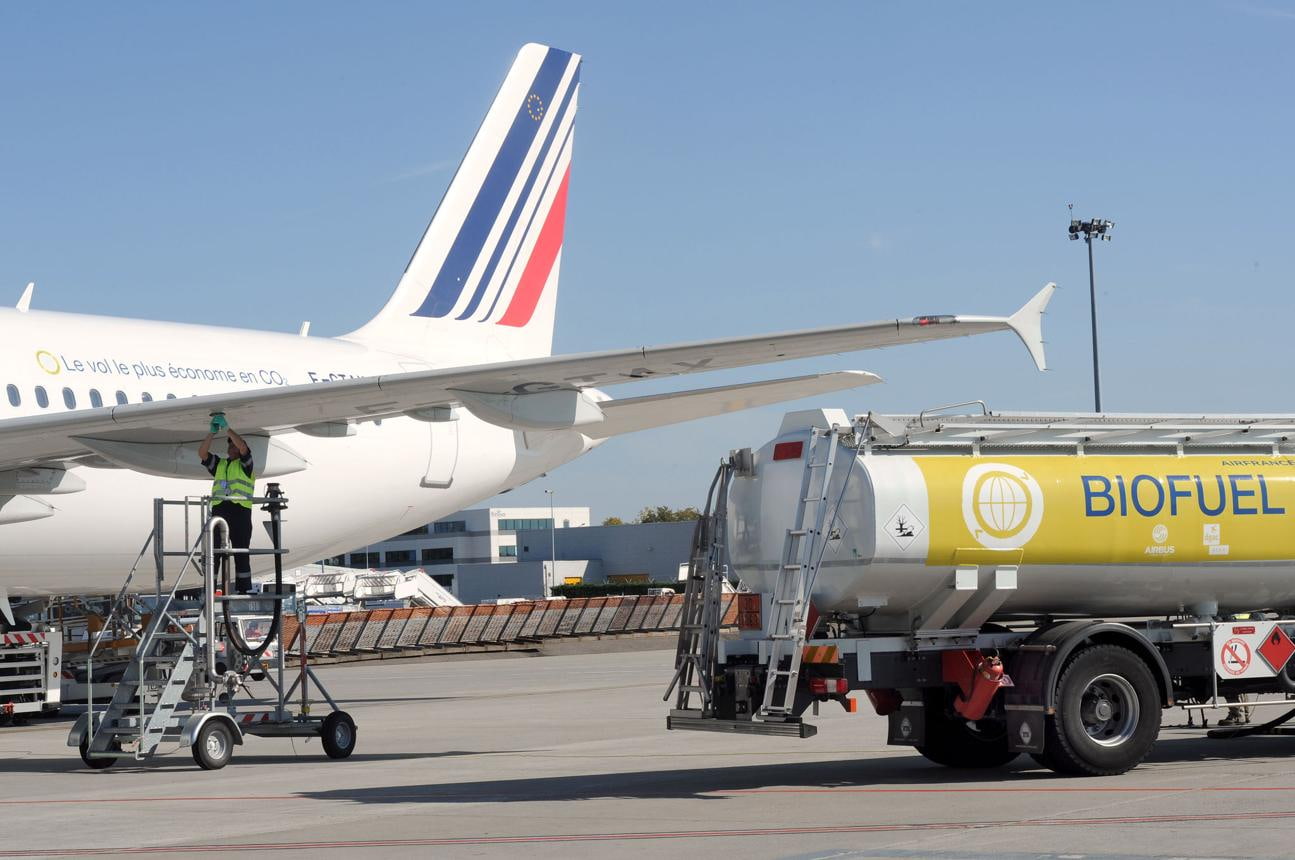
Toulouse: The fuel farms serving Europe’s larger airports now operate under a blending obligation that rises on a fixed schedule while the plants meant to fill it arrive on no schedule at all. ReFuelEU Aviation required a 2 percent sustainable share in 2025, moves to 6 percent in 2030 and reaches 70 percent by 2050. The first year appears to have worked. The years that follow are where the arithmetic strains.

The regulation binds fuel suppliers rather than airlines, and it covers departures from Union airports above 800,000 passengers or 100,000 tonnes of freight a year. The European Union Aviation Safety Agency publishes an annual technical report tracking compliance and market development, which gives this file something most climate instruments lack, namely a published number rather than a projection.

The averaging clause doing the heavy lifting

Article 15 lets suppliers meet the obligation as a weighted average across every Union airport they serve, rather than airport by airport, for reporting periods between 2025 and 2034. A supplier can therefore concentrate blended fuel at a handful of large hubs with the infrastructure to handle it and deliver conventional jet fuel elsewhere, provided the Union total clears the threshold.

That flexibility explains why the first year passed without the shortages some operators predicted. It also disguises what is happening underneath. Blending capacity is clustering where it is cheapest to install, and regional airports in southern and eastern member states are not building the handling capability they will need when the averaging window closes in 2034.

Suppliers are behaving rationally. A logistics answer to a production problem buys nine years, and nine years is long enough for most commercial planning horizons. It is not long enough to construct a refining base.

Feedstock is the constraint, not ambition

Roughly 81 percent of sustainable aviation fuel used in Europe in 2024 came from used cooking oil, with animal fats supplying most of the remainder. Collection of used cooking oil did not expand meaningfully in 2025, so incremental volume increasingly arrives by import, and the imported material carries its own verification questions about origin and double counting.

Lipid feedstocks have a ceiling that no mandate can lift. Europe generates a finite quantity of cooking oil and renders a finite quantity of fat, and road transport and marine fuel compete for the same barrels under separate obligations. Analysts tracking the projects announced over the past decade find that only a small share are operating or under construction, which tells you how the investment case has been received.

The synthetic pathway matters more than the headline percentage suggests. The regulation carries a separate sub-obligation for e-SAF made from renewable hydrogen and captured carbon, and that pathway needs electrolysers, cheap firm power and carbon sources that do not yet exist at the required scale. Several assessments now describe a structural e-SAF gap before 2030. Missing a sub-mandate is harder to average away than missing a general one.

Carriers have pressed for a review, and the Commission has a scheduled opportunity to reopen the file. Their argument runs that a mandate without supply becomes a tax, since suppliers pass through a scarcity premium and airlines pay it without any additional litre reaching a wing.

Environmental analysts answer that the premium is the mechanism. A guaranteed offtake obligation is precisely what unlocks financing for plants that would otherwise never reach a final investment decision, and weakening the trajectory now would remove the only demand signal these projects have.

Both readings can be right at once. A mandate does drive investment, and a mandate can also outrun the physical build-out for a decade while passengers absorb the difference. The question for the review is not whether to keep the target but whether the flexibility mechanism should end in 2034 into a market that has not prepared for it, or taper in a way that forces regional infrastructure to appear before the deadline rather than after.