September 18, 2026
LATEST
Riyadh Gets a Summit Date Before the Gulf Trade Text Is WrittenMontenegro Has Fifteen Chapters and Six Months Left to Close ThemPyongyang Earns European Salaries Through Staff Nobody Ever MetNew Zealand Is the Partner Europe Talks To but Has Not SignedIndonesia Wants an October Signature Europe Has Not ScheduledNine Parliaments Still Stand Between Hanoi and Its Investment PactMEPs Back a Democracy Shield That Still Lacks a Legal ActWhy Due Cause Rarely Saves a Political Parody in CourtErasmus Budget Heads for an October Vote With Its Shares UnsettledEurope’s Pharma Package Waits on One Final Parliament Vote in AutumnCouncil Must Sign Off Five Defence Projects Before EDIP Pays OutInvestors Bid 152 Billion for 11 Billion of EU-BondsEgypt’s Macro-Financial Assistance Nears Its Most Political PaymentGreen Hydrogen Gets Fifty-Eight Million of a Twelve-Billion PledgeFerronickel Supply Puts a Chinese Mining Deal in DoubtEU Solidarity Fund Sends 489 Million After Winter StormsForeign Money Now Faces One Screening Rulebook Across the UnionFinland Entered the Deficit List While Nine Older Cases WaitMember States Must Now Criminalise the Abuse of Public OfficePaperless Trade Is the Part of the Singapore Deal That BitesRiyadh Gets a Summit Date Before the Gulf Trade Text Is WrittenMontenegro Has Fifteen Chapters and Six Months Left to Close ThemPyongyang Earns European Salaries Through Staff Nobody Ever MetNew Zealand Is the Partner Europe Talks To but Has Not SignedIndonesia Wants an October Signature Europe Has Not ScheduledNine Parliaments Still Stand Between Hanoi and Its Investment PactMEPs Back a Democracy Shield That Still Lacks a Legal ActWhy Due Cause Rarely Saves a Political Parody in CourtErasmus Budget Heads for an October Vote With Its Shares UnsettledEurope’s Pharma Package Waits on One Final Parliament Vote in AutumnCouncil Must Sign Off Five Defence Projects Before EDIP Pays OutInvestors Bid 152 Billion for 11 Billion of EU-BondsEgypt’s Macro-Financial Assistance Nears Its Most Political PaymentGreen Hydrogen Gets Fifty-Eight Million of a Twelve-Billion PledgeFerronickel Supply Puts a Chinese Mining Deal in DoubtEU Solidarity Fund Sends 489 Million After Winter StormsForeign Money Now Faces One Screening Rulebook Across the UnionFinland Entered the Deficit List While Nine Older Cases WaitMember States Must Now Criminalise the Abuse of Public OfficePaperless Trade Is the Part of the Singapore Deal That Bites
September 18, 2026
LATEST
Riyadh Gets a Summit Date Before the Gulf Trade Text Is WrittenMontenegro Has Fifteen Chapters and Six Months Left to Close ThemPyongyang Earns European Salaries Through Staff Nobody Ever MetNew Zealand Is the Partner Europe Talks To but Has Not SignedIndonesia Wants an October Signature Europe Has Not ScheduledNine Parliaments Still Stand Between Hanoi and Its Investment PactMEPs Back a Democracy Shield That Still Lacks a Legal ActWhy Due Cause Rarely Saves a Political Parody in CourtErasmus Budget Heads for an October Vote With Its Shares UnsettledEurope’s Pharma Package Waits on One Final Parliament Vote in AutumnCouncil Must Sign Off Five Defence Projects Before EDIP Pays OutInvestors Bid 152 Billion for 11 Billion of EU-BondsEgypt’s Macro-Financial Assistance Nears Its Most Political PaymentGreen Hydrogen Gets Fifty-Eight Million of a Twelve-Billion PledgeFerronickel Supply Puts a Chinese Mining Deal in DoubtEU Solidarity Fund Sends 489 Million After Winter StormsForeign Money Now Faces One Screening Rulebook Across the UnionFinland Entered the Deficit List While Nine Older Cases WaitMember States Must Now Criminalise the Abuse of Public OfficePaperless Trade Is the Part of the Singapore Deal That BitesRiyadh Gets a Summit Date Before the Gulf Trade Text Is WrittenMontenegro Has Fifteen Chapters and Six Months Left to Close ThemPyongyang Earns European Salaries Through Staff Nobody Ever MetNew Zealand Is the Partner Europe Talks To but Has Not SignedIndonesia Wants an October Signature Europe Has Not ScheduledNine Parliaments Still Stand Between Hanoi and Its Investment PactMEPs Back a Democracy Shield That Still Lacks a Legal ActWhy Due Cause Rarely Saves a Political Parody in CourtErasmus Budget Heads for an October Vote With Its Shares UnsettledEurope’s Pharma Package Waits on One Final Parliament Vote in AutumnCouncil Must Sign Off Five Defence Projects Before EDIP Pays OutInvestors Bid 152 Billion for 11 Billion of EU-BondsEgypt’s Macro-Financial Assistance Nears Its Most Political PaymentGreen Hydrogen Gets Fifty-Eight Million of a Twelve-Billion PledgeFerronickel Supply Puts a Chinese Mining Deal in DoubtEU Solidarity Fund Sends 489 Million After Winter StormsForeign Money Now Faces One Screening Rulebook Across the UnionFinland Entered the Deficit List While Nine Older Cases WaitMember States Must Now Criminalise the Abuse of Public OfficePaperless Trade Is the Part of the Singapore Deal That Bites

Europe’s Vacancy Rate Slipped While Building Sites Stayed Short

Utrecht: Eurostat released its quarterly job vacancy figures on 15 September, and the number moved in the direction employers have been signalling for the better part of a year. The euro area vacancy rate fell to 2.1 percent in the second quarter of 2026, down from 2.3 percent in the first quarter and 2.2 percent a year earlier. Across the full Union the rate slipped to 2.0 percent.

The measure divides unfilled posts by the sum of unfilled and occupied posts. A falling ratio therefore carries two possible stories, and the statistical release does not choose between them. Employers may be posting fewer jobs. Or the denominator may be growing because firms are still hiring into a larger workforce. Both produce the same headline.

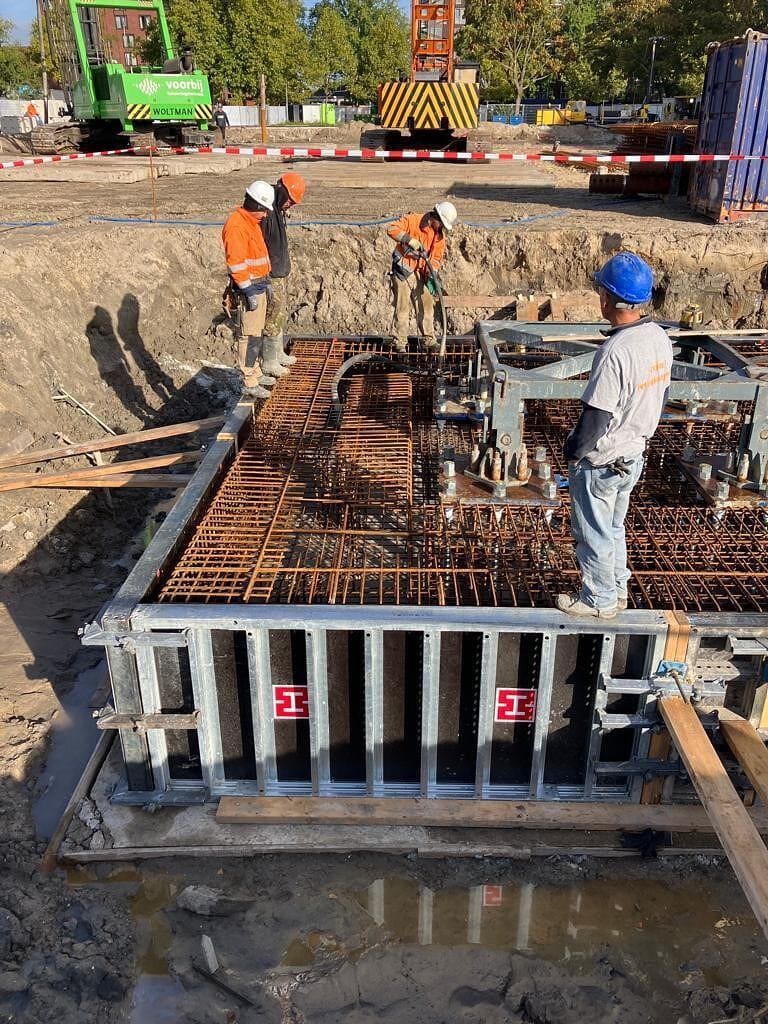
The sectoral breakdown argues for the first reading. Construction still records the highest rate in the Union at 2.8 percent, and 3.0 percent inside the euro area. Administrative and support services sit at 2.8 percent, accommodation and food services at 2.5 percent, telecommunications and computer programming at 2.2 percent, and professional, scientific and technical activities at 2.2 percent. These are the same five sectors that topped the table when the rate peaked. Their order has barely moved. What has moved is the gap between them and everything else.

Aggregate cooling, local scarcity

Country dispersion tells a similar story. The Netherlands posted 4.1 percent, Belgium 3.3 percent, Malta 3.1 percent and Austria 2.9 percent. Cyprus recorded the steepest quarterly fall of any member state. A Union average of 2.0 percent is therefore an arithmetic convenience covering labour markets that differ by a factor of four or more.

That dispersion matters because the policy instruments built during the shortage years were designed around an aggregate. Talent pools, recognition of qualifications and mobility schemes all assume that a worker in a slack market can be moved toward a tight one. The assumption survives contact with a Dutch construction site better than it survives contact with language requirements, licensing rules and housing costs in the receiving country. A vacancy in Utrecht and an unemployed worker in Larissa are not two halves of a solvable equation simply because both appear in the same dataset.

What the next reading should settle

Two figures deserve attention when third-quarter data arrive in December. The first is whether construction holds above 2.5 percent while the aggregate continues to drift down. If it does, the shortage in the sector is structural rather than cyclical, and no amount of demand cooling will close it. Demography and an ageing skilled trades workforce would then be doing the work, not the business cycle.

The second is the spread between the highest and lowest national rates. A narrowing spread would suggest convergence. A widening one, with the Dutch and Belgian rates holding while southern markets fall, would mean the Union is running two labour markets under one statistical roof. Eurostat publishes the detail rather than the interpretation, and the interpretation is where the policy argument now sits.

Employers reading the release as relief should also note what it does not contain. A lower vacancy rate reduces competition for candidates. It does not create plumbers, electricians or welders. The training pipelines that would do so operate on a five to seven year lag, which means the decisions that determine the 2032 rate are being taken, or not taken, now. The quarterly release is available from Eurostat’s euro indicators service, and the methodology behind the ratio is set out in its statistics explained pages.