August 9, 2026
LATEST
New EU Gas Market Rules Take Effect With Consumer SafeguardsDeforestation Regulation Holds Its December Deadline Despite CutsDigital Omnibus Delays Europe’s High-Risk AI Deadline to 2027Europe’s Schools Confront a Widening Basic Skills GapRule of Law Report Finds Progress but Trust Still LagsIRIS2 Gains 66 Satellites as Brussels Signs the Rollout DealNature Restoration Plans Come Due as Member States Race a DeadlineECB Rates Hold at 2.25 Percent as Frankfurt Waits on the DataEU Budget Talks Turn to Cohesion as Ireland Takes OverWildfire Response Stretches Europe’s Emergency Fleet ThinCan Europe’s Quantum Plan Match Its Big Ambitions?Armenia Edges West as Moscow’s Grip Slips AwayEurope Inherits the World’s Aid Bill It Cannot Fully PayAir Passenger Rights Get Their First Overhaul in Two DecadesErasmus Opens a 5 Billion Euro Round for Skills and MobilityCeuta Crisis Pushes the EU Toward Faster Migrant ReturnsBulky Parcels Face a Packaging Crackdown From August 12Can Europe Build Its Drone Wall Before 2030 Arrives?Indonesia’s Trade Deal With Europe Nears Its Final SignatureEurope Leans on Beijing to Keep Climate Talks Alive Before AntalyaNew EU Gas Market Rules Take Effect With Consumer SafeguardsDeforestation Regulation Holds Its December Deadline Despite CutsDigital Omnibus Delays Europe’s High-Risk AI Deadline to 2027Europe’s Schools Confront a Widening Basic Skills GapRule of Law Report Finds Progress but Trust Still LagsIRIS2 Gains 66 Satellites as Brussels Signs the Rollout DealNature Restoration Plans Come Due as Member States Race a DeadlineECB Rates Hold at 2.25 Percent as Frankfurt Waits on the DataEU Budget Talks Turn to Cohesion as Ireland Takes OverWildfire Response Stretches Europe’s Emergency Fleet ThinCan Europe’s Quantum Plan Match Its Big Ambitions?Armenia Edges West as Moscow’s Grip Slips AwayEurope Inherits the World’s Aid Bill It Cannot Fully PayAir Passenger Rights Get Their First Overhaul in Two DecadesErasmus Opens a 5 Billion Euro Round for Skills and MobilityCeuta Crisis Pushes the EU Toward Faster Migrant ReturnsBulky Parcels Face a Packaging Crackdown From August 12Can Europe Build Its Drone Wall Before 2030 Arrives?Indonesia’s Trade Deal With Europe Nears Its Final SignatureEurope Leans on Beijing to Keep Climate Talks Alive Before Antalya
August 9, 2026
LATEST
New EU Gas Market Rules Take Effect With Consumer SafeguardsDeforestation Regulation Holds Its December Deadline Despite CutsDigital Omnibus Delays Europe’s High-Risk AI Deadline to 2027Europe’s Schools Confront a Widening Basic Skills GapRule of Law Report Finds Progress but Trust Still LagsIRIS2 Gains 66 Satellites as Brussels Signs the Rollout DealNature Restoration Plans Come Due as Member States Race a DeadlineECB Rates Hold at 2.25 Percent as Frankfurt Waits on the DataEU Budget Talks Turn to Cohesion as Ireland Takes OverWildfire Response Stretches Europe’s Emergency Fleet ThinCan Europe’s Quantum Plan Match Its Big Ambitions?Armenia Edges West as Moscow’s Grip Slips AwayEurope Inherits the World’s Aid Bill It Cannot Fully PayAir Passenger Rights Get Their First Overhaul in Two DecadesErasmus Opens a 5 Billion Euro Round for Skills and MobilityCeuta Crisis Pushes the EU Toward Faster Migrant ReturnsBulky Parcels Face a Packaging Crackdown From August 12Can Europe Build Its Drone Wall Before 2030 Arrives?Indonesia’s Trade Deal With Europe Nears Its Final SignatureEurope Leans on Beijing to Keep Climate Talks Alive Before AntalyaNew EU Gas Market Rules Take Effect With Consumer SafeguardsDeforestation Regulation Holds Its December Deadline Despite CutsDigital Omnibus Delays Europe’s High-Risk AI Deadline to 2027Europe’s Schools Confront a Widening Basic Skills GapRule of Law Report Finds Progress but Trust Still LagsIRIS2 Gains 66 Satellites as Brussels Signs the Rollout DealNature Restoration Plans Come Due as Member States Race a DeadlineECB Rates Hold at 2.25 Percent as Frankfurt Waits on the DataEU Budget Talks Turn to Cohesion as Ireland Takes OverWildfire Response Stretches Europe’s Emergency Fleet ThinCan Europe’s Quantum Plan Match Its Big Ambitions?Armenia Edges West as Moscow’s Grip Slips AwayEurope Inherits the World’s Aid Bill It Cannot Fully PayAir Passenger Rights Get Their First Overhaul in Two DecadesErasmus Opens a 5 Billion Euro Round for Skills and MobilityCeuta Crisis Pushes the EU Toward Faster Migrant ReturnsBulky Parcels Face a Packaging Crackdown From August 12Can Europe Build Its Drone Wall Before 2030 Arrives?Indonesia’s Trade Deal With Europe Nears Its Final SignatureEurope Leans on Beijing to Keep Climate Talks Alive Before Antalya

Can A Quantum Act Keep Europe From Falling Behind

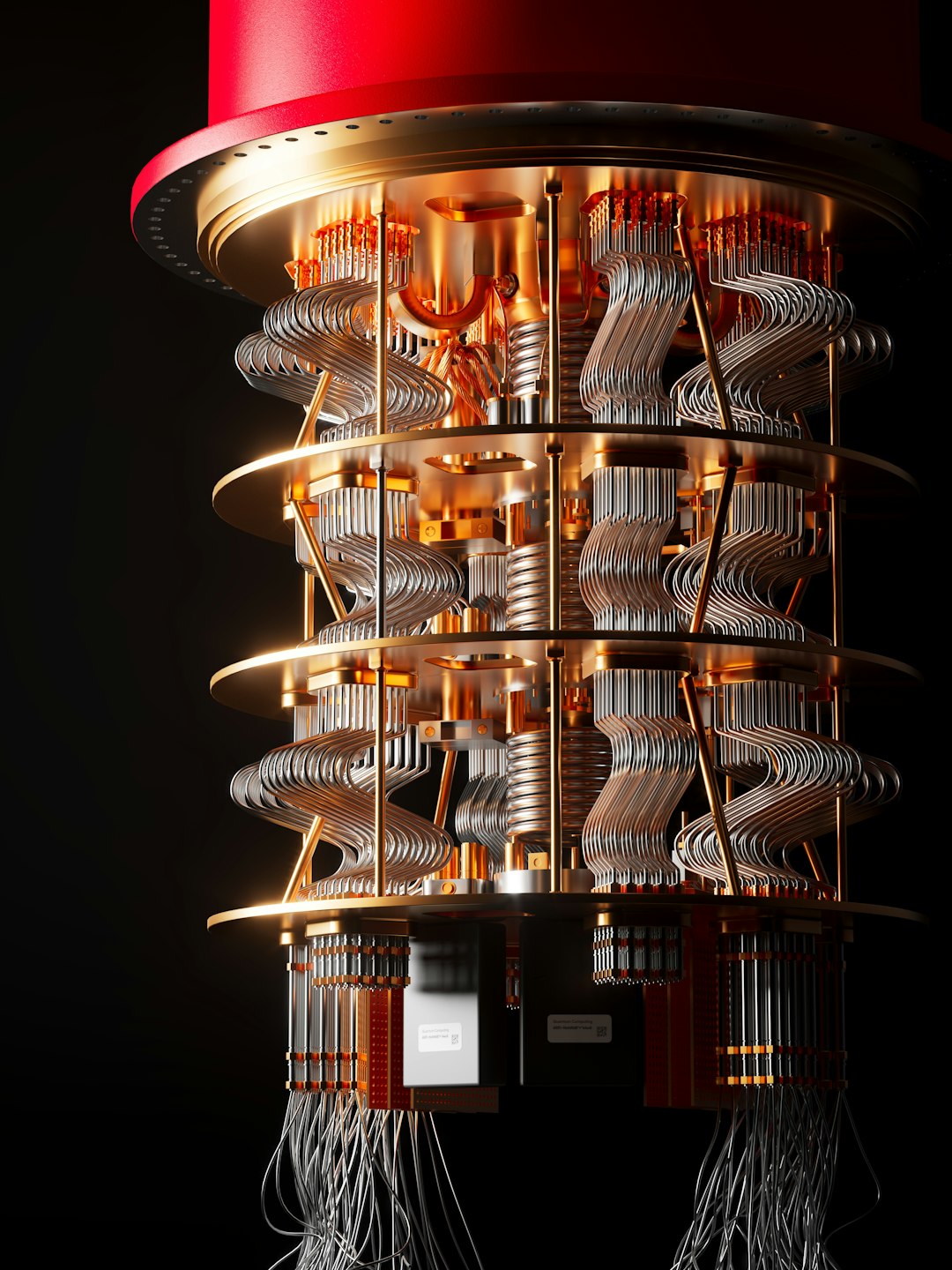
Brussels: Europe has watched two technology races slip away in a decade, losing the consumer internet to American platforms and much of advanced chipmaking to Asia. With its planned Quantum Act, expected as a legislative proposal in the second quarter of 2026, the European Union is signalling that it does not intend to lose a third. The question is whether legislation can manufacture the industrial depth that quantum technology demands, or whether Brussels is reaching for a regulatory instrument when the real shortfall lies in capital and scale.

The Act builds on the Quantum Europe strategy adopted in 2025 and a member-state declaration that predates it. Its logic rests on three pillars that recur across the EU’s recent technology playbook. The first is research and innovation, coordinating the investments that today are scattered across national programmes with little common direction. The second is industrial capacity, including pilot lines and a shared design facility intended to move European quantum work from the laboratory toward something a company can actually buy. The third is supply-chain resilience and governance for a dual-use technology that carries obvious security weight, given quantum computing’s potential to break the encryption that protects everything from bank transfers to state secrets.

On paper the diagnosis is sound. Europe is genuinely strong in quantum science, with leading research groups and a respectable share of the field’s published work and patents. Its weakness has always come at the next stage, where promising physics must turn into financed firms that can grow. Too many European quantum start-ups have raised their early money at home and their growth rounds abroad, drifting toward American investors and, eventually, American control. A roadmap for quantum computing, communication and sensing, a network of competence clusters and a European Quantum Skills Academy, all promised for 2026, address the talent and coordination gaps. They do less for the financing gap, which is where the race is usually won or lost.

This is the familiar tension in European industrial policy. The Union excels at strategy documents, shared definitions and coordinating mechanisms, instruments that cost relatively little and require no member state to surrender control of its budget. It struggles with the harder task of concentrating serious money behind a small number of bets. Quantum hardware is brutally capital intensive and years from broad commercial return. The companies that ultimately dominate will be those able to absorb sustained losses while the technology matures, and that endurance is bought with patient capital more than with regulation.

There is also a strategic-autonomy argument that cuts both ways. Treating quantum as a security asset justifies public support and supply-chain controls, and few would dispute that an encryption-breaking technology deserves careful governance. Yet a heavy security framing can also wall off a young industry from the international partnerships and markets it needs to scale. If the Act tilts too far toward control and screening, it risks protecting a sector that never grows large enough to be worth protecting. Calibrating openness against caution will be the drafting team’s hardest task.

The encouraging element is timing. Quantum remains early enough that no single bloc has run away with it, unlike chips or cloud computing, where Europe arrived late to entrenched incumbents. A coordinated push now, while the technology is still pre-commercial, is far better odds than the EU faced in its previous technology contests. Competence clusters and a skills academy will not, on their own, build a champion, but they create the soil in which one might grow.

The Quantum Act will be judged less by the elegance of its three pillars than by whether it is matched with money on a scale Europe rarely commits to single technologies. A well-designed law with modest funding will produce excellent research and another generation of start-ups acquired before they mature. A law backed by real capital and a tolerance for risk could finally convert European science into European industry. The strategy is in place. The cheque has yet to be written.