August 9, 2026
LATEST
New EU Gas Market Rules Take Effect With Consumer SafeguardsDeforestation Regulation Holds Its December Deadline Despite CutsDigital Omnibus Delays Europe’s High-Risk AI Deadline to 2027Europe’s Schools Confront a Widening Basic Skills GapRule of Law Report Finds Progress but Trust Still LagsIRIS2 Gains 66 Satellites as Brussels Signs the Rollout DealNature Restoration Plans Come Due as Member States Race a DeadlineECB Rates Hold at 2.25 Percent as Frankfurt Waits on the DataEU Budget Talks Turn to Cohesion as Ireland Takes OverWildfire Response Stretches Europe’s Emergency Fleet ThinCan Europe’s Quantum Plan Match Its Big Ambitions?Armenia Edges West as Moscow’s Grip Slips AwayEurope Inherits the World’s Aid Bill It Cannot Fully PayAir Passenger Rights Get Their First Overhaul in Two DecadesErasmus Opens a 5 Billion Euro Round for Skills and MobilityCeuta Crisis Pushes the EU Toward Faster Migrant ReturnsBulky Parcels Face a Packaging Crackdown From August 12Can Europe Build Its Drone Wall Before 2030 Arrives?Indonesia’s Trade Deal With Europe Nears Its Final SignatureEurope Leans on Beijing to Keep Climate Talks Alive Before AntalyaNew EU Gas Market Rules Take Effect With Consumer SafeguardsDeforestation Regulation Holds Its December Deadline Despite CutsDigital Omnibus Delays Europe’s High-Risk AI Deadline to 2027Europe’s Schools Confront a Widening Basic Skills GapRule of Law Report Finds Progress but Trust Still LagsIRIS2 Gains 66 Satellites as Brussels Signs the Rollout DealNature Restoration Plans Come Due as Member States Race a DeadlineECB Rates Hold at 2.25 Percent as Frankfurt Waits on the DataEU Budget Talks Turn to Cohesion as Ireland Takes OverWildfire Response Stretches Europe’s Emergency Fleet ThinCan Europe’s Quantum Plan Match Its Big Ambitions?Armenia Edges West as Moscow’s Grip Slips AwayEurope Inherits the World’s Aid Bill It Cannot Fully PayAir Passenger Rights Get Their First Overhaul in Two DecadesErasmus Opens a 5 Billion Euro Round for Skills and MobilityCeuta Crisis Pushes the EU Toward Faster Migrant ReturnsBulky Parcels Face a Packaging Crackdown From August 12Can Europe Build Its Drone Wall Before 2030 Arrives?Indonesia’s Trade Deal With Europe Nears Its Final SignatureEurope Leans on Beijing to Keep Climate Talks Alive Before Antalya
August 9, 2026
LATEST
New EU Gas Market Rules Take Effect With Consumer SafeguardsDeforestation Regulation Holds Its December Deadline Despite CutsDigital Omnibus Delays Europe’s High-Risk AI Deadline to 2027Europe’s Schools Confront a Widening Basic Skills GapRule of Law Report Finds Progress but Trust Still LagsIRIS2 Gains 66 Satellites as Brussels Signs the Rollout DealNature Restoration Plans Come Due as Member States Race a DeadlineECB Rates Hold at 2.25 Percent as Frankfurt Waits on the DataEU Budget Talks Turn to Cohesion as Ireland Takes OverWildfire Response Stretches Europe’s Emergency Fleet ThinCan Europe’s Quantum Plan Match Its Big Ambitions?Armenia Edges West as Moscow’s Grip Slips AwayEurope Inherits the World’s Aid Bill It Cannot Fully PayAir Passenger Rights Get Their First Overhaul in Two DecadesErasmus Opens a 5 Billion Euro Round for Skills and MobilityCeuta Crisis Pushes the EU Toward Faster Migrant ReturnsBulky Parcels Face a Packaging Crackdown From August 12Can Europe Build Its Drone Wall Before 2030 Arrives?Indonesia’s Trade Deal With Europe Nears Its Final SignatureEurope Leans on Beijing to Keep Climate Talks Alive Before AntalyaNew EU Gas Market Rules Take Effect With Consumer SafeguardsDeforestation Regulation Holds Its December Deadline Despite CutsDigital Omnibus Delays Europe’s High-Risk AI Deadline to 2027Europe’s Schools Confront a Widening Basic Skills GapRule of Law Report Finds Progress but Trust Still LagsIRIS2 Gains 66 Satellites as Brussels Signs the Rollout DealNature Restoration Plans Come Due as Member States Race a DeadlineECB Rates Hold at 2.25 Percent as Frankfurt Waits on the DataEU Budget Talks Turn to Cohesion as Ireland Takes OverWildfire Response Stretches Europe’s Emergency Fleet ThinCan Europe’s Quantum Plan Match Its Big Ambitions?Armenia Edges West as Moscow’s Grip Slips AwayEurope Inherits the World’s Aid Bill It Cannot Fully PayAir Passenger Rights Get Their First Overhaul in Two DecadesErasmus Opens a 5 Billion Euro Round for Skills and MobilityCeuta Crisis Pushes the EU Toward Faster Migrant ReturnsBulky Parcels Face a Packaging Crackdown From August 12Can Europe Build Its Drone Wall Before 2030 Arrives?Indonesia’s Trade Deal With Europe Nears Its Final SignatureEurope Leans on Beijing to Keep Climate Talks Alive Before Antalya

Can Private Capital Make Europe’s Nature Profitable

The slogan attached to this year’s EU Green Week, investing in a nature-positive economy, signals a quiet but important change in how Brussels argues for the environment. For years the case for biodiversity rested on duty and loss, the language of extinction and obligation. The new framing treats nature as infrastructure, an asset that underpins food production, water security, and climate resilience, and therefore something private money has a self-interested reason to protect. Whether that argument can mobilise capital at scale is now the question the Commission is openly testing.

The centrepiece of the week was Re:Invest in Nature, a first-of-its-kind initiative that put around seventy start-ups and entrepreneurs in front of potential investors, including large financial institutions. The pitch is that nature-positive business models, profitable farming that rebuilds soil, urban greening, and novel financing for degraded land, can deliver returns rather than merely consume subsidy. By convening founders and financiers in the same room, the Commission is trying to behave less like a regulator and more like a market-maker, seeding an asset class that does not yet properly exist.

The intellectual scaffolding comes from a growing body of analysis arguing that every business depends on biodiversity and every business affects it. The logic is that economic activity sits on top of ecosystem services that markets have never priced, from pollination to flood control, and that treating those services as free has produced systematic underinvestment in the systems that supply them. If that dependency can be measured and disclosed, the reasoning goes, capital will begin to reward the firms that protect natural capital and penalise those that erode it.

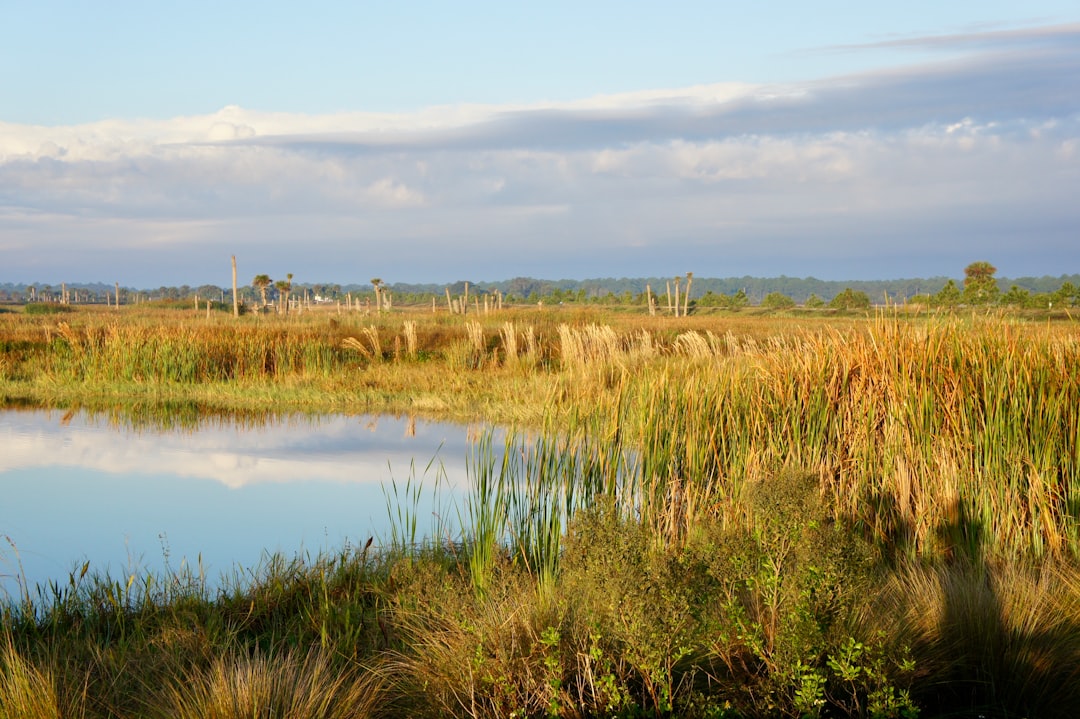
The difficulty is the translation from principle to balance sheet. Nature does not generate predictable cash flows the way a toll road or a power plant does. The benefits of a restored wetland are diffuse, shared across many beneficiaries, and realised over decades, which is precisely the profile that private finance finds hardest to fund. This is why so much of the conversation circles around new instruments, biodiversity credits, blended finance, and outcome-based payments, each of which attempts to manufacture a revenue stream where nature alone provides none. None has yet reached the scale or standardisation that would make it bankable for mainstream investors.

There is also a credibility risk that shadows the entire enterprise. The moment nature becomes an asset class, it becomes a candidate for the same greenwashing that has dogged carbon markets. A biodiversity credit is only as good as the measurement behind it, and ecosystems are far harder to quantify than tonnes of carbon. Without rigorous, verifiable metrics, a nature-positive market could fund the appearance of restoration rather than the substance, channelling capital toward whatever is easiest to certify rather than what is ecologically most valuable. The Commission’s challenge is to build standards strong enough to prevent that without making participation so burdensome that investors stay away.

Skeptics raise a more fundamental objection. Pricing nature, they argue, concedes the premise that something only matters once it carries a financial value, and risks handing stewardship of the commons to actors whose obligations end at their returns. Supporters counter that public budgets alone cannot close the financing gap for restoration at continental scale, and that ignoring private capital is a luxury a warming, biodiversity-poor Europe can no longer afford. Both positions contain a hard truth, and the policy question is not which is correct but how to capture private money without surrendering public purpose.

What makes this Green Week notable is that the Commission has chosen a side, at least rhetorically. By foregrounding investment rather than regulation, it is betting that the most durable protection for European nature is an economy that finds it profitable to keep ecosystems intact. That is a plausible bet, but it is still a bet. The instruments are immature, the metrics contested, and the incentives easy to game. The coming years will show whether a nature-positive economy is a genuine financial frontier or an elegant phrase still waiting for the markets to believe it.