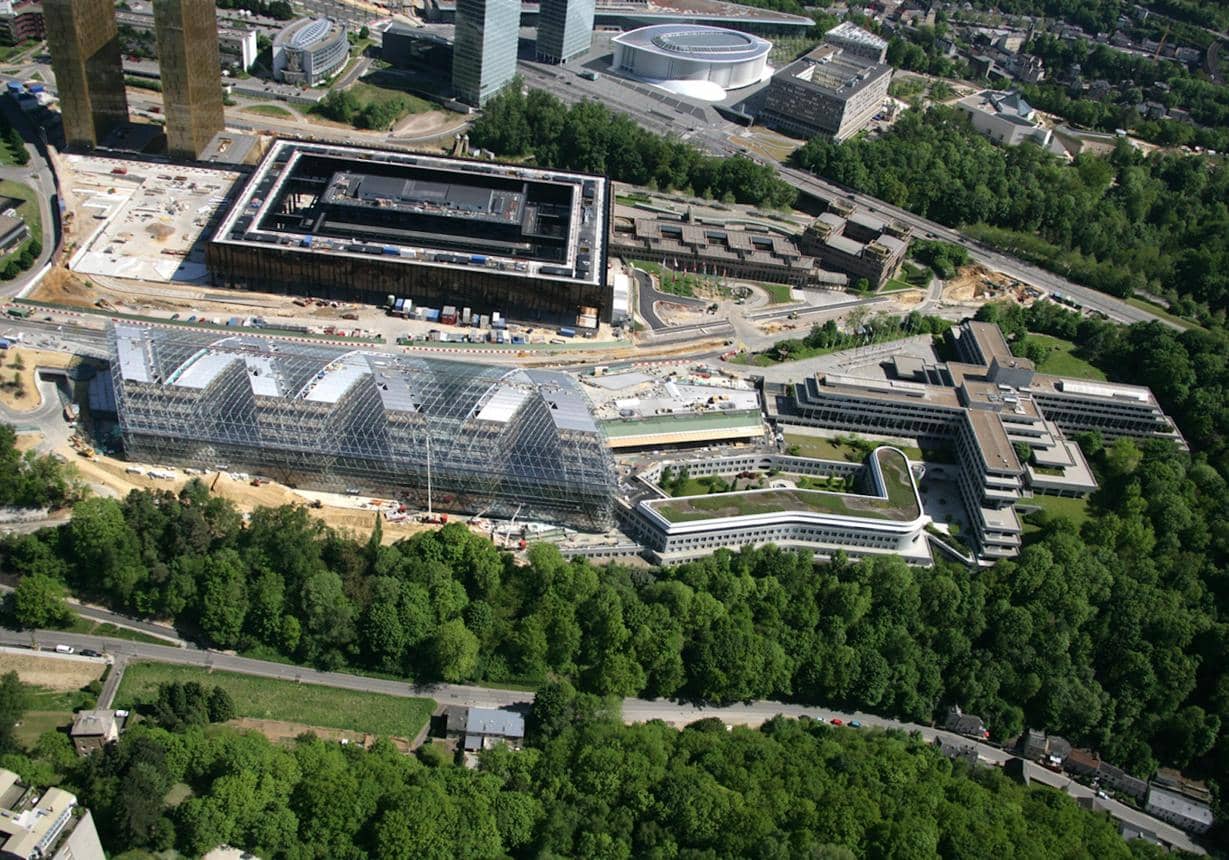
Luxembourg: A €2.5 billion tranche of clean-energy money approved through the Modernisation Fund passed with little fanfare, which is itself revealing. The European Commission and the European Investment Bank cleared financing for 51 energy projects across 11 member states, covering renewable generation, energy efficiency and the modernisation of ageing power grids. The sums are large, the beneficiaries are mostly the bloc’s lower-income eastern and southern economies, and the source of the cash is the quietly powerful engine behind much of Europe’s decarbonisation effort, the revenue thrown off by putting a price on carbon.
The mechanism is worth spelling out because it explains the politics. The Modernisation Fund is filled by proceeds from the EU Emissions Trading System, the market that forces power plants and heavy industry to buy allowances for the carbon they emit. Those allowances have real value, and a slice of that value is recycled into helping the same regions that are most exposed to the transition build the infrastructure to complete it. Since the fund began operating in January 2021 it has now channelled roughly €23.2 billion, a figure that quietly rivals headline programmes that attract far more attention.
The strategic case is that this is climate policy paying for itself. Rather than drawing on stretched national budgets or fresh common borrowing, the fund converts the cost of pollution into capital for its replacement, and it directs that capital where the marginal impact is highest. A euro spent modernising a leaky grid in a coal-dependent region tends to unlock more emissions reduction than the same euro spent in an already-decarbonised one. Grids are the unglamorous heart of the matter. Without the wires, substations and storage to move and absorb variable renewable power, new wind and solar capacity sits stranded, and grid bottlenecks have become the binding constraint on the transition across much of the continent.
There are reasons for caution beneath the approval notices. The first is dependence on a volatile revenue stream. Because the fund is fed by carbon prices, its firepower rises and falls with a market that policymakers deliberately allow to fluctuate, which makes multi-year infrastructure planning harder than a fixed budget line would. The second is absorption. Money is rarely the only obstacle to grid upgrades. Permitting delays, supply-chain shortages for transformers and cables, and thin engineering capacity in smaller administrations can leave allocated funds moving slowly from approval to concrete. The third is the risk that generous support entrenches incumbents or subsidises assets that markets would have financed anyway, blunting the additionality that justifies public money.
Distributional questions sit underneath all of this. The Modernisation Fund is designed as an instrument of cohesion as much as climate, steering resources toward member states whose electricity systems still lean heavily on fossil fuels. That is defensible on fairness grounds, since those economies face the steepest and most expensive path to net zero. But it also means the wealthier members that host much of Europe’s clean-technology manufacturing capture less of this particular pot, and the durability of the arrangement depends on continued political consent to let carbon revenue flow eastward and southward rather than back to national treasuries.
For the projects themselves, the immediate effect is straightforward. Utilities and grid operators gain financing on terms shaped by the European Investment Bank, developers of renewable capacity gain a clearer route to connection, and consumers in beneficiary states should, over time, see more resilient supply and less exposure to imported fuel. The longer-term significance is institutional. The fund shows that carbon pricing can be politically survivable when its proceeds are visibly reinvested in the regions asked to change fastest, turning an abstract levy into new substations and solar farms.
The next test is delivery. The measure of this €2.5 billion will not be the announcement but the share of projects that reach commissioning on schedule, and whether the grid upgrades arrive fast enough to keep pace with the renewables they are meant to carry. If the money moves and the wires get built, the Modernisation Fund will have quietly become one of the more effective climate tools Europe has. If it stalls in permitting queues, it will stand as a reminder that cash was never the scarcest resource.