August 9, 2026
LATEST
New EU Gas Market Rules Take Effect With Consumer SafeguardsDeforestation Regulation Holds Its December Deadline Despite CutsDigital Omnibus Delays Europe’s High-Risk AI Deadline to 2027Europe’s Schools Confront a Widening Basic Skills GapRule of Law Report Finds Progress but Trust Still LagsIRIS2 Gains 66 Satellites as Brussels Signs the Rollout DealNature Restoration Plans Come Due as Member States Race a DeadlineECB Rates Hold at 2.25 Percent as Frankfurt Waits on the DataEU Budget Talks Turn to Cohesion as Ireland Takes OverWildfire Response Stretches Europe’s Emergency Fleet ThinCan Europe’s Quantum Plan Match Its Big Ambitions?Armenia Edges West as Moscow’s Grip Slips AwayEurope Inherits the World’s Aid Bill It Cannot Fully PayAir Passenger Rights Get Their First Overhaul in Two DecadesErasmus Opens a 5 Billion Euro Round for Skills and MobilityCeuta Crisis Pushes the EU Toward Faster Migrant ReturnsBulky Parcels Face a Packaging Crackdown From August 12Can Europe Build Its Drone Wall Before 2030 Arrives?Indonesia’s Trade Deal With Europe Nears Its Final SignatureEurope Leans on Beijing to Keep Climate Talks Alive Before AntalyaNew EU Gas Market Rules Take Effect With Consumer SafeguardsDeforestation Regulation Holds Its December Deadline Despite CutsDigital Omnibus Delays Europe’s High-Risk AI Deadline to 2027Europe’s Schools Confront a Widening Basic Skills GapRule of Law Report Finds Progress but Trust Still LagsIRIS2 Gains 66 Satellites as Brussels Signs the Rollout DealNature Restoration Plans Come Due as Member States Race a DeadlineECB Rates Hold at 2.25 Percent as Frankfurt Waits on the DataEU Budget Talks Turn to Cohesion as Ireland Takes OverWildfire Response Stretches Europe’s Emergency Fleet ThinCan Europe’s Quantum Plan Match Its Big Ambitions?Armenia Edges West as Moscow’s Grip Slips AwayEurope Inherits the World’s Aid Bill It Cannot Fully PayAir Passenger Rights Get Their First Overhaul in Two DecadesErasmus Opens a 5 Billion Euro Round for Skills and MobilityCeuta Crisis Pushes the EU Toward Faster Migrant ReturnsBulky Parcels Face a Packaging Crackdown From August 12Can Europe Build Its Drone Wall Before 2030 Arrives?Indonesia’s Trade Deal With Europe Nears Its Final SignatureEurope Leans on Beijing to Keep Climate Talks Alive Before Antalya
August 9, 2026
LATEST
New EU Gas Market Rules Take Effect With Consumer SafeguardsDeforestation Regulation Holds Its December Deadline Despite CutsDigital Omnibus Delays Europe’s High-Risk AI Deadline to 2027Europe’s Schools Confront a Widening Basic Skills GapRule of Law Report Finds Progress but Trust Still LagsIRIS2 Gains 66 Satellites as Brussels Signs the Rollout DealNature Restoration Plans Come Due as Member States Race a DeadlineECB Rates Hold at 2.25 Percent as Frankfurt Waits on the DataEU Budget Talks Turn to Cohesion as Ireland Takes OverWildfire Response Stretches Europe’s Emergency Fleet ThinCan Europe’s Quantum Plan Match Its Big Ambitions?Armenia Edges West as Moscow’s Grip Slips AwayEurope Inherits the World’s Aid Bill It Cannot Fully PayAir Passenger Rights Get Their First Overhaul in Two DecadesErasmus Opens a 5 Billion Euro Round for Skills and MobilityCeuta Crisis Pushes the EU Toward Faster Migrant ReturnsBulky Parcels Face a Packaging Crackdown From August 12Can Europe Build Its Drone Wall Before 2030 Arrives?Indonesia’s Trade Deal With Europe Nears Its Final SignatureEurope Leans on Beijing to Keep Climate Talks Alive Before AntalyaNew EU Gas Market Rules Take Effect With Consumer SafeguardsDeforestation Regulation Holds Its December Deadline Despite CutsDigital Omnibus Delays Europe’s High-Risk AI Deadline to 2027Europe’s Schools Confront a Widening Basic Skills GapRule of Law Report Finds Progress but Trust Still LagsIRIS2 Gains 66 Satellites as Brussels Signs the Rollout DealNature Restoration Plans Come Due as Member States Race a DeadlineECB Rates Hold at 2.25 Percent as Frankfurt Waits on the DataEU Budget Talks Turn to Cohesion as Ireland Takes OverWildfire Response Stretches Europe’s Emergency Fleet ThinCan Europe’s Quantum Plan Match Its Big Ambitions?Armenia Edges West as Moscow’s Grip Slips AwayEurope Inherits the World’s Aid Bill It Cannot Fully PayAir Passenger Rights Get Their First Overhaul in Two DecadesErasmus Opens a 5 Billion Euro Round for Skills and MobilityCeuta Crisis Pushes the EU Toward Faster Migrant ReturnsBulky Parcels Face a Packaging Crackdown From August 12Can Europe Build Its Drone Wall Before 2030 Arrives?Indonesia’s Trade Deal With Europe Nears Its Final SignatureEurope Leans on Beijing to Keep Climate Talks Alive Before Antalya

Council Confronts Iran War Fallout for EU Development

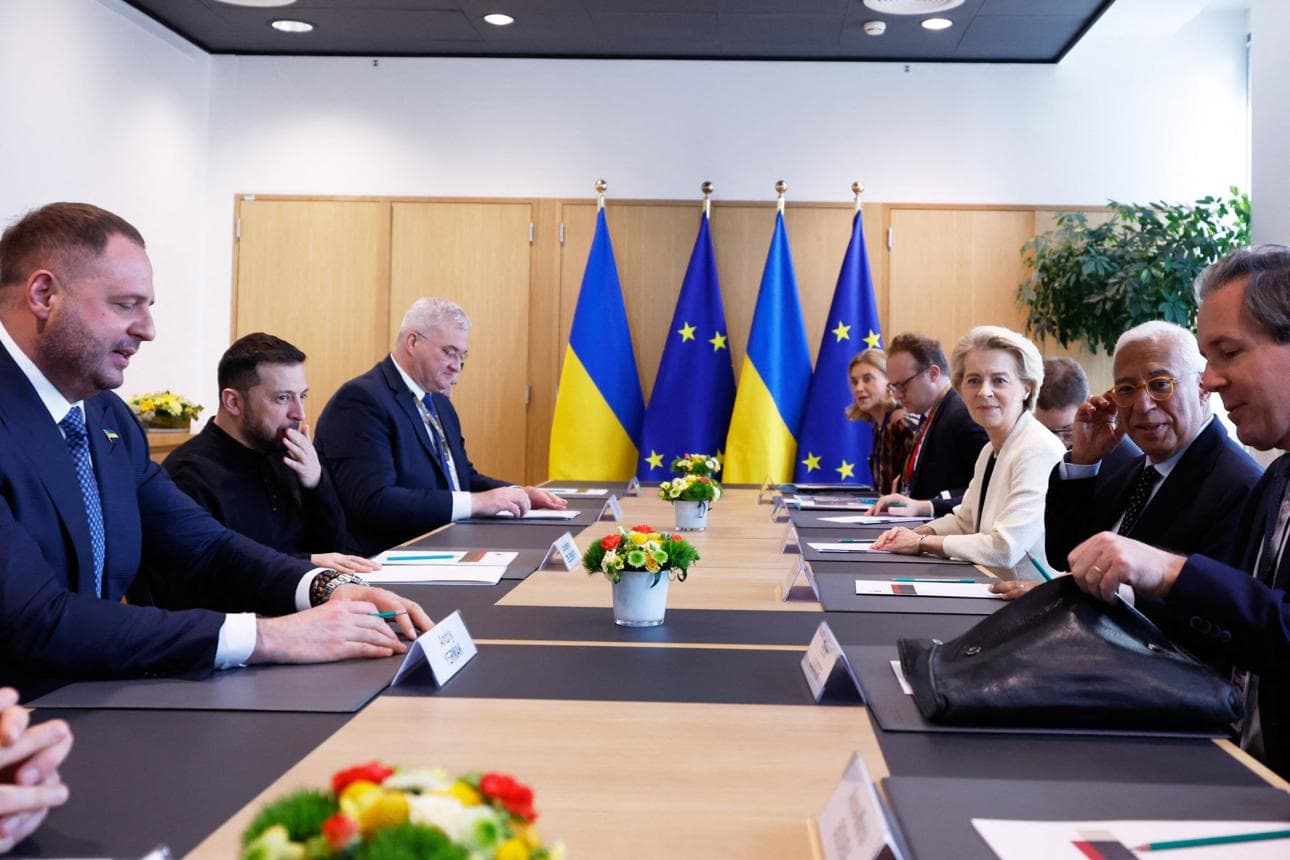
Brussels: Development ministers of the European Union gathered at the Europa building on 18 May for a Foreign Affairs Council session that doubled as a test of the bloc’s ability to recalibrate its external action under sustained geopolitical strain. Chaired by High Representative Kaja Kallas, the meeting placed the war in Iran at the center of a broader conversation about the future of the EU’s development architecture, with the Global Gateway strategy lined up for closer scrutiny over a working lunch.

The framing is significant. For the past decade, EU development policy has operated on the premise that long-term programming, predictable budgets and partner-country ownership are the foundations of effective aid. The war in Iran, and the wider regional disruption that has followed, undermines all three pillars. Funding lines designed to support climate adaptation, gender equality and economic governance are being reallocated to humanitarian response. Implementing partners report delays in disbursement, deteriorating field conditions, and growing difficulty in maintaining cooperation with governments whose own priorities have shifted toward security and refugee management.

Ministers were expected to confront an uncomfortable arithmetic. The Multiannual Financial Framework allocates a finite envelope to the Neighbourhood, Development and International Cooperation Instrument, and that envelope is increasingly stretched. Without supplementary commitments or a reordering of priorities, every additional euro directed to the consequences of the Iran war effectively redirects a euro from a previously agreed objective. Member states have resisted both options. The Council’s task on 18 May was to begin sketching a politically acceptable middle path, likely involving a combination of frontloading, flexibility clauses, and a recalibration of partner-country dialogue.

The Global Gateway, originally conceived as a counterweight to Chinese infrastructure diplomacy, occupies an awkward place in this conversation. Its premise that connectivity investments can deliver both economic returns and strategic influence has yielded a growing project pipeline across Africa, Latin America and the Indo-Pacific, but the war has exposed limits. Several flagship corridors traverse regions where insurance, security and political risk have all repriced sharply. Private-sector co-investment, on which the Gateway’s financial model depends, has slowed in the most exposed geographies, even as the political case for European visibility has strengthened.

Underlying the technical discussion is a structural question about the Union’s external persona. The EU has long preferred to present itself as a normative power, anchoring its external action in human-rights commitments, climate solidarity and rules-based trade. The Iran war, and its development consequences, push the Union toward a more transactional posture in which short-term humanitarian imperatives and security guarantees crowd out longer-term programming. Ministers attending the session were acutely aware that the perception of inconsistency, generous on climate yet hesitant on conflict, will be tested in coming budget negotiations.

There is also a partner-country dimension that no working lunch will resolve. Development counterparts in Africa and Asia have noted with concern the speed at which European attention rotates toward crises in or near Europe’s immediate neighborhood. Repeated rotations of this kind have eroded the credibility of multi-year commitments and complicated the diplomatic work that the European External Action Service undertakes between formal donor cycles. Restoring confidence will require more than additional funding. It will demand sustained political signalling that the broader development partnership remains a strategic priority in its own right.

No press conference was foreseen after the meeting, a small but telling choice. The Council appears to recognize that the questions raised by the Iran war’s spillover are too unsettled for a polished communiqué, and that the work of reconciling humanitarian urgency with strategic continuity will require quieter rounds of deliberation in the weeks ahead, well outside the cycle of formal council statements.