August 9, 2026
LATEST
New EU Gas Market Rules Take Effect With Consumer SafeguardsDeforestation Regulation Holds Its December Deadline Despite CutsDigital Omnibus Delays Europe’s High-Risk AI Deadline to 2027Europe’s Schools Confront a Widening Basic Skills GapRule of Law Report Finds Progress but Trust Still LagsIRIS2 Gains 66 Satellites as Brussels Signs the Rollout DealNature Restoration Plans Come Due as Member States Race a DeadlineECB Rates Hold at 2.25 Percent as Frankfurt Waits on the DataEU Budget Talks Turn to Cohesion as Ireland Takes OverWildfire Response Stretches Europe’s Emergency Fleet ThinCan Europe’s Quantum Plan Match Its Big Ambitions?Armenia Edges West as Moscow’s Grip Slips AwayEurope Inherits the World’s Aid Bill It Cannot Fully PayAir Passenger Rights Get Their First Overhaul in Two DecadesErasmus Opens a 5 Billion Euro Round for Skills and MobilityCeuta Crisis Pushes the EU Toward Faster Migrant ReturnsBulky Parcels Face a Packaging Crackdown From August 12Can Europe Build Its Drone Wall Before 2030 Arrives?Indonesia’s Trade Deal With Europe Nears Its Final SignatureEurope Leans on Beijing to Keep Climate Talks Alive Before AntalyaNew EU Gas Market Rules Take Effect With Consumer SafeguardsDeforestation Regulation Holds Its December Deadline Despite CutsDigital Omnibus Delays Europe’s High-Risk AI Deadline to 2027Europe’s Schools Confront a Widening Basic Skills GapRule of Law Report Finds Progress but Trust Still LagsIRIS2 Gains 66 Satellites as Brussels Signs the Rollout DealNature Restoration Plans Come Due as Member States Race a DeadlineECB Rates Hold at 2.25 Percent as Frankfurt Waits on the DataEU Budget Talks Turn to Cohesion as Ireland Takes OverWildfire Response Stretches Europe’s Emergency Fleet ThinCan Europe’s Quantum Plan Match Its Big Ambitions?Armenia Edges West as Moscow’s Grip Slips AwayEurope Inherits the World’s Aid Bill It Cannot Fully PayAir Passenger Rights Get Their First Overhaul in Two DecadesErasmus Opens a 5 Billion Euro Round for Skills and MobilityCeuta Crisis Pushes the EU Toward Faster Migrant ReturnsBulky Parcels Face a Packaging Crackdown From August 12Can Europe Build Its Drone Wall Before 2030 Arrives?Indonesia’s Trade Deal With Europe Nears Its Final SignatureEurope Leans on Beijing to Keep Climate Talks Alive Before Antalya
August 9, 2026
LATEST
New EU Gas Market Rules Take Effect With Consumer SafeguardsDeforestation Regulation Holds Its December Deadline Despite CutsDigital Omnibus Delays Europe’s High-Risk AI Deadline to 2027Europe’s Schools Confront a Widening Basic Skills GapRule of Law Report Finds Progress but Trust Still LagsIRIS2 Gains 66 Satellites as Brussels Signs the Rollout DealNature Restoration Plans Come Due as Member States Race a DeadlineECB Rates Hold at 2.25 Percent as Frankfurt Waits on the DataEU Budget Talks Turn to Cohesion as Ireland Takes OverWildfire Response Stretches Europe’s Emergency Fleet ThinCan Europe’s Quantum Plan Match Its Big Ambitions?Armenia Edges West as Moscow’s Grip Slips AwayEurope Inherits the World’s Aid Bill It Cannot Fully PayAir Passenger Rights Get Their First Overhaul in Two DecadesErasmus Opens a 5 Billion Euro Round for Skills and MobilityCeuta Crisis Pushes the EU Toward Faster Migrant ReturnsBulky Parcels Face a Packaging Crackdown From August 12Can Europe Build Its Drone Wall Before 2030 Arrives?Indonesia’s Trade Deal With Europe Nears Its Final SignatureEurope Leans on Beijing to Keep Climate Talks Alive Before AntalyaNew EU Gas Market Rules Take Effect With Consumer SafeguardsDeforestation Regulation Holds Its December Deadline Despite CutsDigital Omnibus Delays Europe’s High-Risk AI Deadline to 2027Europe’s Schools Confront a Widening Basic Skills GapRule of Law Report Finds Progress but Trust Still LagsIRIS2 Gains 66 Satellites as Brussels Signs the Rollout DealNature Restoration Plans Come Due as Member States Race a DeadlineECB Rates Hold at 2.25 Percent as Frankfurt Waits on the DataEU Budget Talks Turn to Cohesion as Ireland Takes OverWildfire Response Stretches Europe’s Emergency Fleet ThinCan Europe’s Quantum Plan Match Its Big Ambitions?Armenia Edges West as Moscow’s Grip Slips AwayEurope Inherits the World’s Aid Bill It Cannot Fully PayAir Passenger Rights Get Their First Overhaul in Two DecadesErasmus Opens a 5 Billion Euro Round for Skills and MobilityCeuta Crisis Pushes the EU Toward Faster Migrant ReturnsBulky Parcels Face a Packaging Crackdown From August 12Can Europe Build Its Drone Wall Before 2030 Arrives?Indonesia’s Trade Deal With Europe Nears Its Final SignatureEurope Leans on Beijing to Keep Climate Talks Alive Before Antalya

Europe Finally Clears Gene-Edited Crops for the Field

Brussels: European farmers will soon plant a new generation of gene-edited crops, after lawmakers closed one of the bloc’s longest-running regulatory fights. On 17 June 2026 the European Parliament gave final approval to the regulation on New Genomic Techniques, and the Council had already adopted the text on 5 May. Together the two votes end nearly three years of deadlock over how the Union should treat plants edited with tools such as CRISPR. Gene editing now has a legal home in European agriculture.

The new rules sort edited plants into two groups. Category 1 covers plants whose changes are small enough to arise through conventional breeding or in nature. Regulators will treat these as equivalent to ordinary crops, freeing them from the heavy authorisation, labelling and traceability duties that govern genetically modified organisms. Category 2 covers plants with more extensive edits, and these still travel through the existing GMO framework.

What changes for breeders and farmers

For plant breeders, the reform lifts a cost barrier that had pushed much of Europe’s gene-editing research abroad. Developers of Category 1 plants will notify authorities and register their varieties in a public database rather than run the multi-year approval marathon that GMOs face. The Parliament vote also attaches transparency rules on patents, obliging developers to disclose patent claims so smaller breeders can see what they might license.

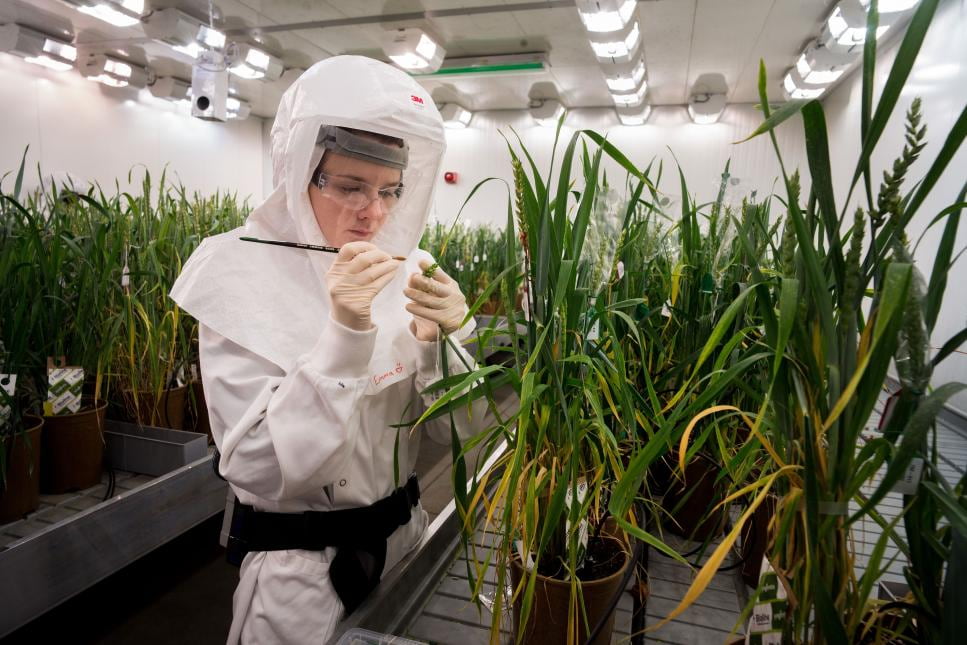
Supporters argue the technology can deliver drought-tolerant wheat, disease-resistant potatoes and crops that need less fertiliser and fewer pesticides. Those traits matter as the bloc chases its climate and food-security targets while farmers wrestle with erratic weather. The Commission frames gene editing as a route to lower chemical inputs without lower yields.

Critics have not gone quiet. Organic farming groups warn that Category 1 plants will circulate without a mandatory label on the final product, which they say strips consumers and organic producers of any easy way to keep edited material out of their supply chains. Several environmental organisations also question whether the equivalence test rests on solid enough science.

A long road still ahead

The votes end the legislative fight, but the rules will not reach fields overnight. A transition period of roughly two years follows publication in the Official Journal, so the framework should apply from around mid-2028. During that window the Commission must write the technical detail, from the criteria that sort a plant into Category 1 to the workings of the public register.

The Council’s adoption settled the political question of whether Europe would loosen its grip on gene editing. It left open how strict the fine print will be. Patent disputes loom large, because a handful of firms hold broad rights over core editing methods, and smaller European breeders fear they could pay dearly for tools they cannot easily avoid.

The stakes reach beyond agronomy. Europe has watched the United States, Latin America and parts of Asia move faster on gene-edited crops, and the bloc’s caution had begun to look like a competitive liability. By carving out a lighter path for the mildest edits, Brussels signals that it wants its researchers and seed companies to compete at home rather than relocate.

Whether the reform delivers now depends on the implementing acts still to come. If the Commission writes workable criteria and a functioning register, gene editing could reshape European fields within a decade. If the detail turns cumbersome, the promise of the June vote may fade into another round of paperwork.