August 9, 2026
LATEST
New EU Gas Market Rules Take Effect With Consumer SafeguardsDeforestation Regulation Holds Its December Deadline Despite CutsDigital Omnibus Delays Europe’s High-Risk AI Deadline to 2027Europe’s Schools Confront a Widening Basic Skills GapRule of Law Report Finds Progress but Trust Still LagsIRIS2 Gains 66 Satellites as Brussels Signs the Rollout DealNature Restoration Plans Come Due as Member States Race a DeadlineECB Rates Hold at 2.25 Percent as Frankfurt Waits on the DataEU Budget Talks Turn to Cohesion as Ireland Takes OverWildfire Response Stretches Europe’s Emergency Fleet ThinCan Europe’s Quantum Plan Match Its Big Ambitions?Armenia Edges West as Moscow’s Grip Slips AwayEurope Inherits the World’s Aid Bill It Cannot Fully PayAir Passenger Rights Get Their First Overhaul in Two DecadesErasmus Opens a 5 Billion Euro Round for Skills and MobilityCeuta Crisis Pushes the EU Toward Faster Migrant ReturnsBulky Parcels Face a Packaging Crackdown From August 12Can Europe Build Its Drone Wall Before 2030 Arrives?Indonesia’s Trade Deal With Europe Nears Its Final SignatureEurope Leans on Beijing to Keep Climate Talks Alive Before AntalyaNew EU Gas Market Rules Take Effect With Consumer SafeguardsDeforestation Regulation Holds Its December Deadline Despite CutsDigital Omnibus Delays Europe’s High-Risk AI Deadline to 2027Europe’s Schools Confront a Widening Basic Skills GapRule of Law Report Finds Progress but Trust Still LagsIRIS2 Gains 66 Satellites as Brussels Signs the Rollout DealNature Restoration Plans Come Due as Member States Race a DeadlineECB Rates Hold at 2.25 Percent as Frankfurt Waits on the DataEU Budget Talks Turn to Cohesion as Ireland Takes OverWildfire Response Stretches Europe’s Emergency Fleet ThinCan Europe’s Quantum Plan Match Its Big Ambitions?Armenia Edges West as Moscow’s Grip Slips AwayEurope Inherits the World’s Aid Bill It Cannot Fully PayAir Passenger Rights Get Their First Overhaul in Two DecadesErasmus Opens a 5 Billion Euro Round for Skills and MobilityCeuta Crisis Pushes the EU Toward Faster Migrant ReturnsBulky Parcels Face a Packaging Crackdown From August 12Can Europe Build Its Drone Wall Before 2030 Arrives?Indonesia’s Trade Deal With Europe Nears Its Final SignatureEurope Leans on Beijing to Keep Climate Talks Alive Before Antalya
August 9, 2026
LATEST
New EU Gas Market Rules Take Effect With Consumer SafeguardsDeforestation Regulation Holds Its December Deadline Despite CutsDigital Omnibus Delays Europe’s High-Risk AI Deadline to 2027Europe’s Schools Confront a Widening Basic Skills GapRule of Law Report Finds Progress but Trust Still LagsIRIS2 Gains 66 Satellites as Brussels Signs the Rollout DealNature Restoration Plans Come Due as Member States Race a DeadlineECB Rates Hold at 2.25 Percent as Frankfurt Waits on the DataEU Budget Talks Turn to Cohesion as Ireland Takes OverWildfire Response Stretches Europe’s Emergency Fleet ThinCan Europe’s Quantum Plan Match Its Big Ambitions?Armenia Edges West as Moscow’s Grip Slips AwayEurope Inherits the World’s Aid Bill It Cannot Fully PayAir Passenger Rights Get Their First Overhaul in Two DecadesErasmus Opens a 5 Billion Euro Round for Skills and MobilityCeuta Crisis Pushes the EU Toward Faster Migrant ReturnsBulky Parcels Face a Packaging Crackdown From August 12Can Europe Build Its Drone Wall Before 2030 Arrives?Indonesia’s Trade Deal With Europe Nears Its Final SignatureEurope Leans on Beijing to Keep Climate Talks Alive Before AntalyaNew EU Gas Market Rules Take Effect With Consumer SafeguardsDeforestation Regulation Holds Its December Deadline Despite CutsDigital Omnibus Delays Europe’s High-Risk AI Deadline to 2027Europe’s Schools Confront a Widening Basic Skills GapRule of Law Report Finds Progress but Trust Still LagsIRIS2 Gains 66 Satellites as Brussels Signs the Rollout DealNature Restoration Plans Come Due as Member States Race a DeadlineECB Rates Hold at 2.25 Percent as Frankfurt Waits on the DataEU Budget Talks Turn to Cohesion as Ireland Takes OverWildfire Response Stretches Europe’s Emergency Fleet ThinCan Europe’s Quantum Plan Match Its Big Ambitions?Armenia Edges West as Moscow’s Grip Slips AwayEurope Inherits the World’s Aid Bill It Cannot Fully PayAir Passenger Rights Get Their First Overhaul in Two DecadesErasmus Opens a 5 Billion Euro Round for Skills and MobilityCeuta Crisis Pushes the EU Toward Faster Migrant ReturnsBulky Parcels Face a Packaging Crackdown From August 12Can Europe Build Its Drone Wall Before 2030 Arrives?Indonesia’s Trade Deal With Europe Nears Its Final SignatureEurope Leans on Beijing to Keep Climate Talks Alive Before Antalya

Europe Moves to Unclog Its Defence Procurement Pipeline

Brussels: The European Union has spent two years discovering that money alone will not rebuild its defence-industrial base. The latest attempt to fix the machinery came on 10 June, when negotiators for the Council presidency and the European Parliament struck a provisional deal on legislation meant to simplify security and defence procurement, ease defence investment and unclog the pipeline between public budgets and factory floors. It is a quieter intervention than the headline spending pledges of recent years, but arguably a more consequential one.

The problem the deal targets is structural. European militaries buy in small national lots, to divergent specifications, through procedures written for peacetime and for the protection of domestic champions. The consequence is fragmentation: dozens of incompatible systems, limited economies of scale, and lead times that stretch to years when they need to be measured in months. The new rules aim to strip out procedural friction, shorten timelines and make it easier for governments to pool demand, rather than each ministry running its own tender for the same missiles or drones.

Simplification sits alongside the European Defence Industry Programme, the bloc’s flagship instrument for 2026 and 2027. EDIP carries roughly 1.5 billion euros, a figure that is modest against the scale of the task and that its own architects treat as seed capital rather than a solution. The money is split across industrial reinforcement, common procurement and a category of defence projects deemed to be of common European interest, with the first calls for proposals closing in October and a second round following early in 2027. The common-procurement strand, worth around 240 million euros, is explicitly designed to reward Member States and Norway that buy together in areas such as counter-drone systems, air and missile defence, and ground and naval combat platforms.

The logic is sound, but the numbers expose the limits of the exercise. A quarter of a billion euros for joint purchasing is a rounding error beside national defence budgets that now run into the hundreds of billions across the bloc. What the EU instruments actually offer is not scale but incentive: a small financial nudge, plus a legal framework, to persuade capitals to do the thing they have long resisted, which is to surrender a measure of sovereignty over what they buy and from whom. The wager is that once governments experience the price advantages of buying in bulk, the habit becomes self-sustaining.

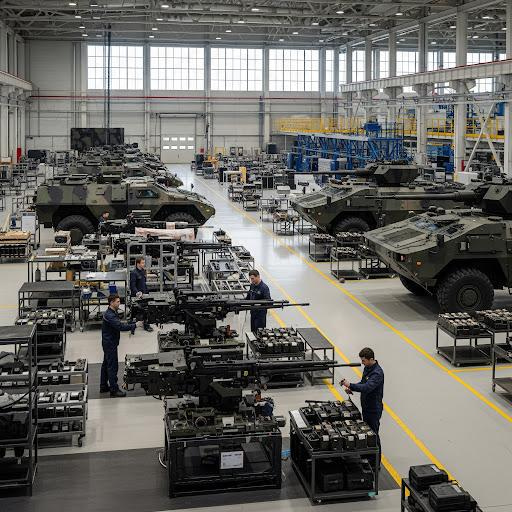
There are reasons for scepticism. Defence procurement is where industrial policy, employment and national prestige converge, and every euro spent abroad is a euro not spent on a domestic supplier and its constituents. The simplification package can lower procedural barriers, but it cannot easily override the political instinct to keep production, and jobs, at home. Nor does faster procurement help if Europe’s factories cannot expand output; a streamlined tender for shells that do not exist yet simply moves the bottleneck downstream to the production line.

Still, the direction of travel matters. For most of its history the EU treated defence as a national preserve into which Brussels intruded only at the margins. The combination of a procurement-simplification law and a dedicated industrial programme signals something different: an acceptance that a fragmented market is itself a strategic vulnerability, and that the tools of the single market, harmonised rules, pooled demand, shared standards, can be turned to hard-security ends. Whether governments follow through will be visible not in the communiqués but in the tender documents that appear over the next year, and in whether they increasingly carry more than one flag.

The coming months will test the theory. If the October calls draw serious joint bids and the new rules genuinely compress timelines, Brussels will have shown that it can reshape how Europe arms itself, not merely how much it spends. If the money is disbursed but the buying stays national, the exercise will have proved that procedural reform, however sensible, cannot by itself overcome the politics of defence.