August 29, 2026
LATEST
Data Rules Agreed With Seoul Now Wait on Parliament’s ConsentChina Listed Fourteen European Firms and November Ends the TruceWhy Australia’s Finished Trade Deal Still Has No Signature DateLate Application Leaves Tokyo Outside the Defence Loan QueueCyber Resilience Rules Give Makers 24 Hours From SeptemberWinter Stocks Test Europe’s New Gas Storage Flexibility RulesInnovation Theory Meets Merger Control in a New Commission StudyMercosur Tariffs Fell in May and the Court Has Not Ruled YetBilaterals III Now Turns on Which Referendum Switzerland PicksDark Patterns Face the EU Digital Fairness ActFifteen Chapters Stand Between Montenegro and 2028Who Blinks First in the FP10 Research Budget FightCustoms Reform Landed in March and Its Data Hub Opens in 2028Victims Rights Gain an EU Helpline and Capitals Have Two YearsIreland Must Move the EU Budget Box Before the October SummitFertiliser Prices Sit 71 Percent Above Their 2024 Average LevelState Aid Exemptions Face a Rewrite With Four Months to SpareIrregular Crossings Fell 37 Percent and Spain Is the ExceptionSpring Growth Went to Ireland and Skipped Belgium EntirelyEurope’s Drought Pushed Four Great Rivers to Record LowsData Rules Agreed With Seoul Now Wait on Parliament’s ConsentChina Listed Fourteen European Firms and November Ends the TruceWhy Australia’s Finished Trade Deal Still Has No Signature DateLate Application Leaves Tokyo Outside the Defence Loan QueueCyber Resilience Rules Give Makers 24 Hours From SeptemberWinter Stocks Test Europe’s New Gas Storage Flexibility RulesInnovation Theory Meets Merger Control in a New Commission StudyMercosur Tariffs Fell in May and the Court Has Not Ruled YetBilaterals III Now Turns on Which Referendum Switzerland PicksDark Patterns Face the EU Digital Fairness ActFifteen Chapters Stand Between Montenegro and 2028Who Blinks First in the FP10 Research Budget FightCustoms Reform Landed in March and Its Data Hub Opens in 2028Victims Rights Gain an EU Helpline and Capitals Have Two YearsIreland Must Move the EU Budget Box Before the October SummitFertiliser Prices Sit 71 Percent Above Their 2024 Average LevelState Aid Exemptions Face a Rewrite With Four Months to SpareIrregular Crossings Fell 37 Percent and Spain Is the ExceptionSpring Growth Went to Ireland and Skipped Belgium EntirelyEurope’s Drought Pushed Four Great Rivers to Record Lows
August 29, 2026
LATEST
Data Rules Agreed With Seoul Now Wait on Parliament’s ConsentChina Listed Fourteen European Firms and November Ends the TruceWhy Australia’s Finished Trade Deal Still Has No Signature DateLate Application Leaves Tokyo Outside the Defence Loan QueueCyber Resilience Rules Give Makers 24 Hours From SeptemberWinter Stocks Test Europe’s New Gas Storage Flexibility RulesInnovation Theory Meets Merger Control in a New Commission StudyMercosur Tariffs Fell in May and the Court Has Not Ruled YetBilaterals III Now Turns on Which Referendum Switzerland PicksDark Patterns Face the EU Digital Fairness ActFifteen Chapters Stand Between Montenegro and 2028Who Blinks First in the FP10 Research Budget FightCustoms Reform Landed in March and Its Data Hub Opens in 2028Victims Rights Gain an EU Helpline and Capitals Have Two YearsIreland Must Move the EU Budget Box Before the October SummitFertiliser Prices Sit 71 Percent Above Their 2024 Average LevelState Aid Exemptions Face a Rewrite With Four Months to SpareIrregular Crossings Fell 37 Percent and Spain Is the ExceptionSpring Growth Went to Ireland and Skipped Belgium EntirelyEurope’s Drought Pushed Four Great Rivers to Record LowsData Rules Agreed With Seoul Now Wait on Parliament’s ConsentChina Listed Fourteen European Firms and November Ends the TruceWhy Australia’s Finished Trade Deal Still Has No Signature DateLate Application Leaves Tokyo Outside the Defence Loan QueueCyber Resilience Rules Give Makers 24 Hours From SeptemberWinter Stocks Test Europe’s New Gas Storage Flexibility RulesInnovation Theory Meets Merger Control in a New Commission StudyMercosur Tariffs Fell in May and the Court Has Not Ruled YetBilaterals III Now Turns on Which Referendum Switzerland PicksDark Patterns Face the EU Digital Fairness ActFifteen Chapters Stand Between Montenegro and 2028Who Blinks First in the FP10 Research Budget FightCustoms Reform Landed in March and Its Data Hub Opens in 2028Victims Rights Gain an EU Helpline and Capitals Have Two YearsIreland Must Move the EU Budget Box Before the October SummitFertiliser Prices Sit 71 Percent Above Their 2024 Average LevelState Aid Exemptions Face a Rewrite With Four Months to SpareIrregular Crossings Fell 37 Percent and Spain Is the ExceptionSpring Growth Went to Ireland and Skipped Belgium EntirelyEurope’s Drought Pushed Four Great Rivers to Record Lows

Europe Split Its Biotech Law and Part Two Is Still Missing

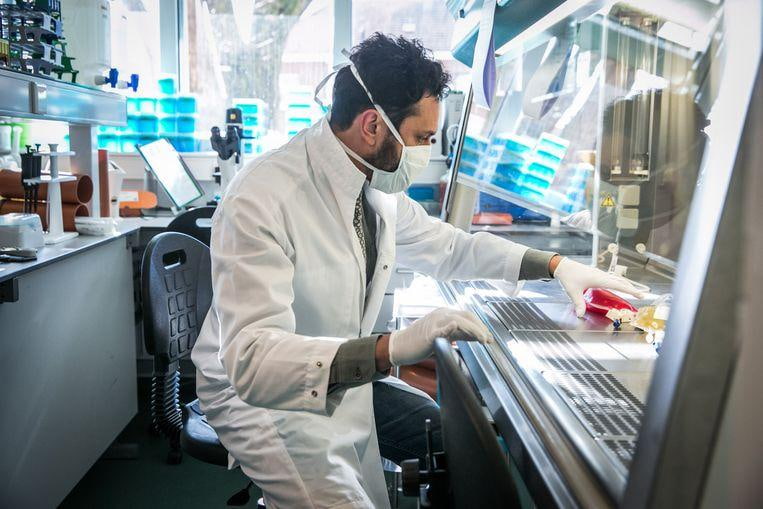
Ghent: The laboratories clustered around this Flemish city turn academic biology into companies at a rate few European regions match, and they have spent 2026 reading a law written for only half of what they do. The Commission proposed a European Biotech Act on 16 December 2025 as part of a wider health package. A second Biotech Act, covering industrial biotechnology and biomanufacturing, is not expected until the fourth quarter of 2026.

Splitting the file was a deliberate choice, and it reveals how Brussels understands the sector. The first act sits with health policy. It simplifies regulatory pathways for biotech medicines, adds incentives for manufacturing inside the Union, and creates an investment pilot aimed at the funding gap that pushes European companies to list or sell in the United States. The Commission’s biotech act page tracks the proposal through the legislature.

A single sector governed by two clocks

The problem is that biotechnology does not divide neatly along the line the package draws. A fermentation platform that produces an enzyme for detergent uses the same organisms, the same bioreactors and often the same regulatory questions as one producing a therapeutic protein. A company that starts in industrial enzymes and moves into biologics crosses from one act into the other, and until the second proposal appears it cannot know what it is crossing into.

Investors price that uncertainty. A venture fund deciding between a Flemish biomanufacturing platform and an American one now weighs a known United States framework against a European framework that is half-published and half-promised. The gap between December 2025 and late 2026 is a full financing cycle for early-stage companies, and some of them will not wait.

The sequencing also creates a legislative risk. The first act enters Parliament and Council negotiations before the second is even tabled. Amendments adopted for health biotech will constrain what the industrial act can say without producing contradictions, and the industrial sector has no seat at the table while those amendments are drafted.

What the act can and cannot fix

Regulatory simplification addresses a real complaint. European approval pathways for advanced therapies involve national competent authorities, ethics committees and the European Medicines Agency in sequences that vary by member state. Shortening that chain saves months, and months are the currency of biotech financing.

But simplification does not answer the sector’s harder constraint, which is capital rather than paperwork. European biotech companies raise less at every stage than their American counterparts, and the shortfall widens precisely at the point where a promising molecule needs several hundred million euros to reach late-stage trials. An investment pilot is a useful signal and a small instrument. It does not replace the deep pools of specialist capital that the Union has discussed building for a decade without building.

Manufacturing incentives face a similar limit. Building biomanufacturing capacity inside the Union competes against energy costs that remain structurally higher than in the United States and against subsidy packages that other jurisdictions offer without lengthy state aid review. An act that streamlines authorisation while leaving those inputs untouched improves the odds without changing the arithmetic.

The most valuable thing the second proposal could do is arrive early and arrive coherent. Industrial biotechnology in Europe has spent years being regulated by borrowing rules from chemicals, agriculture and pharmaceuticals in whatever combination fits. A framework built for the sector itself would be worth more to the companies in Ghent, Delft and Copenhagen than any single incentive in the first act. Until it appears, they plan against a law that has published its opening half and left the ending for later in the year.