August 9, 2026
LATEST
New EU Gas Market Rules Take Effect With Consumer SafeguardsDeforestation Regulation Holds Its December Deadline Despite CutsDigital Omnibus Delays Europe’s High-Risk AI Deadline to 2027Europe’s Schools Confront a Widening Basic Skills GapRule of Law Report Finds Progress but Trust Still LagsIRIS2 Gains 66 Satellites as Brussels Signs the Rollout DealNature Restoration Plans Come Due as Member States Race a DeadlineECB Rates Hold at 2.25 Percent as Frankfurt Waits on the DataEU Budget Talks Turn to Cohesion as Ireland Takes OverWildfire Response Stretches Europe’s Emergency Fleet ThinCan Europe’s Quantum Plan Match Its Big Ambitions?Armenia Edges West as Moscow’s Grip Slips AwayEurope Inherits the World’s Aid Bill It Cannot Fully PayAir Passenger Rights Get Their First Overhaul in Two DecadesErasmus Opens a 5 Billion Euro Round for Skills and MobilityCeuta Crisis Pushes the EU Toward Faster Migrant ReturnsBulky Parcels Face a Packaging Crackdown From August 12Can Europe Build Its Drone Wall Before 2030 Arrives?Indonesia’s Trade Deal With Europe Nears Its Final SignatureEurope Leans on Beijing to Keep Climate Talks Alive Before AntalyaNew EU Gas Market Rules Take Effect With Consumer SafeguardsDeforestation Regulation Holds Its December Deadline Despite CutsDigital Omnibus Delays Europe’s High-Risk AI Deadline to 2027Europe’s Schools Confront a Widening Basic Skills GapRule of Law Report Finds Progress but Trust Still LagsIRIS2 Gains 66 Satellites as Brussels Signs the Rollout DealNature Restoration Plans Come Due as Member States Race a DeadlineECB Rates Hold at 2.25 Percent as Frankfurt Waits on the DataEU Budget Talks Turn to Cohesion as Ireland Takes OverWildfire Response Stretches Europe’s Emergency Fleet ThinCan Europe’s Quantum Plan Match Its Big Ambitions?Armenia Edges West as Moscow’s Grip Slips AwayEurope Inherits the World’s Aid Bill It Cannot Fully PayAir Passenger Rights Get Their First Overhaul in Two DecadesErasmus Opens a 5 Billion Euro Round for Skills and MobilityCeuta Crisis Pushes the EU Toward Faster Migrant ReturnsBulky Parcels Face a Packaging Crackdown From August 12Can Europe Build Its Drone Wall Before 2030 Arrives?Indonesia’s Trade Deal With Europe Nears Its Final SignatureEurope Leans on Beijing to Keep Climate Talks Alive Before Antalya
August 9, 2026
LATEST
New EU Gas Market Rules Take Effect With Consumer SafeguardsDeforestation Regulation Holds Its December Deadline Despite CutsDigital Omnibus Delays Europe’s High-Risk AI Deadline to 2027Europe’s Schools Confront a Widening Basic Skills GapRule of Law Report Finds Progress but Trust Still LagsIRIS2 Gains 66 Satellites as Brussels Signs the Rollout DealNature Restoration Plans Come Due as Member States Race a DeadlineECB Rates Hold at 2.25 Percent as Frankfurt Waits on the DataEU Budget Talks Turn to Cohesion as Ireland Takes OverWildfire Response Stretches Europe’s Emergency Fleet ThinCan Europe’s Quantum Plan Match Its Big Ambitions?Armenia Edges West as Moscow’s Grip Slips AwayEurope Inherits the World’s Aid Bill It Cannot Fully PayAir Passenger Rights Get Their First Overhaul in Two DecadesErasmus Opens a 5 Billion Euro Round for Skills and MobilityCeuta Crisis Pushes the EU Toward Faster Migrant ReturnsBulky Parcels Face a Packaging Crackdown From August 12Can Europe Build Its Drone Wall Before 2030 Arrives?Indonesia’s Trade Deal With Europe Nears Its Final SignatureEurope Leans on Beijing to Keep Climate Talks Alive Before AntalyaNew EU Gas Market Rules Take Effect With Consumer SafeguardsDeforestation Regulation Holds Its December Deadline Despite CutsDigital Omnibus Delays Europe’s High-Risk AI Deadline to 2027Europe’s Schools Confront a Widening Basic Skills GapRule of Law Report Finds Progress but Trust Still LagsIRIS2 Gains 66 Satellites as Brussels Signs the Rollout DealNature Restoration Plans Come Due as Member States Race a DeadlineECB Rates Hold at 2.25 Percent as Frankfurt Waits on the DataEU Budget Talks Turn to Cohesion as Ireland Takes OverWildfire Response Stretches Europe’s Emergency Fleet ThinCan Europe’s Quantum Plan Match Its Big Ambitions?Armenia Edges West as Moscow’s Grip Slips AwayEurope Inherits the World’s Aid Bill It Cannot Fully PayAir Passenger Rights Get Their First Overhaul in Two DecadesErasmus Opens a 5 Billion Euro Round for Skills and MobilityCeuta Crisis Pushes the EU Toward Faster Migrant ReturnsBulky Parcels Face a Packaging Crackdown From August 12Can Europe Build Its Drone Wall Before 2030 Arrives?Indonesia’s Trade Deal With Europe Nears Its Final SignatureEurope Leans on Beijing to Keep Climate Talks Alive Before Antalya

Europeans Get a Vote on the Next Euro Banknotes

Frankfurt: The European Central Bank has invited the public to help choose the next euro banknotes, unveiling ten shortlisted designs and opening an online survey that runs until 21 September. The move turns a technical redesign into a rare act of cultural politics, asking half a billion people what they want their shared money to say about them.

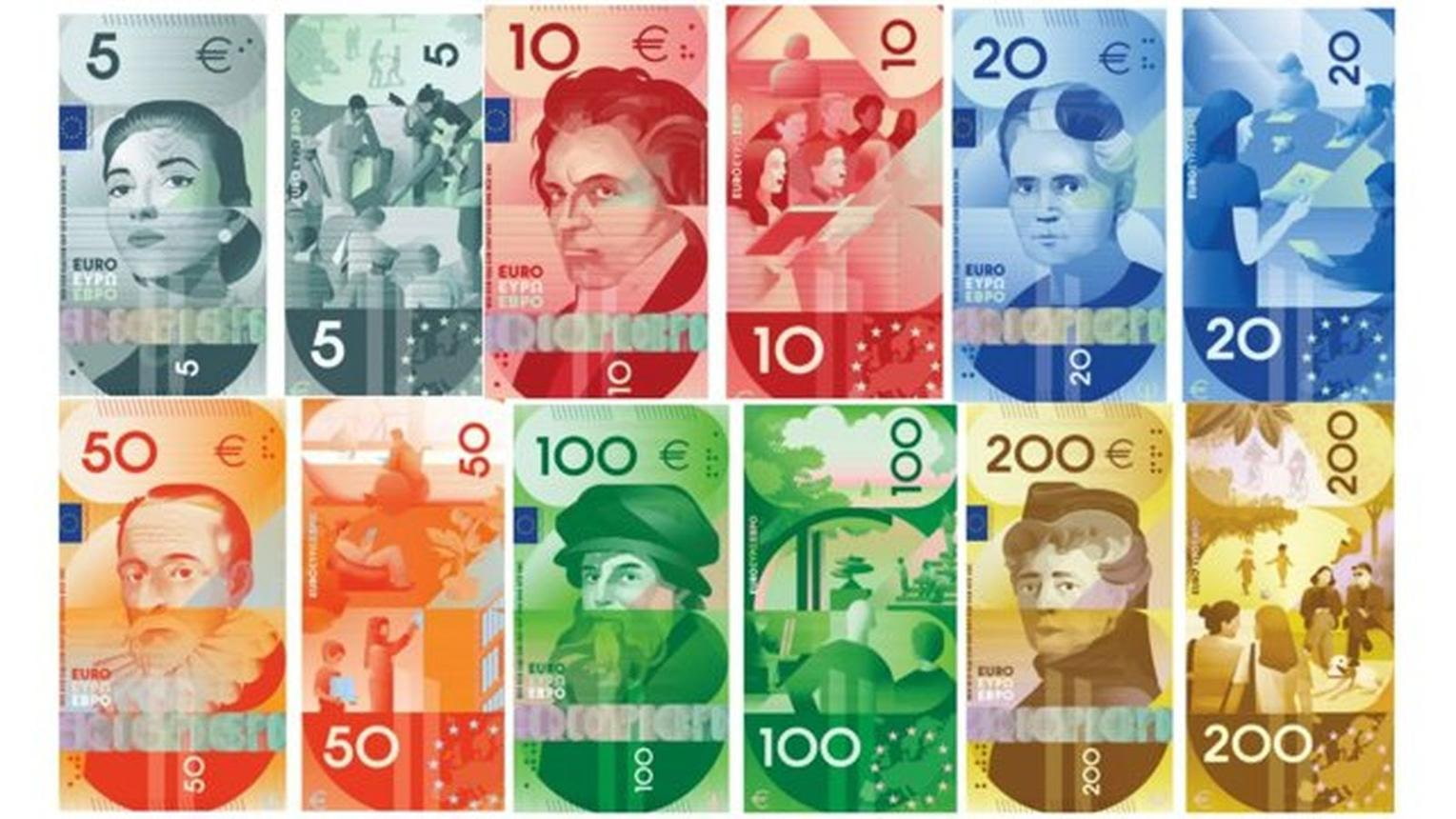
The choice comes down to two themes. One, called European culture, puts historical figures on the front of each note. Maria Callas would grace the five, Ludwig van Beethoven the ten, Marie Curie the twenty, Miguel de Cervantes the fifty, Leonardo da Vinci the hundred and Bertha von Suttner the two hundred. The reverse sides show scenes of shared cultural life, among them a choir and a library.

Portraits or plumage

The rival theme, Rivers and birds, drops the human face entirely. Its designs pair European bird species with river landscapes and EU institutions, setting a kingfisher beside the European Commission, a white stork beside the Court of Justice and a wallcreeper beside the European Parliament. The contrast is stark. One vision celebrates the people who shaped Europe; the other celebrates the nature Europeans share.

The current notes dodged this question on purpose. When the euro launched, designers chose bridges and arches that belong to no single country, precisely to avoid picking national heroes and slighting others. Naming real people breaks that careful neutrality. Every portrait invites a fresh argument about who counts as European enough to carry the currency, and about which countries and which fields feel seen.

Why the vote matters beyond aesthetics

That tension explains why the ECB is spreading the decision across a jury, a technical assessment and two public surveys before the Governing Council settles the matter around the end of the year. A central bank rarely courts popular opinion, and the outreach reads as an attempt to lend legitimacy to a choice that will sit in every wallet for a generation. Money that people helped select may feel a little more like their own.

The stakes are quietly large. Banknotes are among the most widely handled objects in the union, seen far more often than any treaty or flag. What they depict becomes a daily lesson in what the EU thinks it stands for. A note that honours a scientist, a composer or a peace campaigner teaches one story; a note that honours a river and a bird teaches another about a shared natural home.

Practical concerns run underneath the symbolism. New designs must resist counterfeiters, work for people with impaired sight and survive years of wear, so the technical jury carries as much weight as the popular vote. The final notes will not appear for several years, giving printers time to translate a winning theme into secure, durable paper.

For now the ballot is open, and the framing is deliberately simple. Portraits or plumage, people or nature. Whichever wins, the ECB has turned a design brief into a small referendum on European identity, and the answer will pass through hundreds of millions of hands.