August 9, 2026
LATEST
New EU Gas Market Rules Take Effect With Consumer SafeguardsDeforestation Regulation Holds Its December Deadline Despite CutsDigital Omnibus Delays Europe’s High-Risk AI Deadline to 2027Europe’s Schools Confront a Widening Basic Skills GapRule of Law Report Finds Progress but Trust Still LagsIRIS2 Gains 66 Satellites as Brussels Signs the Rollout DealNature Restoration Plans Come Due as Member States Race a DeadlineECB Rates Hold at 2.25 Percent as Frankfurt Waits on the DataEU Budget Talks Turn to Cohesion as Ireland Takes OverWildfire Response Stretches Europe’s Emergency Fleet ThinCan Europe’s Quantum Plan Match Its Big Ambitions?Armenia Edges West as Moscow’s Grip Slips AwayEurope Inherits the World’s Aid Bill It Cannot Fully PayAir Passenger Rights Get Their First Overhaul in Two DecadesErasmus Opens a 5 Billion Euro Round for Skills and MobilityCeuta Crisis Pushes the EU Toward Faster Migrant ReturnsBulky Parcels Face a Packaging Crackdown From August 12Can Europe Build Its Drone Wall Before 2030 Arrives?Indonesia’s Trade Deal With Europe Nears Its Final SignatureEurope Leans on Beijing to Keep Climate Talks Alive Before AntalyaNew EU Gas Market Rules Take Effect With Consumer SafeguardsDeforestation Regulation Holds Its December Deadline Despite CutsDigital Omnibus Delays Europe’s High-Risk AI Deadline to 2027Europe’s Schools Confront a Widening Basic Skills GapRule of Law Report Finds Progress but Trust Still LagsIRIS2 Gains 66 Satellites as Brussels Signs the Rollout DealNature Restoration Plans Come Due as Member States Race a DeadlineECB Rates Hold at 2.25 Percent as Frankfurt Waits on the DataEU Budget Talks Turn to Cohesion as Ireland Takes OverWildfire Response Stretches Europe’s Emergency Fleet ThinCan Europe’s Quantum Plan Match Its Big Ambitions?Armenia Edges West as Moscow’s Grip Slips AwayEurope Inherits the World’s Aid Bill It Cannot Fully PayAir Passenger Rights Get Their First Overhaul in Two DecadesErasmus Opens a 5 Billion Euro Round for Skills and MobilityCeuta Crisis Pushes the EU Toward Faster Migrant ReturnsBulky Parcels Face a Packaging Crackdown From August 12Can Europe Build Its Drone Wall Before 2030 Arrives?Indonesia’s Trade Deal With Europe Nears Its Final SignatureEurope Leans on Beijing to Keep Climate Talks Alive Before Antalya
August 9, 2026
LATEST
New EU Gas Market Rules Take Effect With Consumer SafeguardsDeforestation Regulation Holds Its December Deadline Despite CutsDigital Omnibus Delays Europe’s High-Risk AI Deadline to 2027Europe’s Schools Confront a Widening Basic Skills GapRule of Law Report Finds Progress but Trust Still LagsIRIS2 Gains 66 Satellites as Brussels Signs the Rollout DealNature Restoration Plans Come Due as Member States Race a DeadlineECB Rates Hold at 2.25 Percent as Frankfurt Waits on the DataEU Budget Talks Turn to Cohesion as Ireland Takes OverWildfire Response Stretches Europe’s Emergency Fleet ThinCan Europe’s Quantum Plan Match Its Big Ambitions?Armenia Edges West as Moscow’s Grip Slips AwayEurope Inherits the World’s Aid Bill It Cannot Fully PayAir Passenger Rights Get Their First Overhaul in Two DecadesErasmus Opens a 5 Billion Euro Round for Skills and MobilityCeuta Crisis Pushes the EU Toward Faster Migrant ReturnsBulky Parcels Face a Packaging Crackdown From August 12Can Europe Build Its Drone Wall Before 2030 Arrives?Indonesia’s Trade Deal With Europe Nears Its Final SignatureEurope Leans on Beijing to Keep Climate Talks Alive Before AntalyaNew EU Gas Market Rules Take Effect With Consumer SafeguardsDeforestation Regulation Holds Its December Deadline Despite CutsDigital Omnibus Delays Europe’s High-Risk AI Deadline to 2027Europe’s Schools Confront a Widening Basic Skills GapRule of Law Report Finds Progress but Trust Still LagsIRIS2 Gains 66 Satellites as Brussels Signs the Rollout DealNature Restoration Plans Come Due as Member States Race a DeadlineECB Rates Hold at 2.25 Percent as Frankfurt Waits on the DataEU Budget Talks Turn to Cohesion as Ireland Takes OverWildfire Response Stretches Europe’s Emergency Fleet ThinCan Europe’s Quantum Plan Match Its Big Ambitions?Armenia Edges West as Moscow’s Grip Slips AwayEurope Inherits the World’s Aid Bill It Cannot Fully PayAir Passenger Rights Get Their First Overhaul in Two DecadesErasmus Opens a 5 Billion Euro Round for Skills and MobilityCeuta Crisis Pushes the EU Toward Faster Migrant ReturnsBulky Parcels Face a Packaging Crackdown From August 12Can Europe Build Its Drone Wall Before 2030 Arrives?Indonesia’s Trade Deal With Europe Nears Its Final SignatureEurope Leans on Beijing to Keep Climate Talks Alive Before Antalya

Europe’s Carbon Border Levy Eyes A Downstream Expansion

Luxembourg: Europe’s carbon border levy has finally stopped being a paper instrument and started being a real one, and the difference is already reshaping the political argument around it. Since the start of 2026 the Carbon Border Adjustment Mechanism has applied in full, charging importers of carbon-heavy goods a price meant to mirror what European producers pay under the bloc’s emissions trading system. As affairs ministers work toward a common position to take into talks with the Parliament, the question has shifted from whether the tool works to how far it should reach.

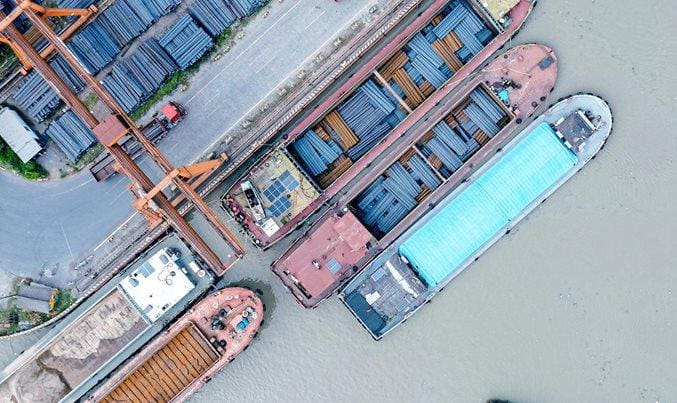
The logic of the mechanism is straightforward and, on its own terms, hard to fault. If Europe forces its steelmakers, cement plants and fertiliser producers to pay for their emissions, those industries face a temptation to move production to countries with weaker climate rules, exporting both the jobs and the pollution. That is carbon leakage, and it would turn European climate policy into an accounting trick that lowers domestic emissions while raising global ones. By pricing the carbon embedded in imports at the border, the mechanism is designed to close that escape route and protect the integrity of the bloc’s wider climate architecture.

The simplification agreed in 2025 made the instrument workable by exempting the smallest importers and easing reporting, which removed an early and legitimate complaint that compliance costs would crush firms bringing in trivial volumes. That fix bought political room. It did not settle the deeper design fight, which is about scope. The mechanism currently covers basic materials such as steel and aluminium, but not the finished goods made from them. A car, a washing machine or a bolted steel structure can be imported with its embedded carbon largely untaxed, which hands foreign manufacturers of downstream products an advantage that European factories buying the same materials do not enjoy.

This is the asymmetry now driving the debate, and it is a genuine one rather than a lobbying invention. Extend the levy too cautiously and European producers of raw materials are protected while the manufacturers who use those materials are left exposed, encouraging value-added production to drift abroad even as the underlying metal stays taxed. Extend it too aggressively and the Union takes on a monitoring task of bewildering complexity, since calculating the carbon inside a multi-component finished product means tracing supply chains that cross many borders and many factories. Neither path is clean.

The technical machinery reflects that difficulty. The Commission’s recent implementing act, out for consultation through mid-June, deals with exactly the unglamorous questions on which credibility depends, namely how emissions are measured, how default values are set when data is missing, and how foreign carbon costs already paid are recognised. These details decide whether the mechanism is a serious climate measure or a disguised tariff, and the distinction matters well beyond Europe. Trading partners watching the rollout will judge the system by whether its methodology is defensible, and several have already hinted at challenges in trade forums.

There is also a fiscal subtext that ministers rarely state plainly. Revenue from the border levy is bound up with the Union’s longer budget arithmetic and its hunt for new own resources. A mechanism justified entirely on climate grounds becomes harder to calibrate honestly once governments start counting on the money it raises. The cleaner the environmental case stays, the more durable the instrument will be, and the temptation to treat it as a revenue stream is the quiet threat to its legitimacy.

What makes this moment instructive is that the Union is no longer arguing about principle. The principle, that emissions should be priced wherever goods are consumed, has effectively won. The fight is now about engineering, and engineering is where ambitious climate policy usually lives or dies. A border levy that covers only raw inputs is incomplete, but one that reaches every finished product is close to unenforceable. Ministers are searching for the line between those two failures, and where they draw it will tell us how much complexity Europe is willing to absorb in exchange for a climate tool that actually holds. The answer is being written now, one methodology annex at a time.