August 9, 2026
LATEST
New EU Gas Market Rules Take Effect With Consumer SafeguardsDeforestation Regulation Holds Its December Deadline Despite CutsDigital Omnibus Delays Europe’s High-Risk AI Deadline to 2027Europe’s Schools Confront a Widening Basic Skills GapRule of Law Report Finds Progress but Trust Still LagsIRIS2 Gains 66 Satellites as Brussels Signs the Rollout DealNature Restoration Plans Come Due as Member States Race a DeadlineECB Rates Hold at 2.25 Percent as Frankfurt Waits on the DataEU Budget Talks Turn to Cohesion as Ireland Takes OverWildfire Response Stretches Europe’s Emergency Fleet ThinCan Europe’s Quantum Plan Match Its Big Ambitions?Armenia Edges West as Moscow’s Grip Slips AwayEurope Inherits the World’s Aid Bill It Cannot Fully PayAir Passenger Rights Get Their First Overhaul in Two DecadesErasmus Opens a 5 Billion Euro Round for Skills and MobilityCeuta Crisis Pushes the EU Toward Faster Migrant ReturnsBulky Parcels Face a Packaging Crackdown From August 12Can Europe Build Its Drone Wall Before 2030 Arrives?Indonesia’s Trade Deal With Europe Nears Its Final SignatureEurope Leans on Beijing to Keep Climate Talks Alive Before AntalyaNew EU Gas Market Rules Take Effect With Consumer SafeguardsDeforestation Regulation Holds Its December Deadline Despite CutsDigital Omnibus Delays Europe’s High-Risk AI Deadline to 2027Europe’s Schools Confront a Widening Basic Skills GapRule of Law Report Finds Progress but Trust Still LagsIRIS2 Gains 66 Satellites as Brussels Signs the Rollout DealNature Restoration Plans Come Due as Member States Race a DeadlineECB Rates Hold at 2.25 Percent as Frankfurt Waits on the DataEU Budget Talks Turn to Cohesion as Ireland Takes OverWildfire Response Stretches Europe’s Emergency Fleet ThinCan Europe’s Quantum Plan Match Its Big Ambitions?Armenia Edges West as Moscow’s Grip Slips AwayEurope Inherits the World’s Aid Bill It Cannot Fully PayAir Passenger Rights Get Their First Overhaul in Two DecadesErasmus Opens a 5 Billion Euro Round for Skills and MobilityCeuta Crisis Pushes the EU Toward Faster Migrant ReturnsBulky Parcels Face a Packaging Crackdown From August 12Can Europe Build Its Drone Wall Before 2030 Arrives?Indonesia’s Trade Deal With Europe Nears Its Final SignatureEurope Leans on Beijing to Keep Climate Talks Alive Before Antalya
August 9, 2026
LATEST
New EU Gas Market Rules Take Effect With Consumer SafeguardsDeforestation Regulation Holds Its December Deadline Despite CutsDigital Omnibus Delays Europe’s High-Risk AI Deadline to 2027Europe’s Schools Confront a Widening Basic Skills GapRule of Law Report Finds Progress but Trust Still LagsIRIS2 Gains 66 Satellites as Brussels Signs the Rollout DealNature Restoration Plans Come Due as Member States Race a DeadlineECB Rates Hold at 2.25 Percent as Frankfurt Waits on the DataEU Budget Talks Turn to Cohesion as Ireland Takes OverWildfire Response Stretches Europe’s Emergency Fleet ThinCan Europe’s Quantum Plan Match Its Big Ambitions?Armenia Edges West as Moscow’s Grip Slips AwayEurope Inherits the World’s Aid Bill It Cannot Fully PayAir Passenger Rights Get Their First Overhaul in Two DecadesErasmus Opens a 5 Billion Euro Round for Skills and MobilityCeuta Crisis Pushes the EU Toward Faster Migrant ReturnsBulky Parcels Face a Packaging Crackdown From August 12Can Europe Build Its Drone Wall Before 2030 Arrives?Indonesia’s Trade Deal With Europe Nears Its Final SignatureEurope Leans on Beijing to Keep Climate Talks Alive Before AntalyaNew EU Gas Market Rules Take Effect With Consumer SafeguardsDeforestation Regulation Holds Its December Deadline Despite CutsDigital Omnibus Delays Europe’s High-Risk AI Deadline to 2027Europe’s Schools Confront a Widening Basic Skills GapRule of Law Report Finds Progress but Trust Still LagsIRIS2 Gains 66 Satellites as Brussels Signs the Rollout DealNature Restoration Plans Come Due as Member States Race a DeadlineECB Rates Hold at 2.25 Percent as Frankfurt Waits on the DataEU Budget Talks Turn to Cohesion as Ireland Takes OverWildfire Response Stretches Europe’s Emergency Fleet ThinCan Europe’s Quantum Plan Match Its Big Ambitions?Armenia Edges West as Moscow’s Grip Slips AwayEurope Inherits the World’s Aid Bill It Cannot Fully PayAir Passenger Rights Get Their First Overhaul in Two DecadesErasmus Opens a 5 Billion Euro Round for Skills and MobilityCeuta Crisis Pushes the EU Toward Faster Migrant ReturnsBulky Parcels Face a Packaging Crackdown From August 12Can Europe Build Its Drone Wall Before 2030 Arrives?Indonesia’s Trade Deal With Europe Nears Its Final SignatureEurope Leans on Beijing to Keep Climate Talks Alive Before Antalya

Europe’s Defence Overhaul Meets a Harder Eastern Flank

The political agreement on the Defence Readiness Omnibus, welcomed by EU leaders at their June summit, is the clearest sign yet that Europe is trying to convert years of rhetoric about strategic autonomy into procurement, production and timelines. The package is designed to cut red tape, speed up defence contracts and make it easier for member states to buy and build together. Its arrival alongside conclusions on the threats facing the Union’s eastern flank gives the reform an urgency that earlier defence initiatives lacked.

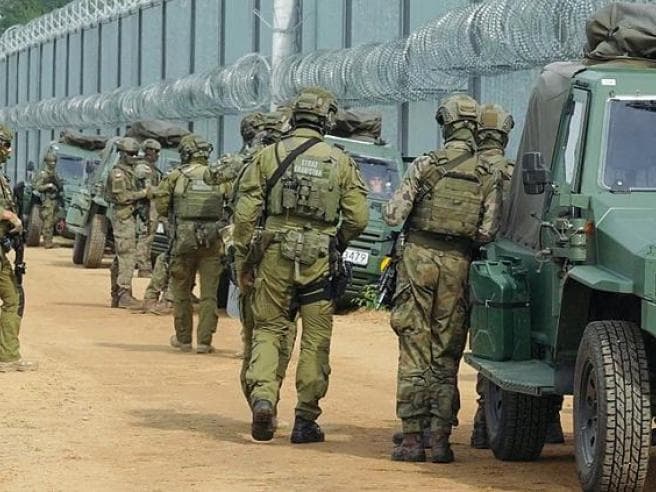
The urgency is not abstract. The European Council strongly condemned the incident of 29 May, in which a Russian drone carrying explosives crashed into a residential building in Romania, and explicitly recognised the immediate threats on the eastern flank. A single drone does not constitute an invasion, but it punctures the comfortable distinction between countries at war and countries at peace. For the states bordering Russia and Belarus, readiness is no longer a planning scenario discussed in Brussels committee rooms; it is a question of what falls from the sky over their towns.

The Omnibus tries to address a structural weakness that has dogged European defence for decades. Fragmentation, the habit of twenty-seven national markets buying twenty-seven slightly different systems, has long inflated costs and undermined the ability of armies to operate together. By simplifying rules and encouraging joint procurement, the package aims to give manufacturers the predictable, large-scale orders they need to expand production lines. The logic is sound, and the diagnosis is one defence economists have offered for years. The difficulty has always been execution rather than analysis.

That is where caution is warranted. Defence procurement remains a jealously guarded national competence, bound up with domestic industrial jobs, export interests and the simple instinct to keep strategic capacity at home. Streamlined rules from Brussels do not dissolve those incentives. A French government protecting its aerospace base, a German one guarding its land-systems champions and a Polish one buying quickly from outside Europe to meet an immediate threat are pursuing rational but divergent aims. The Omnibus can lower the barriers to cooperation; it cannot by itself supply the political will to cooperate.

The financing dimension deepens the question. Leaders have linked defence to the Security Action for Europe instrument, the SAFE programme funded through common EU borrowing, and to a parallel push to redirect cohesion money toward security. Both moves expand the pool of available money, but both also raise uncomfortable trade-offs. Money spent on artillery and air defence is money not spent on the regional development that cohesion funds were created to deliver, and citizens in poorer regions may reasonably ask why their convergence budgets are being repurposed for the priorities of frontline states far from home.

There is a serious case that the trade-off is worth making, and it should not be dismissed. A credible deterrent on the eastern border is a public good for the entire Union, including the regions whose funds are diverted, because the cost of failing to deter is incomparably higher than the cost of preparing. The leaders also called for agreement by the end of 2026 on a programme for agile and rapid defence innovation, an acknowledgement that future security will depend as much on drones, software and electronic warfare as on tanks. The Romania incident was, after all, a cheap drone defeating expensive assumptions.

What the summit could not resolve is the gap between agreement in principle and capability in the field. The Omnibus removes obstacles, the SAFE instrument supplies money and the innovation programme promises agility, but armies are not rebuilt by regulation alone. They require sustained orders, trained personnel and years of consistent funding that survive changes of government. Europe has assembled the legal and financial scaffolding for a more serious defence posture. Whether that scaffolding is filled with real readiness, or quietly abandoned once the immediate alarm fades, is the test the eastern flank will apply long after the communiqués are filed.