August 9, 2026
LATEST
New EU Gas Market Rules Take Effect With Consumer SafeguardsDeforestation Regulation Holds Its December Deadline Despite CutsDigital Omnibus Delays Europe’s High-Risk AI Deadline to 2027Europe’s Schools Confront a Widening Basic Skills GapRule of Law Report Finds Progress but Trust Still LagsIRIS2 Gains 66 Satellites as Brussels Signs the Rollout DealNature Restoration Plans Come Due as Member States Race a DeadlineECB Rates Hold at 2.25 Percent as Frankfurt Waits on the DataEU Budget Talks Turn to Cohesion as Ireland Takes OverWildfire Response Stretches Europe’s Emergency Fleet ThinCan Europe’s Quantum Plan Match Its Big Ambitions?Armenia Edges West as Moscow’s Grip Slips AwayEurope Inherits the World’s Aid Bill It Cannot Fully PayAir Passenger Rights Get Their First Overhaul in Two DecadesErasmus Opens a 5 Billion Euro Round for Skills and MobilityCeuta Crisis Pushes the EU Toward Faster Migrant ReturnsBulky Parcels Face a Packaging Crackdown From August 12Can Europe Build Its Drone Wall Before 2030 Arrives?Indonesia’s Trade Deal With Europe Nears Its Final SignatureEurope Leans on Beijing to Keep Climate Talks Alive Before AntalyaNew EU Gas Market Rules Take Effect With Consumer SafeguardsDeforestation Regulation Holds Its December Deadline Despite CutsDigital Omnibus Delays Europe’s High-Risk AI Deadline to 2027Europe’s Schools Confront a Widening Basic Skills GapRule of Law Report Finds Progress but Trust Still LagsIRIS2 Gains 66 Satellites as Brussels Signs the Rollout DealNature Restoration Plans Come Due as Member States Race a DeadlineECB Rates Hold at 2.25 Percent as Frankfurt Waits on the DataEU Budget Talks Turn to Cohesion as Ireland Takes OverWildfire Response Stretches Europe’s Emergency Fleet ThinCan Europe’s Quantum Plan Match Its Big Ambitions?Armenia Edges West as Moscow’s Grip Slips AwayEurope Inherits the World’s Aid Bill It Cannot Fully PayAir Passenger Rights Get Their First Overhaul in Two DecadesErasmus Opens a 5 Billion Euro Round for Skills and MobilityCeuta Crisis Pushes the EU Toward Faster Migrant ReturnsBulky Parcels Face a Packaging Crackdown From August 12Can Europe Build Its Drone Wall Before 2030 Arrives?Indonesia’s Trade Deal With Europe Nears Its Final SignatureEurope Leans on Beijing to Keep Climate Talks Alive Before Antalya
August 9, 2026
LATEST
New EU Gas Market Rules Take Effect With Consumer SafeguardsDeforestation Regulation Holds Its December Deadline Despite CutsDigital Omnibus Delays Europe’s High-Risk AI Deadline to 2027Europe’s Schools Confront a Widening Basic Skills GapRule of Law Report Finds Progress but Trust Still LagsIRIS2 Gains 66 Satellites as Brussels Signs the Rollout DealNature Restoration Plans Come Due as Member States Race a DeadlineECB Rates Hold at 2.25 Percent as Frankfurt Waits on the DataEU Budget Talks Turn to Cohesion as Ireland Takes OverWildfire Response Stretches Europe’s Emergency Fleet ThinCan Europe’s Quantum Plan Match Its Big Ambitions?Armenia Edges West as Moscow’s Grip Slips AwayEurope Inherits the World’s Aid Bill It Cannot Fully PayAir Passenger Rights Get Their First Overhaul in Two DecadesErasmus Opens a 5 Billion Euro Round for Skills and MobilityCeuta Crisis Pushes the EU Toward Faster Migrant ReturnsBulky Parcels Face a Packaging Crackdown From August 12Can Europe Build Its Drone Wall Before 2030 Arrives?Indonesia’s Trade Deal With Europe Nears Its Final SignatureEurope Leans on Beijing to Keep Climate Talks Alive Before AntalyaNew EU Gas Market Rules Take Effect With Consumer SafeguardsDeforestation Regulation Holds Its December Deadline Despite CutsDigital Omnibus Delays Europe’s High-Risk AI Deadline to 2027Europe’s Schools Confront a Widening Basic Skills GapRule of Law Report Finds Progress but Trust Still LagsIRIS2 Gains 66 Satellites as Brussels Signs the Rollout DealNature Restoration Plans Come Due as Member States Race a DeadlineECB Rates Hold at 2.25 Percent as Frankfurt Waits on the DataEU Budget Talks Turn to Cohesion as Ireland Takes OverWildfire Response Stretches Europe’s Emergency Fleet ThinCan Europe’s Quantum Plan Match Its Big Ambitions?Armenia Edges West as Moscow’s Grip Slips AwayEurope Inherits the World’s Aid Bill It Cannot Fully PayAir Passenger Rights Get Their First Overhaul in Two DecadesErasmus Opens a 5 Billion Euro Round for Skills and MobilityCeuta Crisis Pushes the EU Toward Faster Migrant ReturnsBulky Parcels Face a Packaging Crackdown From August 12Can Europe Build Its Drone Wall Before 2030 Arrives?Indonesia’s Trade Deal With Europe Nears Its Final SignatureEurope Leans on Beijing to Keep Climate Talks Alive Before Antalya

How Ready Is Europe As Its Migration Pact Goes Live

Brussels: After two years of preparation, the Pact on Migration and Asylum begins to apply across the European Union today, replacing a patchwork of national practices with a single common framework for screening, asylum, responsibility-sharing and returns. The political battle over the Pact was won in 2024. The harder question, now arriving, is whether twenty-seven administrations can actually run it.

The evidence on readiness is mixed and worth examining without spin. According to the Commission’s own progress reporting in spring, only eleven member states judged themselves fully on track to connect to the new digital systems by the deadline, while a further sixteen expected to resolve outstanding issues in time. That distribution matters more than the headline. A shared procedure is only as fast as its slowest interface, because the Pact’s logic depends on countries reading and writing to the same databases in close to real time. A border screening in one state is meant to feed an asylum determination, and potentially a transfer, in another. Where the plumbing is incomplete, the design degrades into the very improvisation it was meant to end.

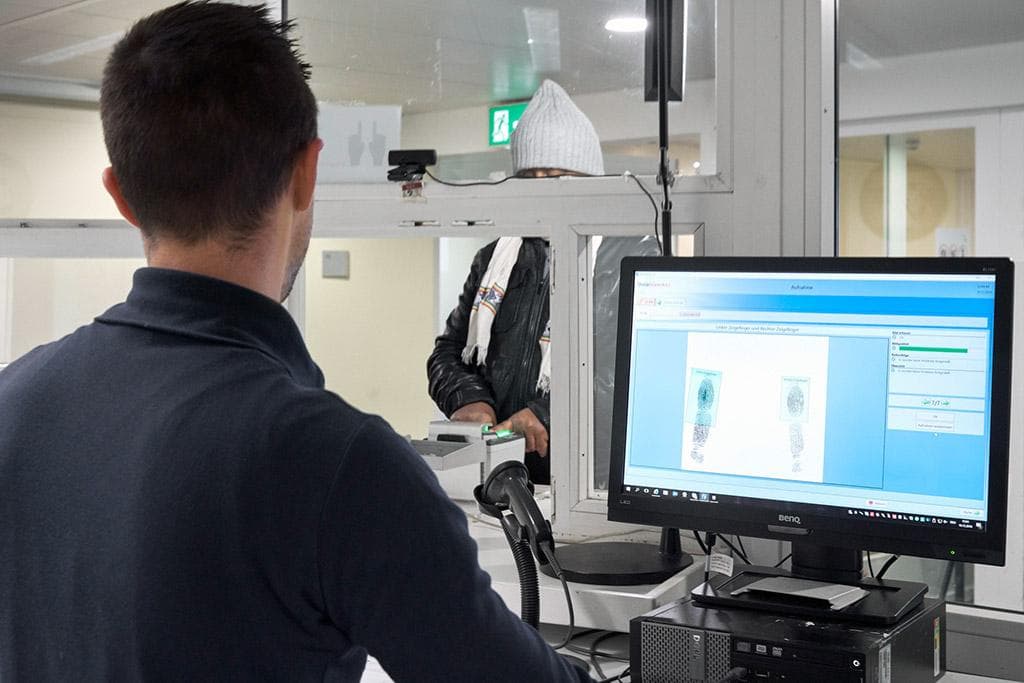
Three components carry most of the operational risk. The first is mandatory border screening, which obliges frontline states to register, fingerprint and health-check arrivals within tight windows. The second is the accelerated border procedure for applicants from countries with low recognition rates, which compresses decisions that previously took months. The third, and politically most delicate, is the solidarity mechanism: member states that decline to relocate asylum seekers must instead pay into a common pool or provide operational support. Ministers agreed the size of that pool in December, but agreement on a number is not the same as a functioning system of obligations that holds when arrivals spike.

It is the spike scenario that should concern analysts most. The Pact was negotiated during a period of relatively manageable flows, and its crisis provisions allow temporary derogations precisely because everyone expected pressure to return. The unresolved tension is that solidarity is strongest on paper when it is least needed and weakest when a single state faces a sudden surge. If the financial contributions prove easier to pay than relocations are to accept, the Pact may quietly settle into a cash-for-burden arrangement rather than the shared-responsibility model its drafters described. That would be a workable outcome, but a different one from the promise.

The Commission has tried to buy resilience with money and institutions. Around three billion euros has been earmarked to support implementation, and the EU’s agencies, from the asylum agency to Frontex, eu-LISA and the fundamental rights agency, are being leaned on to backstop weaker administrations. This is sensible, yet it also concentrates dependence. If national capacity lags, agency support becomes structural rather than transitional, raising questions about accountability that the Pact does not fully answer.

There is also a rights dimension that data alone cannot capture. Faster procedures and detention-adjacent border processing invite legal challenge, and national courts and the Court of Justice will shape how the rules actually operate over the coming year. The presence of the fundamental rights agency in the support architecture is an acknowledgement that speed and safeguards pull in opposite directions.

What today marks, then, is not the end of Europe’s migration debate but the start of its most demanding test: whether a continent that agreed on rules can agree on execution. The early indicators counsel modest expectations. A system in which fewer than half of members declare full readiness is one that will be learned in operation, with the inevitable friction that implies. The honest forecast is neither triumph nor collapse but a long, uneven bedding-in, judged less by the launch than by the first month in which the numbers rise.